
Carbonara is a trust exercise.
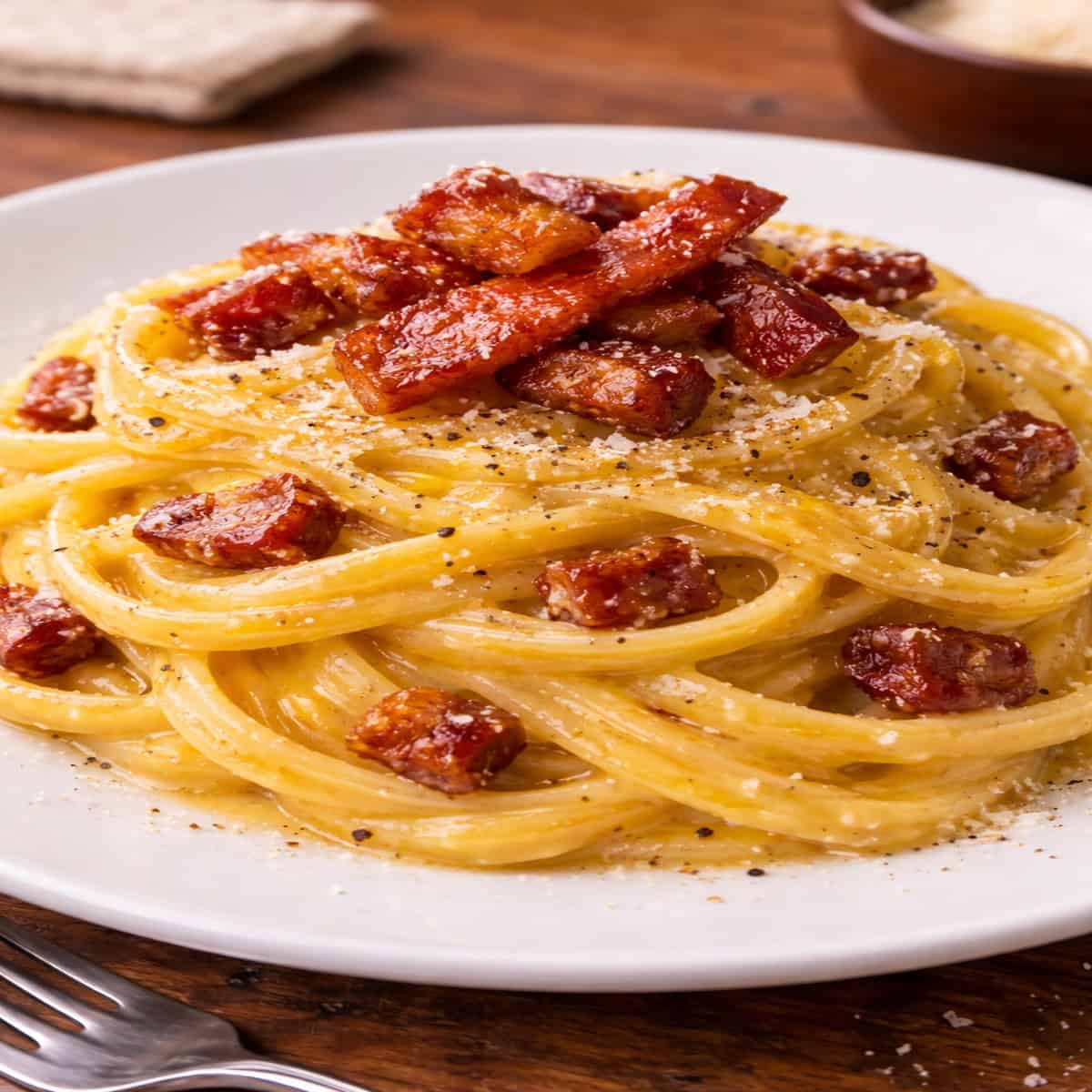
Trust in ingredients. Trust in timing. Trust that you don’t need cream, garlic, peas, or clever substitutions to make something deeply satisfying. When carbonara goes wrong, it’s rarely because the dish is difficult — it’s because someone didn’t trust the process, or didn’t understand what the dish is trying to do.
With fresh pasta, carbonara becomes even more direct. The sauce clings faster. The margin for error shrinks. But when it works, it’s silk and salt and pork fat, wrapped around noodles that still taste like wheat and egg.
This is Roman food. It doesn’t ask for interpretation.
What Carbonara Is Really About
Carbonara isn’t a sauce you cook.
It’s a sauce you assemble in motion.
You’re managing:
- Egg yolks that thicken without scrambling
- Cheese that emulsifies instead of clumping
- Pork fat that carries flavor, not grease
- Pasta water used deliberately, not dumped
With fresh pasta, everything happens faster. That’s the point — and the risk.
Pasta Intelligence: Why Fresh Changes Everything
Fresh pasta cooks quickly and releases starch almost immediately. That starch helps the sauce bind, but it also means you have less time to recover if something goes sideways.
Fresh strands absorb sauce differently than dried pasta. They don’t need as much fat, and they don’t tolerate excess heat. The pasta should arrive in the pan just shy of done, carrying water with it.
Dry pasta forgives. Fresh pasta demands attention.
Pork Intelligence: Guanciale Matters
Traditional carbonara uses guanciale, cured pork jowl. It’s richer, silkier, and melts differently than pancetta or bacon.
Rendered gently, guanciale releases fat that tastes round and savory, not smoky. Pancetta works if that’s what you have. Bacon changes the dish entirely.
The pork isn’t garnish. It’s structural.
Cheese Intelligence: Pecorino Is the Point
Carbonara uses Pecorino Romano, not Parmesan. Pecorino is sharper, saltier, and more assertive — and it matters because there’s no cream to soften it.
With fresh pasta, many cooks blend Pecorino with a smaller amount of Parmigiano-Reggiano to round the edges without losing bite. The goal isn’t mellowness. It’s balance.
The cheese should dissolve into the eggs, not sit on top of them.
About Cream, Peas, and Other Misunderstandings
Cream and peas have nothing to do with carbonara.
They crept in outside of Italy, largely through hotel kitchens and international restaurants where cooks were trying to stabilize a sauce they didn’t fully understand. Cream became insurance. Peas added color. Bacon replaced guanciale because it was familiar. The result was something rich, yes — but fundamentally different.
Roman carbonara is creamy because of eggs, cheese, pork fat, and starch. When it’s done correctly, cream is redundant. When it’s done poorly, cream becomes a crutch.
Peas don’t belong because carbonara isn’t about freshness or sweetness. It’s about salt, fat, heat, and restraint. Add peas and you’re making a different pasta — not bad food, just not carbonara.
Carbonara doesn’t need help. It needs attention.
Technique Intelligence: Why Carbonara Breaks
Carbonara breaks when heat gets ahead of you.
The eggs never go directly on the flame. They thicken from residual heat, pasta water, and constant motion. Stirring isn’t optional — it’s emulsification.
Fresh pasta raises the stakes because it holds more heat. That means pulling it earlier, moving faster, and stopping sooner than you think you should.
If the sauce looks loose in the pan, you’re doing it right. It tightens as it rests.
Wine Pairing
Carbonara is rich, salty, and built on egg yolk, cured pork, and restraint. The wine needs acidity and cleanliness more than power.
In Rome, a chilled Frascati Superiore or Malvasia Puntinata works naturally—bright enough to cut through fat without disturbing the sauce’s delicate emulsion. These wines refresh rather than compete.
If you prefer something with more bite, Verdicchio dei Castelli di Jesi brings structure and mineral edge that stands up to guanciale without flattening the eggs.
Red wine can work, but only lightly: a young Cesanese or a very restrained Chianti, served slightly cool. Avoid tannic or oaked reds—they clash with egg and turn the sauce metallic.
When in doubt, stay white, stay dry, and stay sharp. Carbonara rewards precision, not bravado.
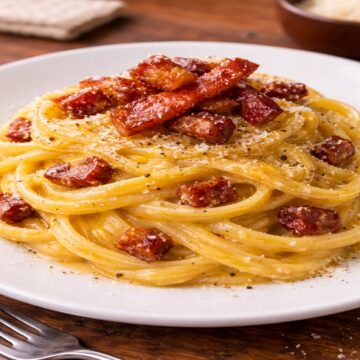
Carbonara with Fresh Pasta

Ingredients
Ingredients
Fresh Egg Pasta
- 200 g all-purpose flour about 1½ cups
- 2 large eggs
- Optional: 1 teaspoon olive oil
- Semolina or flour for dusting
Carbonara Sauce
- 4 oz guanciale cut into batons
- 3 large egg yolks
- 1 large egg
- ¾ cup finely grated Pecorino Romano
- Optional: ¼ cup finely grated Parmigiano-Reggiano for balance
- 1 teaspoon freshly cracked black pepper plus more to taste
For Cooking
- Kosher salt for pasta water
Instructions
Instructions
Make the Fresh Pasta
- Place flour on a work surface and form a well in the center.
- Add eggs (and olive oil if using) to the well.
- Using a fork, gradually incorporate flour into the eggs until a shaggy dough forms.
- Knead until smooth and elastic, 8–10 minutes.
- Wrap dough and rest at room temperature for 30 minutes.
- Roll dough into thin sheets and cut into tagliatelle or fresh spaghetti.
- Dust lightly with flour and set aside.
Prepare the Carbonara
- Bring a large pot of well-salted water to a boil.
- In a bowl, whisk egg yolks, whole egg, grated cheeses, and black pepper until smooth.
- Place guanciale in a cold pan and cook gently over medium heat until fat renders and pork is lightly crisp. Remove pan from heat.
- Assemble the Dish
- Cook fresh pasta until just tender, 1–3 minutes depending on thickness.
- Transfer pasta directly to the pan with guanciale, reserving pasta water.
- Toss pasta in rendered fat to coat.
- Off the heat, add egg mixture and toss vigorously, adding reserved pasta water a little at a time until a glossy, emulsified sauce forms.
- Adjust consistency with additional pasta water as needed.
- Taste and adjust pepper if needed. Serve immediately.
Notes
Fresh pasta dough can be wrapped and refrigerated for up to 24 hours before rolling.
Common Mistakes
- Cooking the eggs directly
- Adding cheese too late or too fast
- Over-reducing the pork fat
- Draining the pasta too thoroughly
Carbonara punishes hesitation more than ambition.
Equipment
- Large pot – for boiling fresh pasta
- Wide sauté pan or skillet – to render guanciale and finish the pasta off heat
- Mixing bowl – for egg and cheese emulsion
- Tongs – essential for transferring pasta with cooking water
- Fine grater (Microplane or box grater) – for Pecorino Romano
- Rolling pin or pasta machine – for rolling fresh pasta dough
- Bench scraper or knife – for portioning and cutting pasta
- Clean kitchen towel or plastic wrap – to rest fresh pasta dough
Optional but Useful
- Large slotted spoon – if cooking multiple pasta batches
- Digital scale – for consistent pasta dough ratios
- Pepper mill – coarse black pepper matters here
How Carbonara Is Served
Carbonara is served immediately. No holding. No garnish that wasn’t already in the pan.
Just pasta, pork, egg, cheese, and black pepper.
If you need something on the side, keep it simple — bitter greens, a glass of white wine, nothing more.
Comments
No Comments