
By Chef Samantha Tilley, executive chef at The Market CT and former chef-owner of Mockingbird Kitchen & Bar.
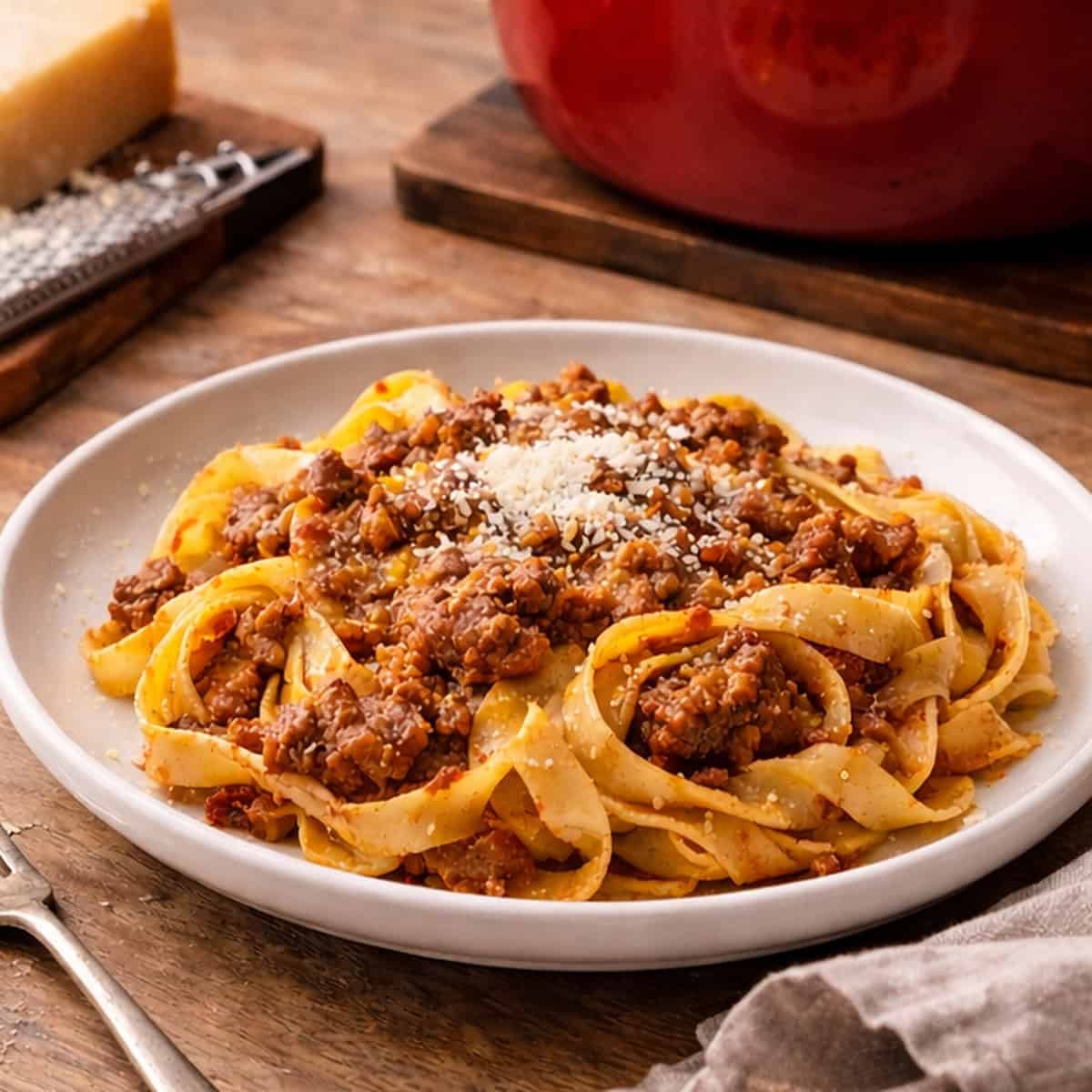
Bologna has a nickname: la grassa, the fat one. The city sits in the middle of Emilia-Romagna, the region of Parmigiano-Reggiano, prosciutto di Parma, mortadella and fresh egg pasta rolled thin by hand, and Bolognese, the slow meat ragù, is its signature sauce. The word ragù comes from the French ragoût, a slow stew, and Pellegrino Artusi printed a "maccheroni alla bolognese" in his 1891 cookbook, La scienza in cucina e l'arte di mangiar bene. In 1982 the Accademia Italiana della Cucina registered a reference recipe for ragù alla Bolognese with the Bologna Chamber of Commerce, but every family in the city still cooks its own version. In Bologna it is eaten with fresh tagliatelle or layered into green lasagne, and it is mostly meat, with only a little tomato.
This sauce starts plain: chopped vegetables softening in butter and oil, meat browning, a pot that smells like dinner in progress. Then time takes over. Proper browning builds the flavor. Wine and milk reduced one after the other give it balance. Hours at a lazy simmer pull it together. None of it is hard, but skip a step and you end up with ground meat in tomato sauce. Do it in order and it tastes like something you have known your whole life.
Bolognese is Sunday food. It fills the house with the smell of browned meat and sweet onion all afternoon, and everyone wanders through the kitchen to lift the lid. It doesn't care if you're impressed. It just wants you to sit down. Twirl the tagliatelle, let the Parmigiano melt into the sauce, pour a glass of something red, and take your time. The sauce did.
Technique Intelligence
Technique: Braise & Stew · Chapters 24 to 26 · Technique School
Chop the soffritto small and even
Dice the onion, carrot and celery finely and to the same size. Even pieces cook at the same rate and melt into the sauce. A sharp chef's knife does it best; a food processor works if you pulse, not purée. You want small pieces, not a wet paste.
Sweat the vegetables, don't brown them
Medium heat, butter and olive oil, a pinch of salt. Ten to twelve minutes, stirring now and then. The vegetables should sizzle gently and turn soft and translucent, with no color at the edges. Gentle cooking turns them sweet. Rushed and browned, they turn harsh. Your kitchen should smell sweet and earthy at this point, never toasty.
Brown the meat hard
Turn the heat up to medium-high. Add the beef and pork, spread them out and leave them alone for 4 to 5 minutes. Listen for a steady sizzle. Then break the meat up and keep cooking until the liquid is gone and the meat is well browned and crisp in places. This is where the flavor comes from: browning creates deep, roasted, savory notes that simmering alone never will. If the meat is steaming in gray juice, the heat is too low or the pot is too crowded. Wait it out. The liquid will cook off, and then the browning starts. For more on why this matters, read Browning | Control Heat | Build Flavor.
Scrape the fond
The brown layer on the bottom of the pot is not burning. It is flavor. Scrape it up with a flat-edged wooden spatula as you go, and again when the wine goes in. It should lift easily and smell roasted. If it smells acrid or looks black, the heat was too high; turn it down.
Wine, then milk, each cooked all the way down
Cook the tomato paste for 2 to 3 minutes until it darkens. Pour in the wine and simmer until it is gone, 5 to 7 minutes, and the sharp alcohol smell has turned into a savory glaze. Then add the milk, lower the heat and cook until you can't see it anymore, 10 to 15 minutes. Reduce each liquid fully before the next one goes in. That is how each one leaves flavor behind instead of watering the sauce down. Cooks in Bologna argue about whether the milk goes in before or after the wine, and both work. This recipe puts the wine first.
Simmer low, slow and uncovered
Turn the heat to low and leave the lid off. Two to three hours. You want slow, lazy bubbles breaking the surface, not a boil. Leaving the lid off lets the sauce reduce and concentrate. Stir every 20 to 30 minutes and scrape the bottom so nothing catches. If the pot starts to look dry before the sauce tastes finished, add a splash of water and keep going. When it's ready, the fat glistens on top, the meat is tender and the sauce smells deep and savory.
Toss the pasta with the sauce
Don't dump a ladle of ragù on a pile of plain noodles. Toss the cooked tagliatelle with the sauce so every strand is coated and the sauce clings without pooling. Grate Parmigiano-Reggiano over the top and serve right away.
Ingredient Intelligence
Beef and Pork
Bolognese is not a beef sauce. It is a meat sauce, and it works because the two meats do different jobs. Beef brings structure and deep flavor. Pork brings fat and sweetness. Together they make a sauce that is rich and tender instead of dry and crumbly. Ground chuck (80 to 85 percent lean) is the right beef; very lean beef turns grainy over a long simmer.
Quality matters more than seasoning here. Freshly ground meat from a butcher browns cleanly and releases its moisture predictably. If your butcher will grind beef chuck and pork shoulder for you, take them up on it.
Onion, Carrot and Celery
This is the soffritto, the base of the sauce. Onion gives sweetness, carrot gives more sweetness and color, celery gives a light, green, savory note. Use yellow onion. Don't swap in other vegetables; the classic three are the flavor of the sauce.
Butter and Olive Oil
Butter is the cooking fat of Emilia-Romagna, and it gives the soffritto a sweet, rounded richness. Olive oil keeps the butter from scorching. I use Kerrygold or Plugrá butter.
Dry White Wine
White wine is the traditional choice in Bologna. It adds brightness without darkening the sauce or pushing it toward a heavy red-wine stew. Use something dry and unoaked that you would drink: Pinot Grigio, Trebbiano or Sauvignon Blanc. If you wouldn't pour a glass, don't pour it into the pot.
Whole Milk
Milk surprises people, but it is what makes the sauce feel finished. Cooked down completely, it softens the meat, rounds out the acidity of the wine and tomato and gives the sauce a gentle, velvety richness. You never taste milk. You taste balance. Use whole milk; low-fat milk doesn't add the same richness.
Tomato Paste
Bolognese is not a red sauce. Two tablespoons of tomato paste, plus a little crushed tomato if you like, are there for depth and color, not dominance. This is meat with tomato, not tomato with meat. If the sauce starts to look like marinara, you've used too much. A good pick is Mutti double-concentrated tomato paste in a tube, which keeps in the refrigerator once opened.
Parmigiano-Reggiano and Fresh Tagliatelle
Buy real Parmigiano-Reggiano: look for the name stamped in dots on the rind. Buy a wedge and grate it yourself, just before serving. Pre-grated cheese is often dry and doesn't melt into the sauce the same way.
Fresh egg tagliatelle is the classic match. The wide, slightly rough ribbons hold the sauce; thin, smooth pasta lets it slide off. Make your own with Basic Pasta Dough (By Hand or Food Processor), or look for fresh egg tagliatelle or dried egg tagliatelle nests at an Italian market. Pappardelle and fettuccine work too.
The Pot
Use a heavy-bottomed Dutch oven or enameled cast-iron pot. It holds steady, even heat for hours without scorching the bottom. Thin pots develop hot spots and burn the fond. Le Creuset and Staub are excellent; Lodge enameled cast iron is a good, more affordable pick. Add a flat-edged wooden spatula for scraping.
Stocking an Italian kitchen? See Italian Pantry Essentials: What to Stock and Why.
Variations
- With pancetta: Many Bolognese cooks start with finely chopped pancetta, rendered in the butter before the soffritto, for a deeper, saltier base.
- With veal: Replace half the beef with ground veal for a softer, more delicate sauce.
- Lasagne alla Bolognese: Layer the ragù with fresh spinach pasta sheets, béchamel and Parmigiano-Reggiano, the way it is made in Bologna.
- Red wine: Use a dry red instead of white for a darker, heavier sauce.
- Slightly more tomato: Add the optional ½ cup crushed tomatoes for a sauce with a bit more color and brightness.
Make Ahead, Storage and Freezing
Make ahead: Bolognese tastes even better the next day, once the flavors have rested overnight. Make it a day or two ahead and reheat it gently.
Storage: Cool the sauce, then refrigerate it in a covered container within 2 hours of cooking. It keeps up to 4 days.
Freezing: Freeze the cooled sauce in freezer bags or airtight containers up to 3 months. Lay the bags flat so they freeze thin and thaw fast. Thaw overnight in the refrigerator.
Reheating: Warm the sauce in a covered pot over low heat, stirring often, with a splash of water if it has thickened too much. Bring it to a gentle simmer before serving.
What to Serve with Bolognese
- Fresh tagliatelle made from Basic Pasta Dough
- Focaccia for wiping the plate
- A simple green salad with olive oil and red wine vinegar, served after the pasta
- Classic Tiramisu for dessert
- A glass of Sangiovese di Romagna or a dry, lightly chilled Lambrusco, both from Emilia-Romagna. Outside the region, look for balanced reds such as Barbera, Dolcetto or Montepulciano d'Abruzzo, and skip heavily oaked, high-alcohol wines.
Bolognese FAQ
What is the difference between Bolognese and meat sauce? Bolognese is mostly meat, slowly simmered with soffritto, wine and milk and only a little tomato. Italian-American meat sauce is a tomato sauce with meat added. Bolognese is thicker, richer and less red.
Why do you put milk in Bolognese? Milk tenderizes the meat, softens the acidity of the wine and tomato and makes the sauce rounder and richer. It cooks down completely, so you don't taste it as milk.
Should Bolognese use red or white wine? Dry white wine is traditional in Bologna. Red wine works and makes a darker, heavier sauce.
How long should Bolognese simmer? At least 2 hours and up to 3 hours, uncovered, over low heat, after the meat is browned and the wine and milk are cooked off. Longer, gentle cooking gives a deeper, more tender sauce.
What pasta goes best with Bolognese? Fresh egg tagliatelle is the traditional choice. Pappardelle, fettuccine and rigatoni also hold the sauce well. In Bologna it is also layered into lasagne.
Can I use spaghetti? Yes. Spaghetti Bolognese is popular around the world, but in Bologna the sauce is served with wider pasta, which holds a chunky meat sauce better.
Can I freeze Bolognese? Yes. Cool it completely and freeze it in airtight containers or freezer bags for up to 3 months. Thaw overnight in the refrigerator and reheat gently.
Planning a dinner? This recipe is part of our Italian Sunday Supper menu. Plan the whole dinner in the Menu Planner →
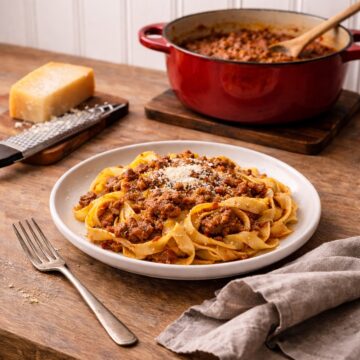
Bolognese (Ragù alla Bolognese)

Equipment
- Large pasta pot
Ingredients
Ingredients
Meat
- 1 lb ground beef
- ½ lb ground pork
Soffritto
- 1 onion finely diced
- 1 carrot finely diced
- 1 celery stalk finely diced
Liquids & Fat
- 2 tablespoons olive oil
- 2 tablespoons butter
- 1 cup whole milk
- ½–1 cup water or low-sodium beef or chicken stock as needed during the simmer
- 1 cup dry white wine
Tomato
- 2 tablespoons tomato paste
- ½ cup crushed tomatoes optional
Seasoning
- 1 teaspoon Kosher salt plus more to taste
- ½ teaspoon Freshly ground black pepper
To Finish
- 1 lb Fresh tagliatelle for serving
- ½ cup Parmigiano-Reggiano grated, for serving
Instructions
Build the base
- Heat the fat: Heat 2 tablespoons olive oil and 2 tablespoons butter in a heavy-bottomed pot over medium heat until the butter melts and the oil shimmers quietly.
- Sweat the soffritto: Add 1 finely diced onion, 1 finely diced carrot and 1 finely diced celery stalk, with a pinch of kosher salt. The vegetables should sizzle gently. Cook for 10 to 12 minutes, stirring occasionally, until they soften and turn translucent. They should smell sweet and vegetal, with no browning at the edges.
Brown the meat properly
- Sear the meat: Increase the heat to medium-high and add 1 lb ground beef and ½ lb ground pork. You should hear a confident sizzle when the meat hits the pot. Spread the meat into an even layer and leave it undisturbed for about 4 to 5 minutes so it can brown properly. As the moisture cooks off, the aroma deepens and brown bits begin to form on the bottom of the pot. This is what you want.
- Finish browning: Break up the meat and keep cooking until it is well browned and slightly crisp in places, with no visible liquid remaining, about 8 to 10 minutes. Scrape the bottom of the pot to release the browned bits. They should lift easily and smell roasted, not burnt.
Build the sauce
- Cook the tomato paste: Stir in 2 tablespoons tomato paste and cook for 2 to 3 minutes, scraping the pot as you go, until the paste darkens slightly and loses its raw edge.
- Reduce the wine: Pour in 1 cup dry white wine and simmer until fully reduced, about 5 to 7 minutes. The sharp alcohol smell should disappear, leaving a savory glaze.
- Add the milk: Add 1 cup whole milk and lower the heat. Cook gently until it is fully absorbed and no longer visible, about 10 to 15 minutes. This softens the meat and rounds out the sauce.
- Season: Season lightly with 1 teaspoon kosher salt and ½ teaspoon freshly ground black pepper.
Slow simmer
- Add tomatoes (optional): Add ½ cup crushed tomatoes, if using. The sauce should stay meat-forward, not red.
- Simmer: Reduce the heat to low and let the ragù simmer uncovered for 2 to 3 hours, stirring occasionally. If it looks dry before it is done, add ½ to 1 cup water or stock, a splash at a time. You are looking for slow, lazy bubbles and a sauce that gradually thickens and comes together.
- Taste: Taste and adjust seasoning. The flavor should be deep, savory and settled, with nothing sharp sticking out.
Serve
- Sauce the pasta: Spoon the ragù over 1 pound fresh tagliatelle, or toss gently with the pasta until it clings without pooling.
- Finish: Finish with ½ cup freshly grated Parmigiano-Reggiano and serve right away.
Notes
Made this? Leave a star rating and a comment below: did you go with white wine or red, and how long did your ragù simmer? I read every comment.

Comments
No Comments