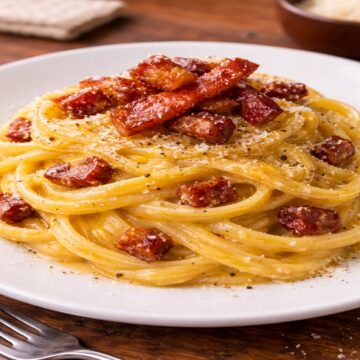
Carbonara with Fresh Pasta

Roman-style carbonara made with homemade fresh egg pasta, guanciale, egg yolks, Pecorino Romano, and black pepper for a creamy sauce without cream.
Ingredients
Ingredients
Fresh Egg Pasta
- 200 g all-purpose flour about 1½ cups
- 2 large eggs
- Optional: 1 teaspoon olive oil
- Semolina or flour for dusting
Carbonara Sauce
- 4 oz guanciale cut into batons
- 3 large egg yolks
- 1 large egg
- ¾ cup finely grated Pecorino Romano
- Optional: ¼ cup finely grated Parmigiano-Reggiano for balance
- 1 teaspoon freshly cracked black pepper plus more to taste
For Cooking
- Kosher salt for pasta water
Instructions
Instructions
Make the Fresh Pasta
- Place flour on a work surface and form a well in the center.
- Add eggs (and olive oil if using) to the well.
- Using a fork, gradually incorporate flour into the eggs until a shaggy dough forms.
- Knead until smooth and elastic, 8–10 minutes.
- Wrap dough and rest at room temperature for 30 minutes.
- Roll dough into thin sheets and cut into tagliatelle or fresh spaghetti.
- Dust lightly with flour and set aside.
Prepare the Carbonara
- Bring a large pot of well-salted water to a boil.
- In a bowl, whisk egg yolks, whole egg, grated cheeses, and black pepper until smooth.
- Place guanciale in a cold pan and cook gently over medium heat until fat renders and pork is lightly crisp. Remove pan from heat.
- Assemble the Dish
- Cook fresh pasta until just tender, 1–3 minutes depending on thickness.
- Transfer pasta directly to the pan with guanciale, reserving pasta water.
- Toss pasta in rendered fat to coat.
- Off the heat, add egg mixture and toss vigorously, adding reserved pasta water a little at a time until a glossy, emulsified sauce forms.
- Adjust consistency with additional pasta water as needed.
- Taste and adjust pepper if needed. Serve immediately.
Notes
Chef Notes
Fresh pasta holds heat — keep the pan off the flame when adding eggs.
The sauce should look loose in the pan; it tightens as it rests.
Pecorino Romano provides the traditional bite; Parmigiano softens the edge.
Do not salt the sauce — the cheese and guanciale provide enough seasoning.
Storage
Carbonara is best eaten immediately.
Fresh pasta dough can be wrapped and refrigerated for up to 24 hours before rolling.
Fresh pasta dough can be wrapped and refrigerated for up to 24 hours before rolling.
Tried this recipe?Let us know how it was!
