
By Chef Samantha Tilley, executive chef at The Market CT and former chef-owner of Mockingbird Kitchen & Bar.
Pesto Genovese is the sauce of Genoa and the Ligurian coast, the narrow crescent of northwest Italy where the mountains drop straight into the sea and small-leaved basil grows in terraced gardens and greenhouses above the water. The name comes from pestare, to pound, because it was made the way many Genoese cooks still make it: in a marble mortar with a wooden pestle. Ligurians pounded garlic, cheese and herbs into sauces long before this one, and the basil version took its familiar shape in the nineteenth century, when the first written recipes appeared in Genoese cookbooks. Today Basilico Genovese has its own protected designation in Europe, and the Pra' district on Genoa's western edge is famous for it. It is the cooking of a place with little flat land: a garden herb, a little cheese, good local oil and no stove at all.
There is almost nothing to it, which is exactly why technique decides everything. Basil darkens when it is heated or overworked. Raw garlic turns harsh the more you work it. Olive oil can turn bitter under a fast blade. Pesto doesn't need lemon, cream, spinach or extra garlic to be good. It needs cold ingredients, a light hand and the judgment to stop early. The restraint is the technique.
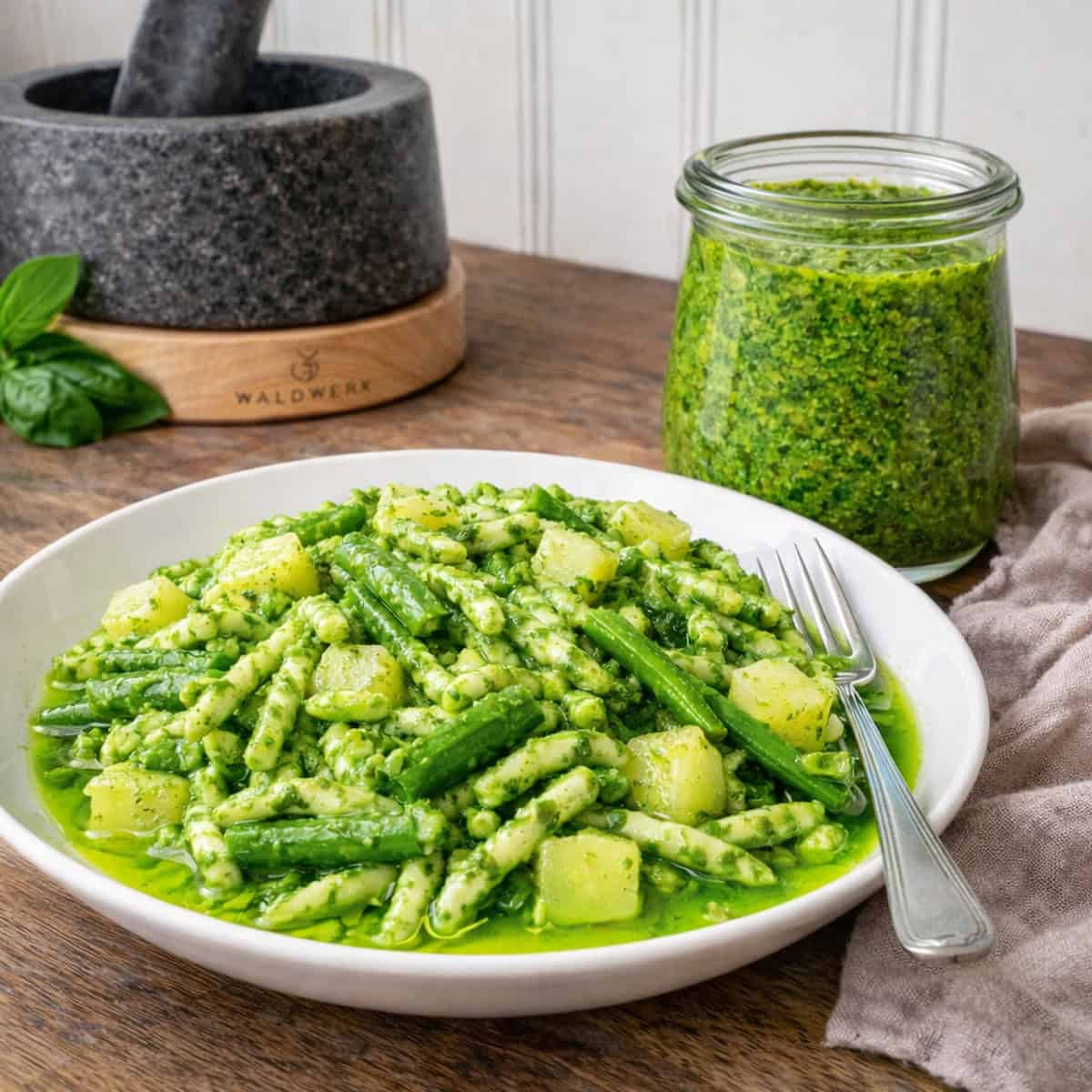
Drain a pot of trofie, keep back a cup of the cooking water and fold the pesto through off the heat. The kitchen fills with the smell of basil and warm cheese. The sauce clings to every twist of pasta, glossy and bright green, flecked with pine nut. Set the bowl in the middle of the table with a wedge of Parmigiano and let everyone help themselves. When it goes right, it tastes like summer pressed into a bowl and stopped just in time, and nobody will blame you for eating the last of it straight from the spoon.
Technique Intelligence
Technique: Sauces & Flavor Bases · Chapter 13 · Technique School
Start with garlic and salt
Put the salt and one small clove of garlic in the mortar first and grind them to a smooth paste. Salt is abrasive. It breaks the garlic down fast and evenly, so you get a mellow, creamy base instead of sharp raw chunks. In the food processor, pulse the garlic, salt and pine nuts together a few times until finely chopped. Then leave the garlic alone. You'll smell it, sweet and pungent, the moment the pestle starts to turn.
Crush, don't chop
A mortar makes the most aromatic pesto. Crush the pine nuts until creamy, then add the basil a handful at a time and grind with a steady circular motion, pressing the leaves against the sides of the bowl. Crushing ruptures the leaves and releases their oils gently, so the flavors stay distinct. A blade slices and spins, and that friction makes heat. The sound tells you how it's going: a soft, wet grind as the leaves give way and turn to a deep green paste.
Keep everything cold
Heat dulls basil. Speed creates heat. If you use a food processor, chill the bowl and blade in the refrigerator for 10 minutes first. Keep the basil cool and dry it completely after washing; water on the leaves makes the pesto thin and slick. Pulse briefly. Never run the machine continuously. Bruised, warm basil turns dark and tastes flat; cold basil stays bright and smells like a summer garden.
Add the oil in two stages
Work in the first half of the oil slowly, until the mixture loosens and turns glossy. In the processor, drizzle it in with the machine off, then pulse only until combined. Then move everything to a bowl and fold in the cheeses and the rest of the oil by hand. Here's why: whipping extra-virgin olive oil at high speed breaks its bitter compounds loose and spreads them through the sauce. A spatula doesn't. Stop when the pesto is loose and spoonable, never watery or oily.
Stop early
Pesto is assembled, not blended. Good pesto has texture: tiny flecks of leaf, a little grain from the pine nuts and cheese. A perfectly smooth, uniform paste means it was overworked. If you're wondering whether it needs another pass, it doesn't. Taste, adjust the salt and stop.
Toss it off the heat
Pesto is never cooked. Drain the pasta, take the pot off the burner and fold the pesto through with a splash of the starchy cooking water. The heat of the pasta is enough to warm the sauce and bloom the basil. The starch in the water binds oil and cheese into a creamy coating instead of a greasy slick. Put it on a hot burner and the basil turns olive-drab and the cheese clumps.
Protect it from air
Cut basil darkens when it meets air, the same way a cut apple browns. Press plastic wrap or parchment directly onto the surface of any pesto you aren't using right away, or pour a thin layer of olive oil over the top. Use an airtight container that lets you do that. The green underneath stays vivid.
Ingredient Intelligence
Basil
Basil isn't just the star. It's the whole orchestra. Young Genovese basil is ideal: small leaves, tender stems, no bitterness, with a sweet, clove-like perfume. Larger grocery-store basil works if it's fresh and cool. Tear a leaf and smell it. If it releases a sweet, green aroma, you're in good shape. If it smells grassy or metallic, or the leaves are black at the edges, find another bunch. Pick the leaves off the stems, and don't refrigerate basil before you use it; cold air blackens the leaves. Keep the bunch in a glass of water on the counter like flowers.
If you grow your own, Genovese is the variety to plant. Thai basil, purple basil and lemon basil all make good sauces, but they won't taste like pesto Genovese.
Garlic
Garlic should whisper, not announce itself. One small clove is plenty; pesto isn't garlic sauce. Choose a firm, fresh head with no green sprout in the center, which tastes bitter. If you only have large cloves, use half of one.
Pine Nuts
Pine nuts give pesto body and softness. They don't crunch. They round out the basil, add a buttery sweetness and help carry the oil. Raw pine nuts keep the flavor clean. Toasting is optional, and if you do it, take them just to pale gold in a dry skillet over low heat and stir the whole time. Burnt pine nuts ruin everything they touch.
Look for Mediterranean pine nuts, often sold as Italian pinoli: long, slim and ivory. They cost more, and they taste better. Some imported pine nuts have been linked to "pine mouth," a bitter, metallic taste that can linger for days. Pine nuts go rancid quickly, so taste one before you start and store the rest in the freezer.
Substitutes: walnuts are the most common swap and give an earthier, slightly tannic pesto. Blanched almonds are mild and sweet. For a nut-free pesto, use raw sunflower seeds.
Parmigiano Reggiano and Pecorino
This is not a one-cheese job. Parmigiano Reggiano brings depth and savory, nutty umami. Pecorino brings salt and edge. Together they give pesto structure without overpowering the basil. Buy wedges and grate them on a Microplane or fine grater, so the cheese melts into the sauce instead of sitting on top of it. Pre-grated cheese is often drier and coated with anti-caking agents, and it tastes dusty. This is not the place to cut corners.
Look for real Parmigiano Reggiano, with the name stamped in dots on the rind; 24 months aged is a good choice. For Pecorino Romano, Locatelli is a good, widely available pick. In Genoa, many cooks use a Sardinian pecorino such as Fiore Sardo, which is milder and less salty than Romano. If you find it, it's worth trying.
Extra-Virgin Olive Oil
Olive oil is the binder, not the headline. Use a mild, fruity extra-virgin olive oil, nothing bitter or aggressively peppery. Strong oils fight basil instead of supporting it. The traditional choice is a Ligurian oil, labeled Riviera Ligure, often pressed from small, delicate Taggiasca olives. California Olive Ranch is a good everyday alternative. Taste it on its own first: it should smell fresh and grassy-sweet and finish soft.
Salt
Salt sharpens everything and, in the mortar, helps break down the garlic and basil. Fine sea salt is what the recipe calls for. Add it early. Finish carefully. The cheese will do more seasoning than you think, so taste only after the cheese is in.
Variations
- Ligurian style with potatoes and green beans: Cook a diced waxy potato and a handful of cut green beans in the pasta water with trofie or trenette, drain together and toss with the pesto. This is how the dish is often served in Genoa.
- Extra-green pesto: Dip the basil leaves in boiling water for 10 seconds, plunge into ice water and dry completely before making the pesto. The color stays brighter for longer, though the flavor is slightly less sharp.
- Walnut pesto: Replace the pine nuts with walnuts for a deeper, earthier sauce.
- Nut-free: Use raw sunflower seeds in place of pine nuts.
- Milder cheese: Use all Parmigiano Reggiano, or swap the Pecorino Romano for a Sardinian pecorino.
Make Ahead, Storage and Freezing
Make ahead: Pesto is best the day it's made, but you can make it up to 2 to 3 days ahead. Press plastic wrap or parchment directly onto the surface and refrigerate.
Storage: Keep pesto in an airtight container in the refrigerator, with the surface covered, for 2 to 3 days. Because it contains raw garlic in oil, keep it cold and don't leave it at room temperature for more than 2 hours.
Freezing: Freeze in small portions, such as an ice cube tray topped with a thin layer of oil, then move the cubes to a freezer bag. Use within 3 months. The color fades slightly, but the flavor holds, and flavor is what matters. For the freshest taste, freeze it before adding the cheese and fold the cheese in after thawing.
Using cold pesto: Thaw frozen pesto overnight in the refrigerator, then let it sit at room temperature for about 15 minutes before tossing with pasta. Don't heat it.
What to Serve with Pesto Genovese
- Trofie or trenette, the classic Ligurian shapes, or fresh tagliatelle made with this Basic Pasta Dough
- Warm Focaccia, Genoa's other great gift, with pesto spread thin on top
- A spoonful stirred into vegetable soup just before serving, the way Genoese minestrone is finished
- Chicken Milanese, with pesto on the side
- Ripe tomatoes, fresh mozzarella or grilled vegetables, drizzled with pesto loosened with a little olive oil
- Stock the cheeses, oil and pine nuts with the help of Italian Pantry Essentials
- A glass of Ligurian Vermentino, bright, saline and herbal enough to echo the basil, or Pigato, Liguria's local version of the grape, with a little more texture for pasta with potatoes and green beans. Outside the region, choose a crisp, unoaked white such as Soave, Verdicchio or Grüner Veltliner. Skip heavy, buttery whites and most reds; they smother the sauce.
Pesto Genovese FAQ
Why did my pesto turn brown or dark? Basil darkens when its cut leaves are exposed to air or heat. Keep the ingredients cold, process briefly, press wrap directly onto the surface and never cook the pesto.
Why does my pesto taste bitter? Usually the olive oil was blended at high speed, the oil itself was strongly peppery, or the pine nuts were stale or burnt. Use a mild oil, add it with short pulses or by hand, and taste your pine nuts first.
Mortar and pestle or food processor? A mortar makes the most aromatic, textured pesto. A food processor works well if you chill the bowl and blade, use short pulses and fold in the cheese and remaining oil by hand.
Can I make pesto without pine nuts? Yes. Walnuts and blanched almonds are the most common substitutes, and raw sunflower seeds make a nut-free version.
How long does homemade pesto last? 2 to 3 days in the refrigerator with plastic wrap pressed onto the surface, or up to 3 months in the freezer.
Should pesto be heated? No. Toss it with hot pasta off the heat, loosened with a little pasta water. Cooking pesto darkens the basil and dulls its flavor.
What pasta goes best with pesto Genovese? In Liguria, trofie and trenette are traditional, often with potatoes and green beans. Linguine, fresh tagliatelle and short twisted shapes like gemelli also hold the sauce well.
Pesto Genovese

Equipment
- Equipment
Ingredients
Ingredients
- 2 packed cups fresh basil leaves about 1½ to 2 oz
- 1 small garlic clove peeled
- 2 tablespoons pine nuts
- ½ teaspoon fine sea salt plus more to taste
- ½ cup extra virgin olive oil divided
- ¼ cup finely grated Parmigiano Reggiano
- 2 tablespoons finely grated Pecorino Romano
Instructions
Method 1: Mortar and pestle (preferred)
- Make the garlic paste: Add ½ teaspoon fine sea salt and 1 small garlic clove to a mortar. Grind until the garlic forms a smooth paste.
- Crush the pine nuts: Add 2 tablespoons pine nuts and crush until creamy and cohesive.
- Grind the basil: Add 2 packed cups fresh basil leaves a handful at a time, grinding gently with a circular motion until the leaves break down and release their aroma.
- Add the first oil: Drizzle in ¼ cup extra virgin olive oil, working it in slowly until the mixture loosens and turns glossy.
- Fold in the cheeses: Transfer to a bowl and fold in ¼ cup Parmigiano Reggiano and 2 tablespoons Pecorino Romano.
- Add the remaining oil: Add the remaining ¼ cup olive oil gradually until the pesto is loose but not watery.
- Taste: Taste and adjust salt if needed. The pesto should be aromatic, textured and vibrant.
Method 2: Food processor (modern alternative)
- Chill the bowl: Place the food processor bowl and blade in the refrigerator for 10 minutes to chill.
- Chop the base: Add 1 small garlic clove, 2 tablespoons pine nuts and ½ teaspoon fine sea salt to the bowl. Pulse 3 to 4 times, until finely chopped.
- Pulse the basil: Add 2 packed cups fresh basil leaves and pulse briefly, just until broken down. Do not run the machine continuously.
- Add the first oil: With the machine off, drizzle in ¼ cup extra virgin olive oil, pulsing only until combined.
- Fold in the cheeses: Transfer to a bowl and fold in ¼ cup Parmigiano Reggiano and 2 tablespoons Pecorino Romano by hand.
- Add the remaining oil: Add the remaining ¼ cup olive oil gradually, stirring gently until the pesto reaches a spoonable consistency.
- Taste: Taste and adjust salt if needed.
Notes
Made this? Leave a star rating and a comment below: mortar or food processor, and what did you toss your pesto with? I read every comment.
Comments
No Comments