
Adobo First — Why Birria Starts Before It Cooks
Birria isn’t built in the pot—it’s built in the adobo.
What you’re working toward is a broth that behaves like a sauce—rich, structured, and cohesive. That only happens when the chile base is developed properly and the braise is controlled from start to finish.
Done right, the meat breaks down cleanly and the liquid clings.
Done wrong, it separates, dulls, or turns greasy.
This isn’t about adding more ingredients.
It’s about controlling how each step builds the next.
Technique Intelligence
Birria follows a fixed sequence. Break that sequence, and the structure falls apart.
Toast → Hydrate → Blend
Dried chiles and spices must be toasted just enough to activate their oils. Once hydrated, they’re blended into a paste that should be completely smooth.
On parchment lined sheet the armoatics and spices are lightly toasted. the toasted and hydrated chilies and then blended smooth to create the birria adobo.
Marinate Before Braising
The adobo isn’t just added—it’s absorbed.
Once the meat is browned on all sides it is marinated in ½ the adobo paste for 4 hours or overnight before begining the braise.
Resting the meat in adobo allows seasoning to move inward before heat ever hits. Skipping this step leaves the interior underdeveloped, even if the broth tastes strong.
Covered, Low Braise
This is a sealed, moist environment.
banana leaves are used to line a ducth over, placing the marinated beef and marinade a few aromatics, the meats is then covered by 1" bove with liquid, then covered with the balance banan leaves, seal with aluminim foil or lid and braise until tender.
The goal is controlled breakdown—collagen dissolves, the broth thickens naturally, and the chile base integrates into the liquid.
Too hot, and the fat separates aggressively.
Too loose, and the broth never develops body.
Different cuts will finish differently—short rib breaks down faster and richer, while chuck requires slightly more time to reach the same level of tenderness.
Separate and Rebuild
After cooking, the structure splits:
- fat rises
- broth settles below
This is intentional.
The fat becomes your cooking medium for tacos.
The broth becomes your consommé.
Recombined properly, they create balance. Left unmanaged, they create grease.
Ingredient Intelligence
Birria doesn’t rely on many components—but each one behaves in ways that directly affect the outcome.
Beef (Short Rib or Chuck)
Short ribs deliver maximum richness—high fat, high collagen, deep flavor.
But they’re expensive, and they’re not the only way to get there.
Chuck roast is the practical alternative. It has enough connective tissue to break down properly and enough fat to carry flavor, but it’s leaner and more controlled. The result is slightly lighter, but still structured.
If using chuck:
- cut into large chunks (not cubes)
- extend cook time slightly if needed
- expect a cleaner, less fatty finish
Short rib gives you intensity.
Chuck gives you balance and accessibility.
Both work—if you handle them correctly.
Dried Chiles (Ancho + Cascabel)
This combination builds depth rather than brightness.
Ancho contributes dark, almost raisin-like sweetness.
Cascabel adds a nutty, slightly smoky layer that rounds out the profile.
Together, they create a base that feels grounded and complete—not sharp or one-dimensional.
Sesame Seeds
This ingredient works quietly.
Blended into the adobo, it adds body and a subtle nuttiness that thickens the sauce without making it heavy. It’s not meant to stand out—it’s meant to stabilize.
Beer (Dark Mexican Lager)
Beer adds structure more than flavor.
It brings bitterness and depth that balance the richness of the meat and chiles. Used correctly, it disappears into the background while strengthening the overall profile.
Vinegar
This is the control point for balance.
Without acid, the dish feels dense and flat.
With it, the flavors sharpen and separate just enough to stay defined.
Banana Leaf
The banana leaf creates a controlled cooking environment.
It traps moisture while adding a subtle, earthy aroma that integrates into the broth. It doesn’t dominate—but it changes the way the dish feels.
Equipment
- Dutch oven or heavy braising pot
- Blender
- Fine mesh strainer
- Sheet tray
- Tongs
Optional:
- Banana leaves
- Fat separator
Storage & Reheating
Refrigeration:
Store up to 4 days.
Reheating:
Reheat gently on the stove, stirring to recombine fat and broth.
Freezing:
Freezes well. Reheat slowly to maintain structure.
Serving Notes
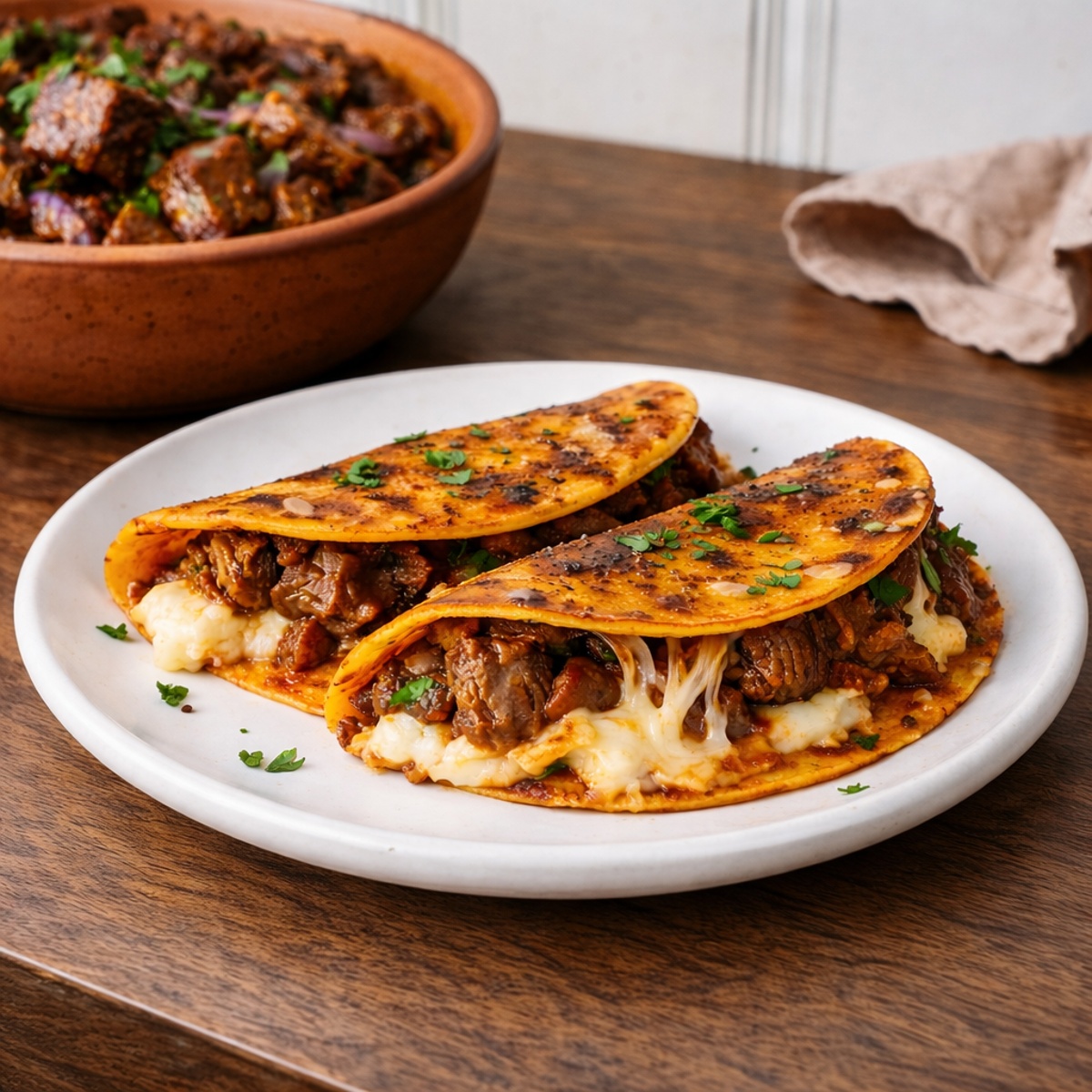
Serve directly from the same base in two forms:
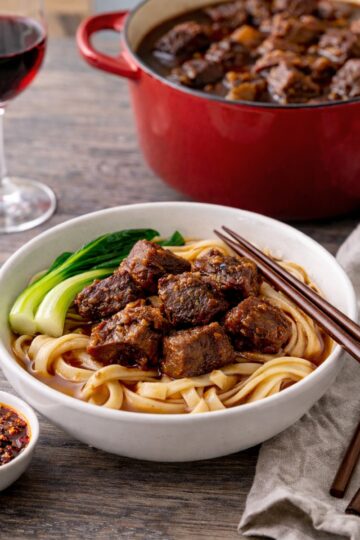
- Bowl: shredded beef with consommé, onion, cilantro, lime
- Tacos: tortillas dipped in fat, filled, griddled, served with broth
The broth should coat, not run.
The meat should hold, not collapse.
FAQ
Why is my broth thin?
Insufficient collagen breakdown or too much added liquid.
Why is it greasy?
Fat wasn’t separated and controlled.
Why does it taste flat?
Underdeveloped chiles or missing acid.
Can I skip the marinade?
You can—but the interior won’t match the broth.
Beef Birria (Adobo Braised Beef with Consommé)

Equipment
- Dutch oven or heavy braising pot
- High-speed blender
- Fine-mesh strainer
- Sheet tray
- Large skillet (for toasting chiles)
- Tongs
Ingredients
Beef
- 4 lbs beef short ribs or chuck roast cut into large chunks
- Kosher salt
Birria Adobo
- 8 cloves garlic
- 1 tablespoon whole black peppercorns
- 2 teaspoons whole cloves
- 1½ teaspoons ground ginger
- 1 teaspoon ground cumin
- 1 tablespoon + 1½ teaspoons dried thyme
- 1 tablespoon + 1½ teaspoons dried oregano
- 7 bay leaves
- 3 tablespoons sesame seeds
- 20 –22 dried ancho chiles stemmed and seeded
- 1 cup dark Mexican beer
- ¼ cup white vinegar
- Hot water as needed
Braise
- ½ medium white onion cut into chunks
- 6 cloves garlic
- 3 bay leaves
- 1 teaspoon whole black peppercorns
- Water to cover
- Banana leaves optional
Salsa / Consommé Base
- 8 cups canned diced tomatoes with juices
- 3 cloves garlic
- 10 –12 dried cascabel chiles stemmed and seeded
For Serving
- Corn tortillas
- Chopped cilantro
- Diced onion
- Lime wedges
Instructions
- Build the Adobo
- Preheat oven to 350°F. On a sheet tray, combine 8 cloves garlic, 1 tablespoon black peppercorns, 2 teaspoons whole cloves, 1½ teaspoons ground ginger, 1 teaspoon cumin, 1 tablespoon + 1½ teaspoons thyme, 1 tablespoon + 1½ teaspoons oregano, 7 bay leaves, and 3 tablespoons sesame seeds and toast for about 15 minutes, until fragrant.
- Meanwhile, cover 20–22 dried ancho chiles with boiling water and let sit for 20 minutes until softened.
- Transfer the toasted spices, softened chiles (reserving some soaking liquid), 1 cup dark Mexican beer, and ¼ cup white vinegar to a blender. Blend until completely smooth, adding enough chile soaking liquid as needed to form a thick, smooth paste. Strain if needed.
Season and Sear the Beef
- Season 4 lbs beef short ribs or chuck roast generously with kosher salt and let sit for 30 minutes.
- Heat a Dutch oven over medium-high heat and sear the beef in batches until browned on all sides, allowing fat to render. Remove and set aside.
Marinate
- Coat the seared beef with about half of the prepared adobo (reserve the remaining half) and refrigerate for at least 4 hours or overnight.
Braise
- Preheat oven to 325°F.
- Line the pot with banana leaves if using. Return the marinated beef to the pot along with ½ white onion (chunked), 6 cloves garlic, 3 bay leaves, and 1 teaspoon black peppercorns. Add enough water to cover the meat by about 1 inch.
- Cover tightly and braise for about 3 hours (short ribs) or 3–3.5 hours (chuck) until the meat is very tender and easily shreds. Remove the meat and reserve the braising liquid.
Build the Consommé
- Increase oven to 350°F. Place 8 cups canned diced tomatoes with juices and 3 cloves garlic on a sheet tray and roast for about 30 minutes until slightly caramelized.
- In a skillet, toast 10–12 dried cascabel chiles over medium heat for about 2 minutes until fragrant.
- Transfer the roasted tomatoes, garlic, cascabel chiles, and the reserved half of the adobo to a blender and blend until smooth.
- In a pot, combine this mixture with about 4 cups reserved braising liquid and bring to a simmer. Cook for 25–30 minutes until slightly thickened but still pourable.
- Return the shredded beef to the sauce and adjust salt to taste.
Serve
- Serve in bowls with chopped cilantro, diced onion, and lime wedges, or dip corn tortillas into the reserved fat from the broth, fill with beef, and griddle in a cast iron pan until crisp. Serve with consommé for dipping.
Notes
Short ribs vs chuck: Short ribs = richer, fattier. Chuck = leaner, slightly longer cook, cleaner finish.
Strain if needed: For a smoother consommé, strain after blending.
Fat is functional: Skim and reserve for tacos—don’t discard.
Make ahead: Best flavor develops overnight.
Comments
No Comments