
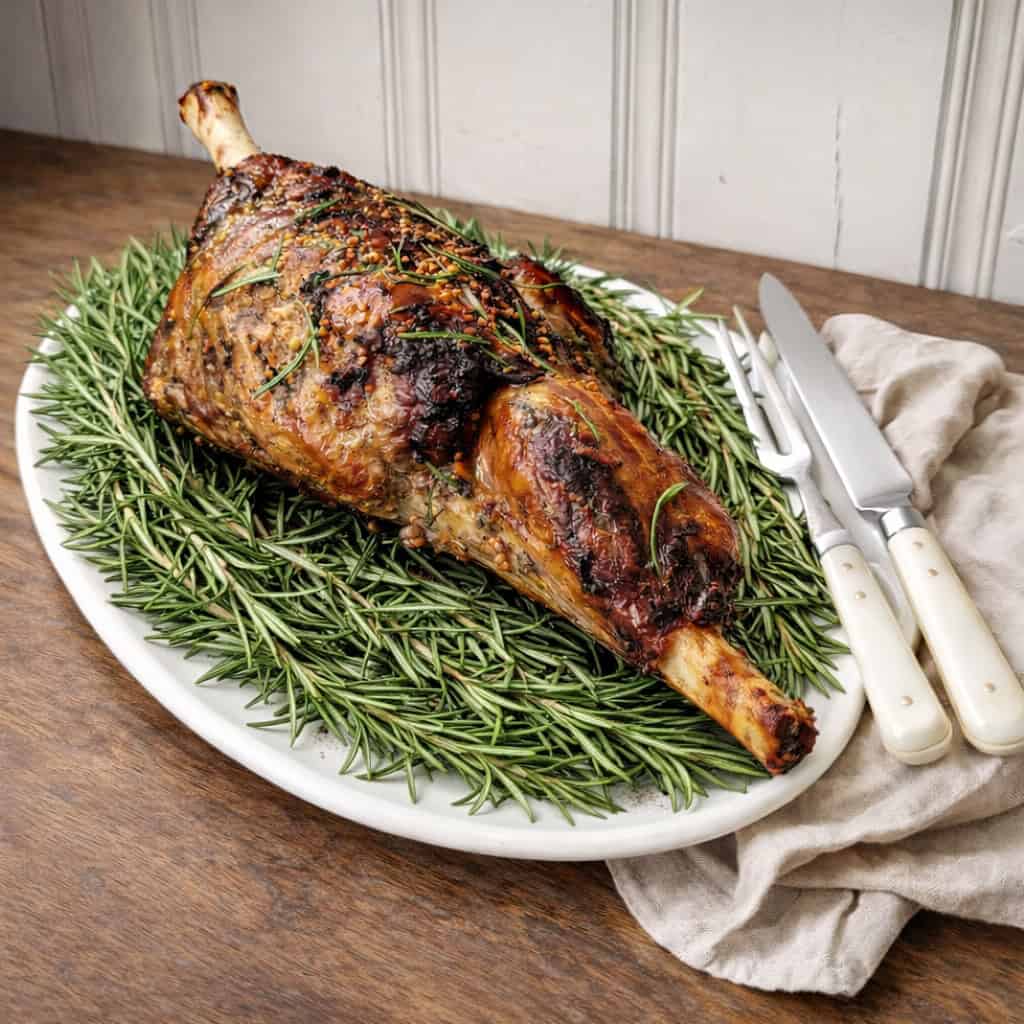
There are two choices at Easter—ham or lamb. Ham’s the safe option. Feeds a crowd, easy to reheat, gets the job done.
But lamb? That’s the one that actually means something to me.
In our home, lamb was Easter. Light garlic, plenty of fresh rosemary, salt and pepper—started hot to form a crust, then turned down to finish. I still remember those crispy, salty edges—the bits everyone quietly snuck as the roast rested.
Your choice: bone-in for flavor and tradition, a bit rustic, a bit showy—or boneless for control, clean slices, and a tighter execution.
Technique Intelligence
Lamb lives or dies by heat control.
The goal isn’t just doneness—it’s contrast. A high-heat start renders fat and builds a crust; lowering the temperature finishes the interior gently so it stays tender and juicy. The exterior should be deeply browned with crisp edges, while the inside stays evenly pink.
A meat thermometer isn’t optional—it’s the difference between precision and guesswork. Carryover cooking will continue to raise the internal temperature after roasting, so pulling early is part of the process.
Failure mode: overcooked, dry lamb from relying on time instead of temperature or skipping the rest.
Ingredients, With Intent
Lamb
Bone-in offers more flavor and a slightly more forgiving cook due to insulation from the bone. Boneless provides uniform thickness and more predictable results.
Garlic & Rosemary
This is a light hand, not a marinade. Garlic should support, not dominate. Rosemary provides structure and aroma.
Fat (Olive Oil)
Carries heat across the surface and helps develop the crust.
Salt
Drives flavor and draws moisture to the surface, aiding browning. Season early if possible.
Optional Dijon
Acts as a binder for the herb mixture and adds subtle depth without standing out.
Finish
A squeeze of lemon and a final touch of salt sharpen the richness just before serving.
Bone-In vs Boneless
This isn’t preference—it’s execution style.
Bone-In
The bone insulates the meat and slows heat transfer slightly, which can help retain moisture. It also contributes flavor and gives you a more traditional presentation.
The tradeoff is control. The irregular shape means the meat cooks unevenly—some sections will push closer to medium while others stay mid-rare.
Best for: centerpiece presentation, traditional tables, cooks comfortable reading doneness across the roast.
Boneless
Boneless lamb is about uniformity. When tied properly, it creates an even shape, allowing heat to move consistently from edge to center.
The result is predictable doneness and clean slicing, which makes it easier to serve and portion.
The tradeoff is slightly less depth of flavor compared to bone-in, though proper seasoning and technique close that gap.
Best for: controlled execution, dinner parties, and consistent results.
Decision Point
Choose bone-in for flavor and presentation.
Choose boneless for precision and control.
Neither is better—the outcome depends on how well it’s cooked.
What Can Go Wrong
Dry lamb → Overcooked past medium; no recovery.
No crust → Skipped high heat or surface was too wet.
Uneven doneness → Irregular shape (boneless not tied properly).
Flat flavor → Underseasoned before roasting.
Variations & Context
Bone-in roasts lean traditional—more visual, slightly less controlled.
Boneless roasts lean technical—clean slices, even doneness.
Slow roasting alone won’t develop the same crust. The initial high heat is what creates the defining texture.
This dish belongs as a centerpiece. It doesn’t need heavy sauces or embellishment—execution is the focus.
Wine Pairing
Lamb benefits from structure and acidity.
Red Bordeaux, Cabernet Sauvignon, or Syrah all work—tannin cuts through the fat and complements the roasted flavors. For a lighter approach, a Pinot Noir with good acidity can balance without overpowering.
Avoid overly sweet or heavily oaked wines—they dull the clarity of the roast.
Table Itinerary
Lamb sets the direction of the table—everything around it should support, not compete.
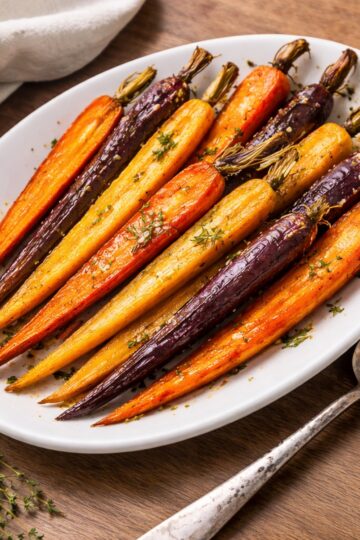
Something roasted or caramelized
Something green or fresh
Something that adds acidity
Serve the lamb carved or whole depending on the tone—either way, it leads.
Suggested Equipment
Roasting pan with rack for airflow and even heat
Sharp carving knife for clean slicing
Cutting board with groove to catch juices
Kitchen twine (for boneless shaping)
Microplane for light garlic application
Mixing bowl for herb mixture
Foil for resting
Meat thermometer — required for accuracy
Storage & Make-Ahead
Lamb holds well when handled properly.
Refrigerate tightly wrapped for up to 3–4 days. Store whole if possible to retain moisture.
Reheat gently at low temperature with added liquid to prevent drying. High heat breaks the texture and overcooks the meat.
Leftovers are best used sliced thin for sandwiches or reheated lightly with pan juices.
Easter Leg of Lamb (Two Ways): Bone-In vs Boneless

Equipment
- Roasting pan with rack
- Sharp carving knife + fork
- Kitchen twine (for boneless)
- Mixing bowl
Ingredients
- 1 leg of lamb:
- 5 –7 lb bone-in or
- 3 –5 lb boneless rolled and tied
- 2 –3 cloves garlic finely grated
- 2 tablespoon fresh rosemary finely chopped
- 2 tablespoon olive oil
- 2 teaspoon kosher salt
- 1 teaspoon black pepper
- 1 tablespoon Dijon mustard optional
- Lemon wedges for serving (optional)
Instructions
Season (Dry Brine)
- Season the lamb with salt, pepper, garlic, rosemary, olive oil, and Dijon (if using).
- Place uncovered in the refrigerator for at least 4 hours, ideally overnight.
- Shape (Boneless Only)
- Pat dry thoroughly to ensure proper browning.
- If using boneless lamb, roll into a tight, even roast and tie with kitchen twine every 1½–2 inches.
Prep for Roasting
- Remove from the refrigerator 1 hour before cooking.
Roast — High Heat Start
- Preheat oven to 450°F.
- Roast for 15–20 minutes to develop a crust.
- Reduce Heat & Finish
Lower oven to 325°F and continue roasting until internal temperature reaches:
- 125–130°F for medium-rare
- 130–135°F for medium
Approximate Total Roasting Time (including high heat start):
- Bone-in (5–7 lb): 1 hour 30 minutes to 1 hour 45 minutes
- Boneless (3–5 lb): 1 hour to 1 hour 20 minutes
- Per-Pound Guide (after initial high heat):
- Bone-in: 15–18 minutes per pound
- Boneless: 12–15 minutes per pound
- (Always cook to temperature—time is a guide.)
Rest
- Remove from oven and rest 20 minutes, loosely tented with foil.
Carve & Serve
- Slice against the grain.
- Bone-in: carve along the bone, then slice
- Boneless: slice into even rounds
- Finish with lemon and flaky salt if desired.
Notes
Seasoning 4–24 hours ahead improves flavor and crust (dry brine)
Patting the surface dry is critical for browning
Start at high heat to form the crust—the crispy, salty edges
Lower heat ensures a tender interior without overcooking
Boneless lamb cooks more evenly; bone-in offers deeper flavor
Tying boneless lamb is essential for even results
Always use a meat thermometer—time is only a guide
Carryover cooking will raise internal temperature while resting
Comments
No Comments