
A traditional ragu alla Bolognese, slow cooked with beef and pork until it settles in over time.
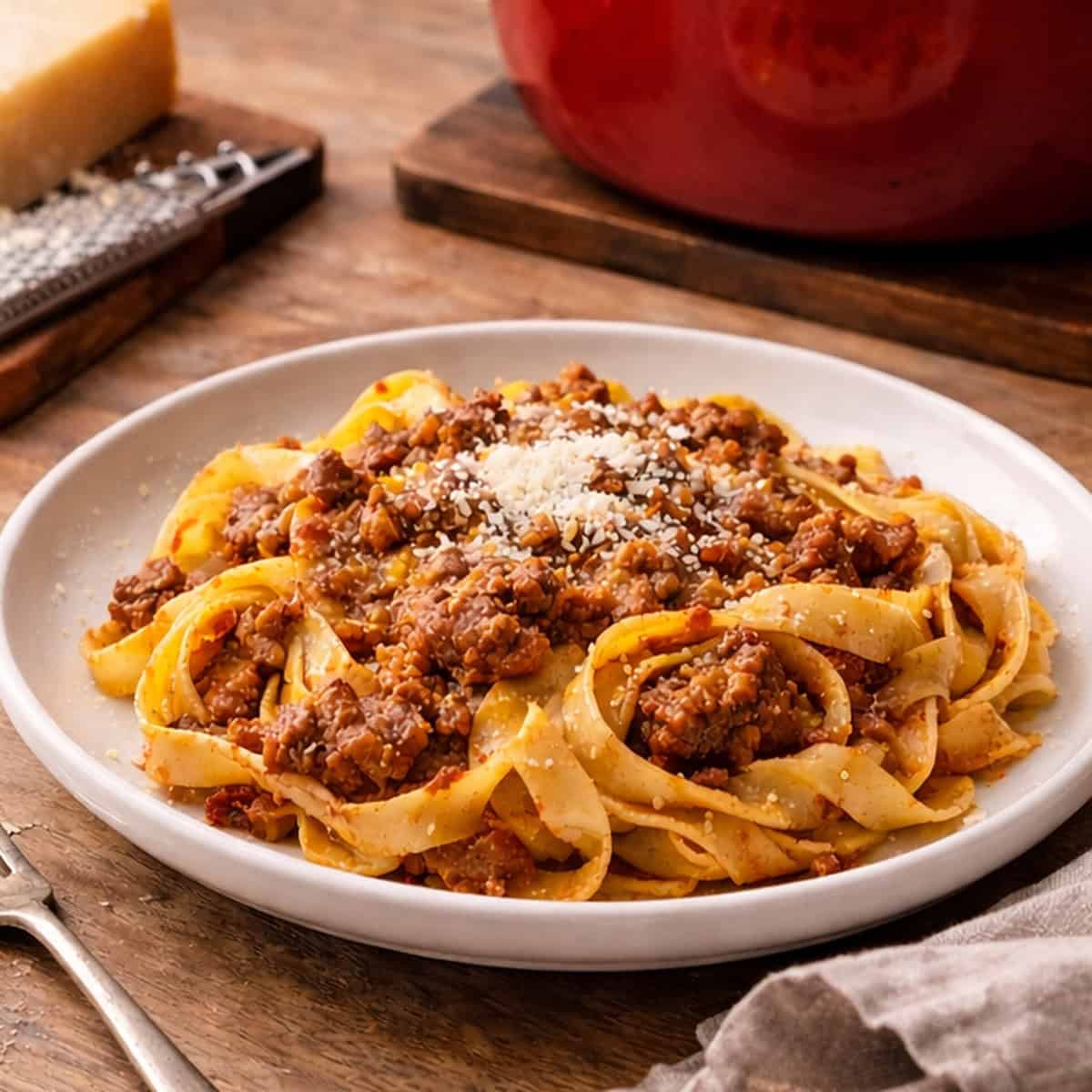
There’s no big reveal, no glossy finish, no reason to Instagram it halfway through. It starts plain, almost unimpressive — chopped vegetables sweating quietly, meat giving up its moisture, a pot that smells more like dinner-in-progress than anything finished.
And then, a few hours later, it tastes like something you’ve known your whole life.
Real Bolognese is patient food. It’s built on attention, not tricks. The kind of recipe that doesn’t care if you’re impressed — it just wants you to sit down.
Ingredient Intelligence (Why Each One Earns Its Place)
The Meat
Bolognese is not a beef sauce. It’s a meat sauce, and it works because beef and pork do different jobs.
Beef brings structure. Pork brings fat and sweetness. Together, they create something cohesive instead of crumbly.
This is one of those moments where quality meat matters more than seasoning. Freshly ground meat — whether from a butcher or a trusted online source — behaves differently in the pot. It browns cleanly, releases moisture predictably, and doesn’t fight you.
Affiliate-worthy, honestly.
The Soffritto
Onion, carrot, celery. No variations, no clever swaps.
Cooked gently, they disappear into the sauce and leave behind sweetness and depth. Rushed or browned, they turn harsh. This is where time starts doing the work for you.
A sharp chef’s knife or a food processor earns its keep here — not for speed, but for consistency. Even pieces cook evenly. Uneven ones don’t.
Milk
Milk is the ingredient people side-eye. It’s also the ingredient that makes the sauce feel finished.
Added early and cooked down completely, milk softens the meat, rounds the edges, and keeps the sauce from tipping acidic later. You never taste “milk.” You taste balance.
Skip it and you’ll spend the rest of the cook trying to fix what never needed breaking.
Wine
White wine is traditional, and for good reason. It lifts without darkening. It adds acidity without pulling the sauce toward tomato land.
Use something dry. Use something drinkable. If you wouldn’t pour a glass, don’t pour it into the pot.
Tomatoes (Kept on a Short Leash)
Bolognese is not a red sauce.
Tomato paste or a small amount of crushed tomato is there for depth, not dominance. If the sauce starts to look like marinara, you’ve gone too far.
This is meat with tomato — not tomato with meat.
Why This Recipe Works
This recipe works because it respects order, heat, and restraint.
The vegetables soften before they brown.
The meat releases moisture before it browns.
The milk goes in before the wine.
The wine cooks off completely before tomatoes enter.
The sauce simmers uncovered, gently, until everything relaxes.
Nothing dramatic happens. That’s the point.
Where Equipment Actually Matters (Affiliate-Worthy, Not Optional)
This is not the place for thin pots and hot spots.
A heavy-bottomed Dutch oven or enameled cast-iron pot is doing real work here — holding steady heat for hours without scorching the bottom or rushing evaporation. If there’s one piece of cookware worth linking, it’s this.
A wooden spoon or flat-edged spatula matters more than you think. You want to scrape the bottom cleanly without shredding the meat.
A lid that can sit slightly ajar lets the sauce reduce without drying out. That’s not a flourish — that’s control.
Equipment
- Heavy-bottomed Dutch oven or enameled cast-iron pot
- Wooden spoon or flat-edged spatula
- Sharp chef’s knife
- Cutting board
Optional but Useful
- Food processor (for soffritto prep)
- Splatter guard (long, quiet simmer)
- Digital scale (consistent meat ratios if you batch cook)
Wine Pairing
Ragù alla Bolognese is slow, savory, and built on restraint rather than brightness. The wine should mirror that patience.
In Emilia-Romagna, the traditional pairing is Sangiovese di Romagna—medium-bodied, high in acidity, and structured enough to handle long-cooked meat without overpowering it. It cleans the palate between bites and keeps the dish from feeling heavy.
Another regional option is Lambrusco, served dry and lightly chilled. Its natural acidity and gentle fizz cut through richness and reset the palate, especially when the ragù is served with fresh egg pasta.
Outside the region, look for reds with balance rather than muscle: Barbera, Dolcetto, or a restrained Montepulciano d’Abruzzo. Avoid heavily oaked or high-alcohol wines. Ragù doesn’t need sweetness or power—it needs clarity.
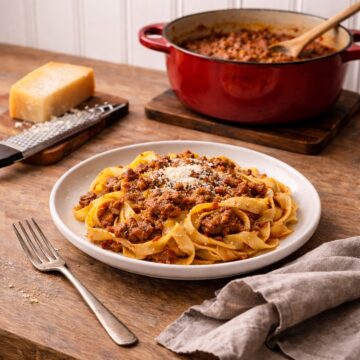
Bolognese (Ragù alla Bolognese)

Ingredients
Ingredients
Meat
- 1 lb ground beef
- ½ lb ground pork
Soffritto
- 1 onion finely diced
- 1 carrot finely diced
- 1 celery stalk finely diced
Liquids & Fat
- 2 tablespoons olive oil
- 2 tablespoons butter
- 1 cup whole milk
- 1 cup dry white wine
Tomato
- 2 tablespoons tomato paste
- Optional: ½ cup crushed tomatoes
Seasoning
- Kosher salt
- Freshly ground black pepper
To Finish
- Fresh tagliatelle for serving
- Parmigiano-Reggiano grated
Instructions
Instructions
Build the Base
- Heat 2 tablespoons olive oil and 2 tablespoons butter in a heavy-bottomed pot over medium heat until the butter melts and the oil shimmers quietly.
- Add 1 finely diced onion, 1 finely diced carrot, and 1 finely diced celery stalk, along with a pinch of kosher salt. The vegetables should sizzle gently.
- Cook for 10–12 minutes, stirring occasionally, until the vegetables soften and turn translucent. They should smell sweet and vegetal, with no browning at the edges.
Brown the Meat Properly
- Increase the heat to medium-high and add 1 lb ground beef and ½ lb ground pork. You should hear a confident sizzle when the meat hits the pot.
- Spread the meat into an even layer and leave it undisturbed for several minutes so it can brown properly.
- As the moisture cooks off, the aroma deepens and brown bits begin to form on the bottom of the pot. This is what you want.
- Break up the meat and continue cooking until it’s well browned and slightly crisp in places, with no visible liquid remaining.
- Scrape the bottom of the pot to release the browned bits — they should lift easily and smell roasted, not burnt.
Build the Sauce
- Stir in 2 tablespoons tomato paste and cook for 2–3 minutes, scraping the pot as you go, until the paste darkens slightly and loses its raw edge.
- Pour in 1 cup dry white wine and let it simmer until fully reduced. The sharp alcohol smell should disappear, leaving behind a savory glaze.
- Add 1 cup whole milk and lower the heat. Let it cook gently until it’s fully absorbed and no longer visible, softening the meat and rounding the sauce.
- Season lightly with kosher salt and freshly ground black pepper.
Slow Simmer
- Add ½ cup crushed tomatoes, if using. The sauce should remain meat-forward, not red.
- Reduce the heat to low and let the ragù simmer uncovered for 2–3 hours, stirring occasionally. You’re looking for slow, lazy bubbles and a sauce that gradually thickens and comes together.
- Taste and adjust seasoning. At this point, the flavor should be deep, savory, and settled, with nothing sharp sticking out.
Serve
- Spoon the ragù over fresh tagliatelle or toss gently with pasta until it clings without pooling.
- Finish with freshly grated Parmigiano-Reggiano and serve right away.
Notes
How Bolognese Is Served
Traditionally, Bolognese goes with fresh tagliatelle. Wide pasta holds the sauce. Thin pasta lets it slide off.
It’s finished with grated Parmigiano-Reggiano and nothing else. No herbs. No garnish. No apology.
Comments
No Comments