
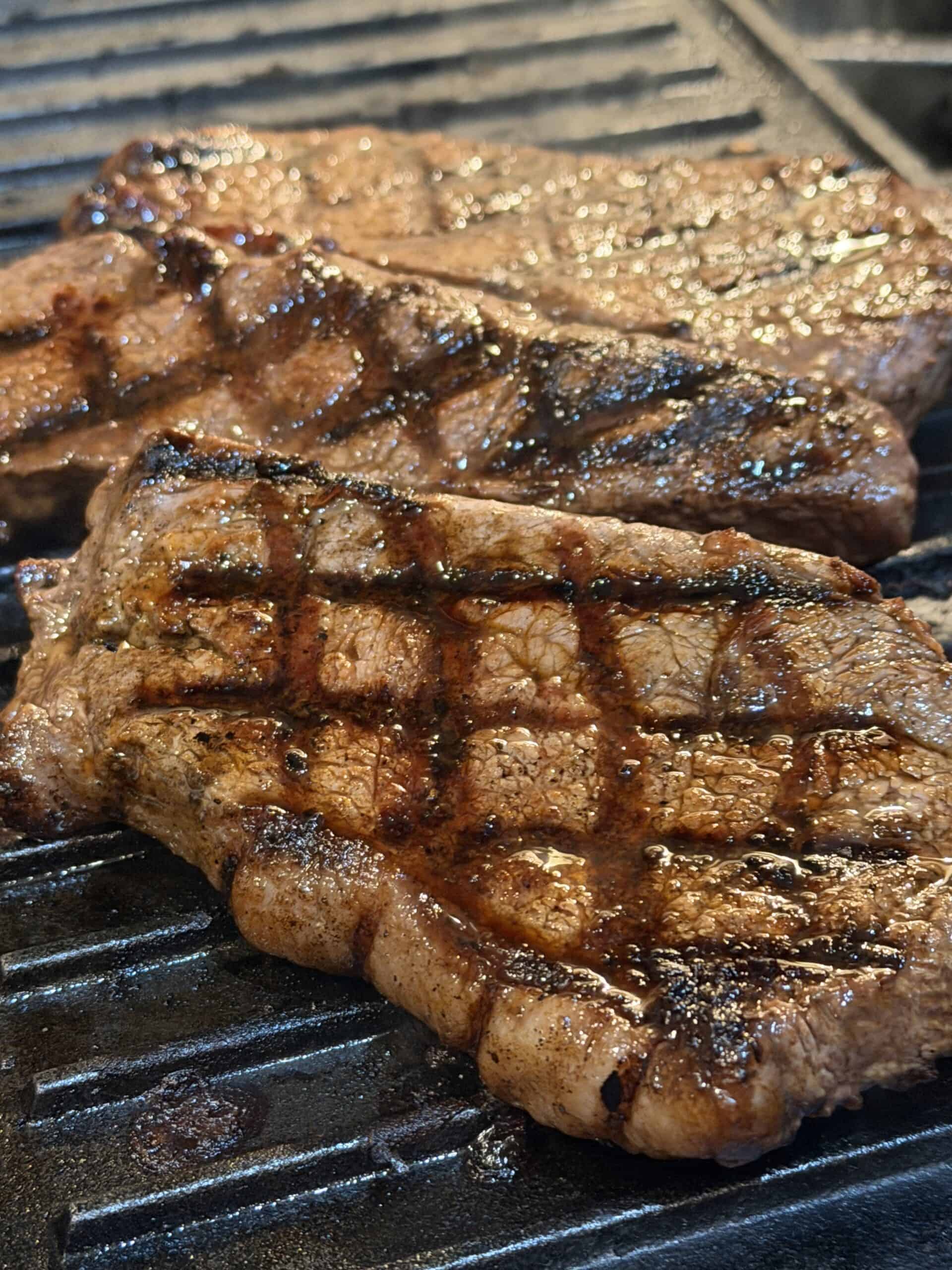
A good steak does not require a backyard or a ritual involving charcoal and weather reports. What it needs is intense heat, a dry surface, and restraint. Indoors, the flavor comes from browning — the deep, savory crust formed when meat meets a properly heated pan or broiler — not from smoke or grill marks.
Done correctly, the result is a dark, aromatic exterior and a tender interior. Done poorly, it is gray, wet, and disappointing.
THE RULE
Dry steak.
Hot surface.
Leave it alone.
Everything else is refinement.
WHAT ACTUALLY HAPPENS
When the steak touches hot metal, surface moisture flashes off as steam. Only then can browning begin. Proteins and sugars react, forming the complex flavors associated with roasted meat. Fat renders, carrying flavor and improving contact with the pan. Heat moves inward gradually, cooking the center without drying it out.
If the surface is damp or the pan is timidly warm, the steak releases liquid and stews in its own juices. Browning never has a chance.
Indoor grilling is not imitation barbecue. It is controlled, high-heat cooking.
HOW TO DO IT PROPERLY
Pat the steak completely dry.
Season just before cooking.
Heat the pan until it is unquestionably hot.
Add a thin film of high-smoke-point oil if needed.
Lay the steak down and resist the urge to fuss with it.
Turn when a crust has formed.
Finish thicker cuts in the oven or under the broiler.
Rest before slicing.
That’s the discipline.
SIGNS OF SUCCESS
A deep brown crust, not pale or blackened
A steady, confident sizzle
Meat that releases from the pan without tearing
Rendered fat along the edges
An aroma that suggests dinner is inevitable
WHEN IT GOES WRONG
Pan not hot enough → gray meat
Surface too wet → steaming
Constant turning → no crust
Crowding → temperature collapse
Too much oil → smoke without browning
If the steak looks anemic, heat or patience was lacking.
TOOLS THAT WORK
Cast-iron skillet: heavy, stable, unforgiving in the best way
Flat griddle: even browning across the surface
Broiler: fierce heat from above
Grill pan: marks, but less flavor
Electric grill: controlled, but rarely thrilling
A flat surface browns more meat than ridges ever will.
SMOKE
Some smoke is inevitable. It comes from fat and meat juices vaporizing, not from theatrical flames. Ventilation helps. Excess smoke usually means the pan is overloaded with oil or moisture.
WHY THIS MATTERS
Steak is often treated as a luxury, but the technique is simple. Mastering indoor cooking means you can produce a satisfying result whenever you want, regardless of season or space.
The pleasure comes from the crust — the moment heat transforms muscle into something rich and deeply savory. Smoke is optional. Competence is not.
FREQUENTLY ASKED QUESTIONS
Can indoor steak taste as good as grilled steak?
Yes, though without smoke. Most of the flavor comes from browning.
Why does steak stick to the pan?
Either the pan is not hot enough or the crust has not formed yet.
Should I oil the steak or the pan?
A light coating on the meat reduces smoke and improves contact.
Why rest the steak?
Resting allows juices to redistribute, preventing them from spilling onto the plate instead of staying in the meat.
What thickness works best indoors?
Moderately thick steaks are easiest to cook evenly without overcooking the interior.
Indoor Grilled Steak (Steakhouse Method Without a Grill)

Equipment
- Cast-iron skillet or heavy grill pan
- Tongs
- Instant-read thermometer (recommended)
- Paper towels
- Oven mitt
Ingredients
Ingredients
- 2 boneless steaks 1–1½ inches thick (ribeye, strip, or sirloin), about 10–12 oz each
- 1 –2 teaspoons kosher salt
- ½ teaspoon freshly ground black pepper
- 1 tablespoon canola oil
- 1 tablespoon unsalted butter optional
- 1 garlic clove crushed (optional)
- 1 sprig thyme or rosemary optional
Instructions
Instructions
Prepare the steaks
- Remove steaks from refrigeration 20–30 minutes before cooking. Pat completely dry with paper towels to eliminate surface moisture.
Season
- Season both sides with 1–2 teaspoons kosher salt and ½ teaspoon black pepper just before cooking.
Preheat the cooking surface
- Heat a heavy cast-iron skillet or grill pan over high heat until very hot. The pan should be just beginning to smoke.
Add oil
- Add 1 tablespoon canola oil and swirl to coat the surface evenly.
Sear the first side
- Place steaks in the pan and do not move them. Cook 3–5 minutes until a deep brown crust forms and the meat releases naturally.
Flip
- Turn steaks and cook the second side for 2–4 minutes for medium-rare, adjusting time for thickness and desired doneness.
Optional butter baste
- Reduce heat slightly. Add 1 tablespoon butter, 1 crushed garlic clove, and herbs if using. Tilt the pan and spoon the melted butter over the steaks for 30–60 seconds.
Finish if needed
- For thicker steaks, transfer the pan to a 400°F (205°C) oven or reduce heat and cook until the desired internal temperature is reached.
Rest
- Transfer steaks to a plate and rest 5–10 minutes before slicing or serving.
Notes
Internal Temperature Guide Rare: 120–125°F (49–52°C) Medium-rare: 130–135°F (54–57°C) Medium: 140–145°F (60–63°C) Medium-well: 150–155°F (66–68°C) Remove from heat about 5°F below target; temperature will rise during resting. Storage Refrigerate leftovers in an airtight container up to 3 days. Reheat gently in a skillet or enjoy cold, sliced.
Comments
No Comments