
By Chef Samantha Tilley, executive chef at The Market CT and former chef-owner of Mockingbird Kitchen & Bar.
Spaghetti aglio e olio, garlic and oil, comes from the cucina povera of southern and central Italy, the cooking of poor kitchens that turned a few humble ingredients into a real meal. It is most closely tied to Naples and Rome, and it is the dish Italians make when the pantry looks bare but dinner still matters: olive oil, garlic, dried chili and pasta. It is also the classic spaghettata di mezzanotte, the midnight spaghetti friends cook together after a night out, or what someone makes after a long day of travel. Nothing decorative, nothing hidden.
Don't let the short ingredient list fool you. Italian cooks judge technique on dishes exactly like this. There is nowhere to hide: the garlic has to perfume the oil without browning, and starchy pasta water has to turn that oil into a glossy sauce that clings to every strand. Master this and you understand how half of Italian pasta works. You are no longer following a recipe; you are cooking a pattern.
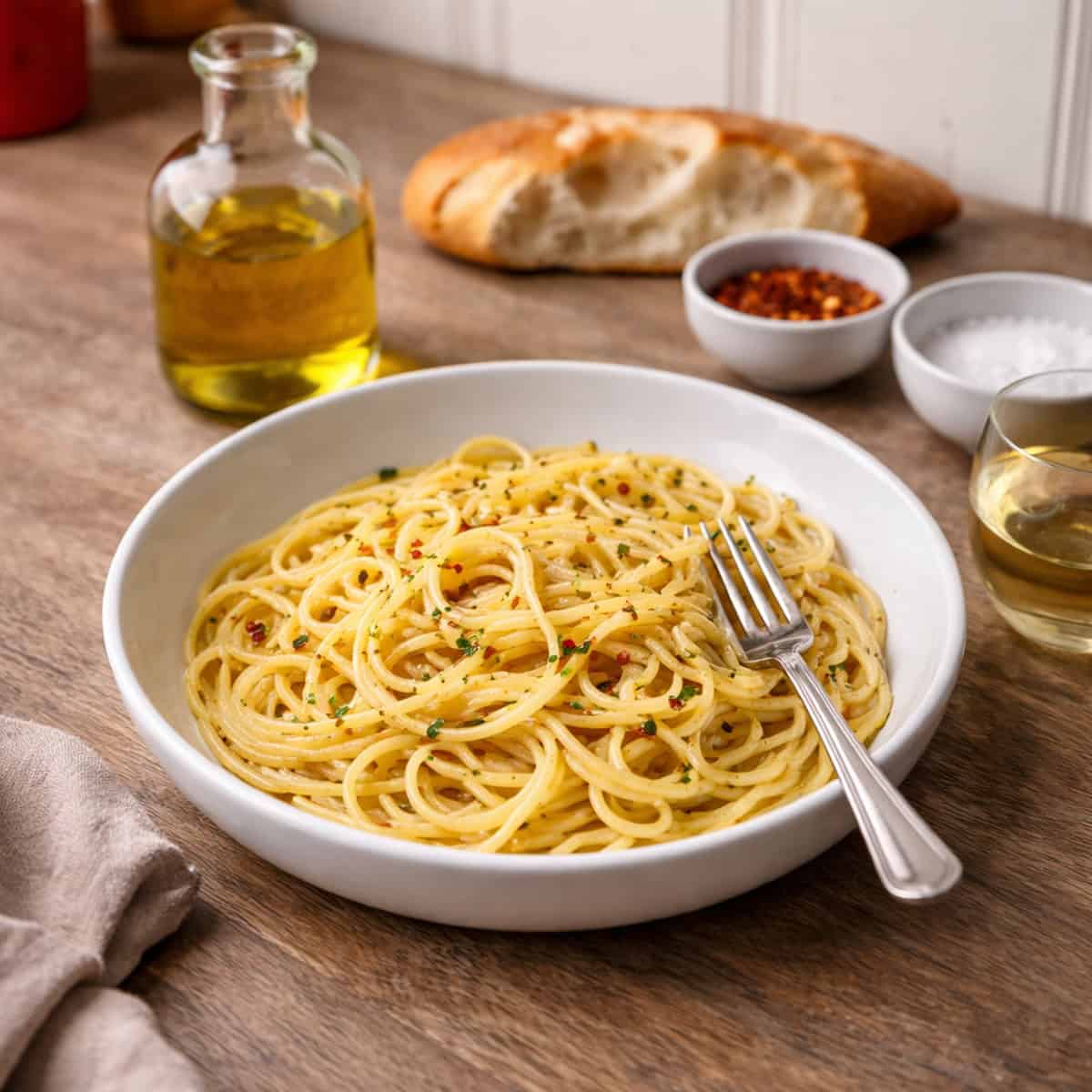
Done right, it is glossy and clean, fragrant with garlic and warm with chili, and it smells like a trattoria kitchen the moment the oil hits the pan. Serve it in warmed bowls, right away, with a glass of wine and a piece of bread to wipe the plate. Dinner doesn't require complexity, only attention.
Technique Intelligence
Technique: Pasta, Noodles & Dumplings · Chapter 31 · Technique School
Infuse the garlic, don't fry it
Start the sliced garlic in cool oil over low heat and let it warm slowly until it is soft, fragrant and just pale gold at the edges. If it turns dark golden or brown, it's bitter. Start again; it's only garlic.
Save the pasta water
Before you drain the spaghetti, scoop out at least a cup of the cooking water. Its starch is what turns oil into sauce. Without it you get oily pasta, not silky pasta.
Finish the pasta in the pan
Pull the spaghetti a minute or two before it's al dente and move it straight into the garlic oil. It finishes cooking there and absorbs the flavor. Pasta that's fully cooked and drained before it meets the sauce never really comes together with it.
Toss hard to emulsify
Add a splash of pasta water, raise the heat briefly and toss and stir constantly. The motion combines the oil and starchy water into a creamy, cohesive sauce. Add more water a little at a time until every strand is glossy.
Serve it immediately
This dish goes downhill fast once it's off the heat. Have warmed bowls ready and get it to the table.
Ingredient Intelligence
Extra-Virgin Olive Oil
The oil is the sauce, so use a good one: fresh, green and a little peppery on the finish. A flat, neutral bulk oil makes a flat dish.
Garlic
Slice it thin. Slices release their flavor gradually and soften evenly. Minced garlic burns almost instantly and turns harsh.
Dried Chili (Peperoncino)
Crushed dried chili brings warmth, not fire. In Italy it is whole dried peperoncino or flakes, never chili powder or hot sauce.
Spaghetti
Long strands are traditional. Bronze-cut pasta has a rough surface that holds the sauce far better than slick, Teflon-cut pasta. De Cecco and Rummo are widely available bronze-cut brands.
Parsley and Salt
Flat-leaf parsley adds freshness and color; some Roman cooks leave it out. Salt the pasta water well, like the sea, because there is nothing else in the dish to season the pasta.
Variations
- With olives: See Spaghetti Aglio e Olio with Green Olives for a briny version.
- Anchovy: Melt 2 or 3 anchovy fillets into the oil with the garlic for savory depth.
- Toasted breadcrumbs: Finish with crisp breadcrumbs toasted in olive oil, the southern Italian way.
- Lemon: Add the grated zest of 1 lemon at the end for brightness.
- Greens: Toss in a handful of arugula or broccoli rabe at the end.
Make Ahead, Storage and Freezing
Make ahead: Slice the garlic and chop the parsley up to a few hours ahead. Cook the pasta to order; this dish doesn't wait.
Storage: Leftovers keep, covered, in the refrigerator up to 2 days, though they lose their silkiness.
Freezing: Not recommended.
Reheating: Warm in a skillet with a splash of water and a drizzle of olive oil, tossing until glossy again.
What to Serve with Spaghetti Aglio e Olio
- A simple green salad with lemon and olive oil
- Grilled or roasted vegetables
- Italian Sausage Stuffed Long Hot Peppers to start
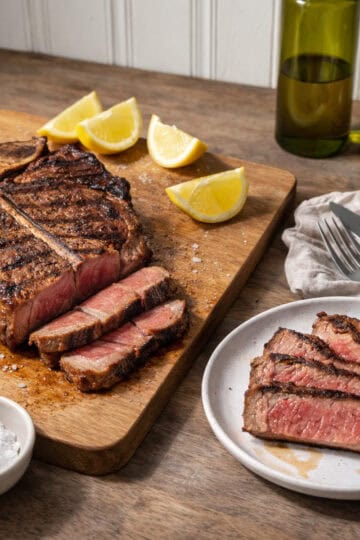
- Bistecca alla Fiorentina as the main course, Italian style
- A glass of Verdicchio or a light Chianti
Spaghetti Aglio e Olio FAQ
What does aglio e olio mean? Garlic and oil in Italian.
Why is my aglio e olio oily instead of silky? There wasn't enough pasta water or it wasn't tossed hard enough to emulsify. Add more starchy water and keep tossing over heat.
Why does it taste bitter? The garlic browned. Keep the heat low and pull it when it's pale gold.
Do Italians put cheese on aglio e olio? Traditionally, no. A little grated Parmigiano-Reggiano or Pecorino is a common home addition, but the classic dish is just garlic, oil, chili and pasta.
Can I use a different pasta shape? Long pasta is traditional. Linguine and spaghettini work well.
Spaghetti Aglio e Olio (Garlic and Oil Pasta)

Equipment
- Large pasta pot
- Tongs
- Ladle or heatproof cup
Ingredients
Ingredients
- 8 oz 225 g spaghetti
- ¼ cup 60 ml extra virgin olive oil
- 4 –5 cloves garlic thinly sliced
- ½ teaspoon crushed red pepper flakes or to taste
- ¼ cup fresh parsley finely chopped (optional)
- Kosher salt for pasta water
- ½ –1 cup reserved pasta cooking water as needed
- Optional — Italian-American Variation:
- 1 –2 teaspoon fresh lemon juice to taste
- Freshly grated Parmigiano-Reggiano
Instructions
- Boil the water: Bring a large pot of water to a rolling boil and salt it generously with kosher salt until it tastes like the sea.
- Cook the spaghetti: Add 8 oz (225 g) spaghetti and cook for about 8 to 10 minutes, stirring occasionally to prevent sticking.
- Test for al dente: Begin testing early. Lift a strand with tongs and bite through it. The pasta should be tender on the outside with a faint firm core in the center, not crunchy and not fully soft. A tiny opaque line or dot in the middle means it is ready to finish in the sauce.
- Warm the oil: While the pasta cooks, pour ¼ cup (60 ml) extra virgin olive oil into a wide skillet and warm over medium-low heat.
- Soften the garlic: Add 4 to 5 thinly sliced garlic cloves and cook gently, stirring often, until softened and fragrant, about 2 to 3 minutes. The goal is to perfume the oil, not brown the garlic.
- Infuse the pepper flakes: Add ½ teaspoon crushed red pepper flakes and cook briefly to infuse the oil, about 30 seconds.
- Move the pasta to the skillet: Before draining, reserve about 1 cup of the starchy pasta cooking water. Using tongs, transfer the nearly cooked pasta directly into the skillet. Add about ¼ cup pasta water to start.
- Emulsify the sauce: Increase heat to medium and toss continuously. The oil and starchy water will combine into a silky emulsion that coats the pasta. Add more pasta water, a few tablespoons at a time, until the pasta looks glossy and fluid rather than oily or dry.
- Finish cooking: Keep tossing until the pasta is tender and fully cooked. The sound in the pan will shift from watery bubbling to a softer sizzle as the sauce tightens around the noodles.
- Add the parsley: Remove from heat. Stir in ¼ cup chopped fresh parsley, if using. Taste and adjust salt.
- Italian-American variation (optional): Add 1 to 2 teaspoons fresh lemon juice and toss gently to brighten the dish.
- Serve: Serve immediately while glossy and aromatic. Grated Parmigiano-Reggiano may be added at the table.
Notes
Made this? Leave a star rating and a comment below: parsley or no parsley, and how much chili? I read every comment.
Comments
No Comments