
Char siu is the smell that makes you stop walking.
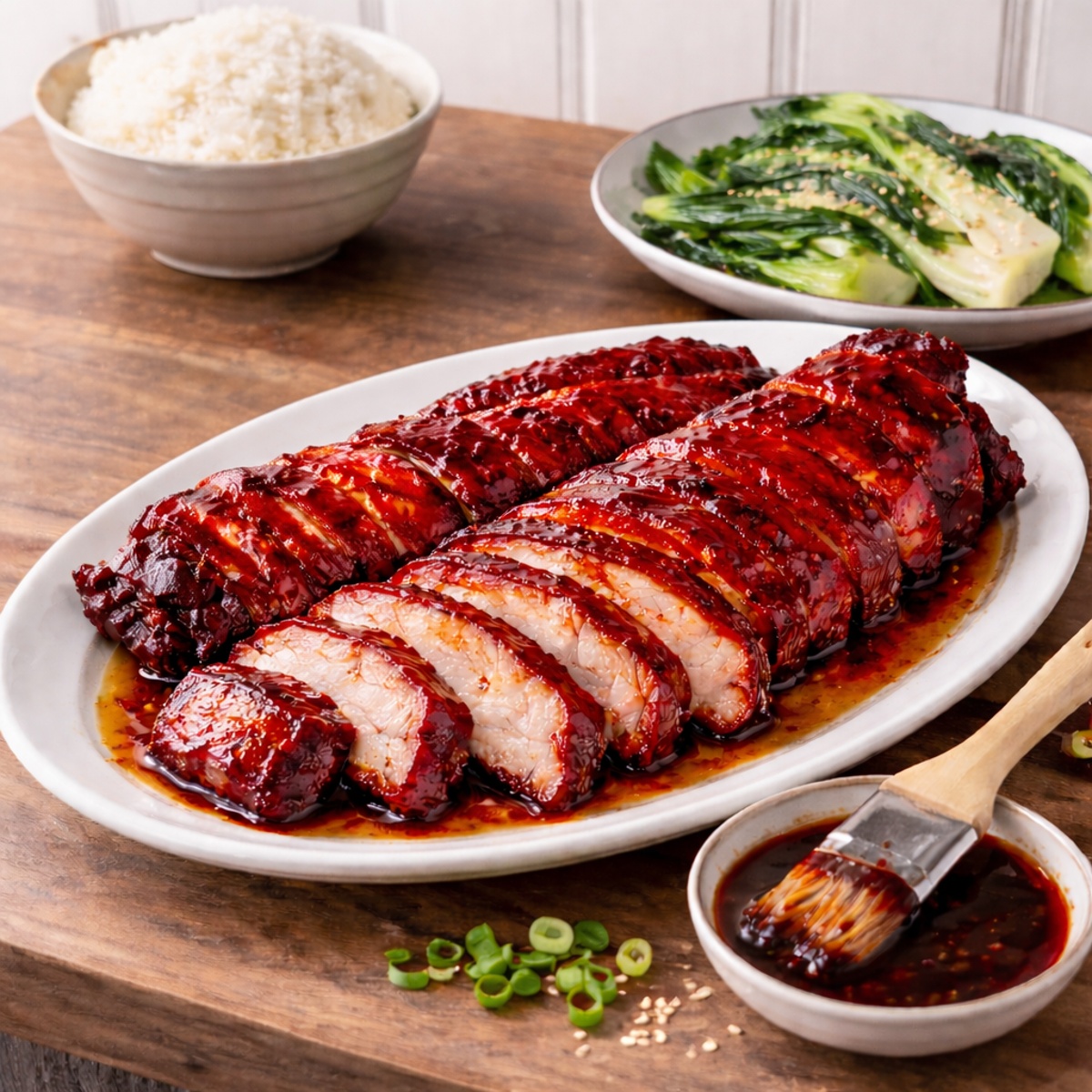
Sweet smoke drifting out of a Chinatown window. Pork hanging in lacquered strips, edges darkened just enough to flirt with bitterness. It’s not shy food. But it is disciplined food — sugar, salt, fat, and heat kept in careful balance.
Char siu doesn’t whisper. It persuades.
At its best, the pork is tender but resilient, glossy without being sticky, sweet without crossing into candy. Every slice tells you someone paid attention — to the cut, the marinade, the heat, and most of all, the timing.
What Char Siu Is Really About
Char siu isn’t just Chinese BBQ pork.
It’s controlled caramelization.
You’re managing:
- Pork with enough fat to stay juicy
- A marinade that penetrates without overpowering
- Sugar that browns instead of burns
- Heat applied in stages, not all at once
This is barbecue built on repetition and restraint, not bravado.
Pork Intelligence(猪肉的选择)
Traditional char siu uses pork shoulder or pork collar for a reason. These cuts have fat woven through the muscle, not layered on top. That fat bastes the meat from the inside as it cooks, keeping the pork supple even under aggressive heat.
Lean cuts dry out. Too much fat turns greasy. Shoulder gives you margin — and flavor.
Cutting the pork into long strips isn’t aesthetic. It increases surface area, allowing the glaze to build in layers and the edges to char without sacrificing the center.
Marinade Intelligence(腌料逻辑)
Char siu marinades are sweet-forward, but they’re anchored by fermented depth and spice.
- Soy sauce provides salt and backbone
- Hoisin adds sweetness and body
- Molasses deepens color and bitterness
- Five-spice brings warmth without heat
- Sugar fuels caramelization, not flavor
The marinade isn’t meant to cook the pork. It’s meant to season it thoroughly and set the stage for glazing later.
Time matters here. Hours, not minutes.
Two Legitimate Ways to Cook Char Siu
Char siu has always evolved with available tools. What matters is the result — not nostalgia for the fire.
Traditional Oven or Grill Method
This is the classic approach: high heat, frequent turning, repeated glazing. It’s tactile, visual cooking. You watch the pork darken, feel when it’s ready to glaze again, and know when to stop.
This method delivers the most aggressive char and is closest to what you’d see hanging in a Cantonese roast shop.
Sous Vide + Roast (Passport Kitchen Method)
Sous vide isn’t a shortcut here — it’s a precision tool.
By gently cooking the pork in the marinade first, you guarantee juiciness and even doneness. The pork comes out tender and ready to take on heat. The oven then does what it’s always done best: caramelize, lacquer, and char.
The result is char siu that’s remarkably consistent, especially in home kitchens where oven hot spots can sabotage sugar-heavy glazes.
Both methods are valid. Choose based on your kitchen and your temperament.
Technique Intelligence: Glaze in Layers
(技术关键)
Char siu isn’t sauced — it’s built.
The glaze goes on in stages, brushed lightly and repeatedly. Each layer sets before the next goes on. Dumping it all at once leads to burning, bitterness, and disappointment.
Patience here pays off in shine, texture, and depth.
Wine Pairing
Char siu lives in the space between sweet and savory—honeyed glaze, fermented depth, roasted edges. The wine needs acidity and a little generosity, not tannic muscle.
A dry or off-dry Riesling is the most reliable match. High acidity cuts through the fat, while a touch of residual sugar mirrors the glaze without tipping into dessert. Look for balance, not sweetness.
If you prefer red, keep it light and chill it slightly. Gamay or a restrained Pinot Noir works when the pork leans smoky rather than sticky. The goal is freshness, not structure.
Sparkling wine also belongs here. A Brut sparkling—especially something clean and dry—resets the palate and keeps the dish from feeling heavy over a full meal.
Avoid heavily oaked reds or high-alcohol wines. Sugar and smoke amplify heat and bitterness, and char siu doesn’t need help being bold.
Char Siu(叉烧)

Ingredients
Ingredients
- 3 lb boneless pork shoulder / pork butt cut into long strips
- Marinade
- ¼ cup granulated white sugar
- 2 teaspoons salt
- ½ teaspoon five-spice powder
- ¼ teaspoon white pepper
- ½ teaspoon sesame oil
- 1 tablespoon Shaoxing rice wine or dry sherry; optional
- 1 tablespoon soy sauce
- 1 tablespoon hoisin sauce
- 2 teaspoons molasses
- ⅛ teaspoon red food coloring optional
- 3 cloves garlic finely minced
Glaze
- 2 tablespoons maltose or honey
- 1 tablespoon hot water
- Reserved marinade
Instructions
Instructions
Marinate the Pork (Both Methods)
- In a bowl, combine all marinade ingredients.
- Add pork and coat thoroughly.
- Cover and refrigerate 8–24 hours, turning occasionally.
- Remove pork from marinade and reserve marinade for glazing.
Method 1: Traditional Oven-Roasted Char Siu
- Preheat oven to 475°F (245°C).
- Line a sheet pan with foil and place a metal rack on top.
- Arrange pork on the rack with space between pieces.
- Pour 1½ cups water into the pan below the rack.
- Roast pork for 10 minutes at 475°F, then reduce oven temperature to 375°F (190°C).
- Continue roasting for 15 minutes.
- Flip pork, rotate pan 180°, and add another cup of water if the pan is dry.
- Roast an additional 15 minutes.
- Meanwhile, combine reserved marinade with maltose (or honey) and hot water, heating gently until smooth.
- After 40 minutes total roasting, begin basting pork with glaze.
- Continue roasting and basting every 5–10 minutes until deeply caramelized, 50–60 minutes total.
- If needed, briefly broil for color — watch closely.
- Rest pork 10–15 minutes, then slice across the grain.
Method 2: Sous Vide Char Siu (Passport Kitchen Method)
- Transfer marinated pork to a vacuum-seal bag, using only a light coating of marinade.
- Sous vide at 144°F (62°C) for 2–3 hours.
- Remove pork from bag, pat completely dry, and air-dry 10–15 minutes.
- Prepare glaze by heating reserved marinade with maltose (or honey) and hot water until smooth.
- Preheat oven to 425°F (220°C).
- Brush pork lightly with glaze and roast for 8–10 minutes, turning once.
- Remove pork and rest 15 minutes.
- Brush with glaze again, then roast at 375°F (190°C) for 8–10 minutes until glossy and lacquered.
- Rest briefly, then slice across the grain.
Notes
Common Mistakes(常见错误)
- Using pork that’s too lean
- Treating the glaze like a sauce instead of a finish
- Cooking too hot too early
- Walking away during the final minutes
Sugar doesn’t forgive inattention.
How Char Siu Is Traditionally Served
(食用方式)
Char siu is versatile by design:
- Sliced over rice
- Tucked into bao
- Stirred into fried rice
- Laid over noodles
It’s just as good warm as it is at room temperature. In many kitchens, it’s cooked in advance and used throughout the day — because it holds beautifully when done right.
Cultural Note(文化背景)
“Char siu” literally means fork-roasted. Historically, pork was skewered and cooked over open flames, then hung to cool and slice.
Modern ovens and sous vide baths change the mechanics, not the soul. The goal remains the same: glossy pork, balanced sweetness, and clean char.
Comments
No Comments