
Caribbean cooking is shaped by fire, seasoning, and time. Marinades are built to penetrate, spices are layerd for heat and detph, and cooking often happens over flame or smoke. These dishes carry memory because they were designed to last - through travel, scarcity and adaptation. The techniques reflect that history as much as the ingredients themselves.
-
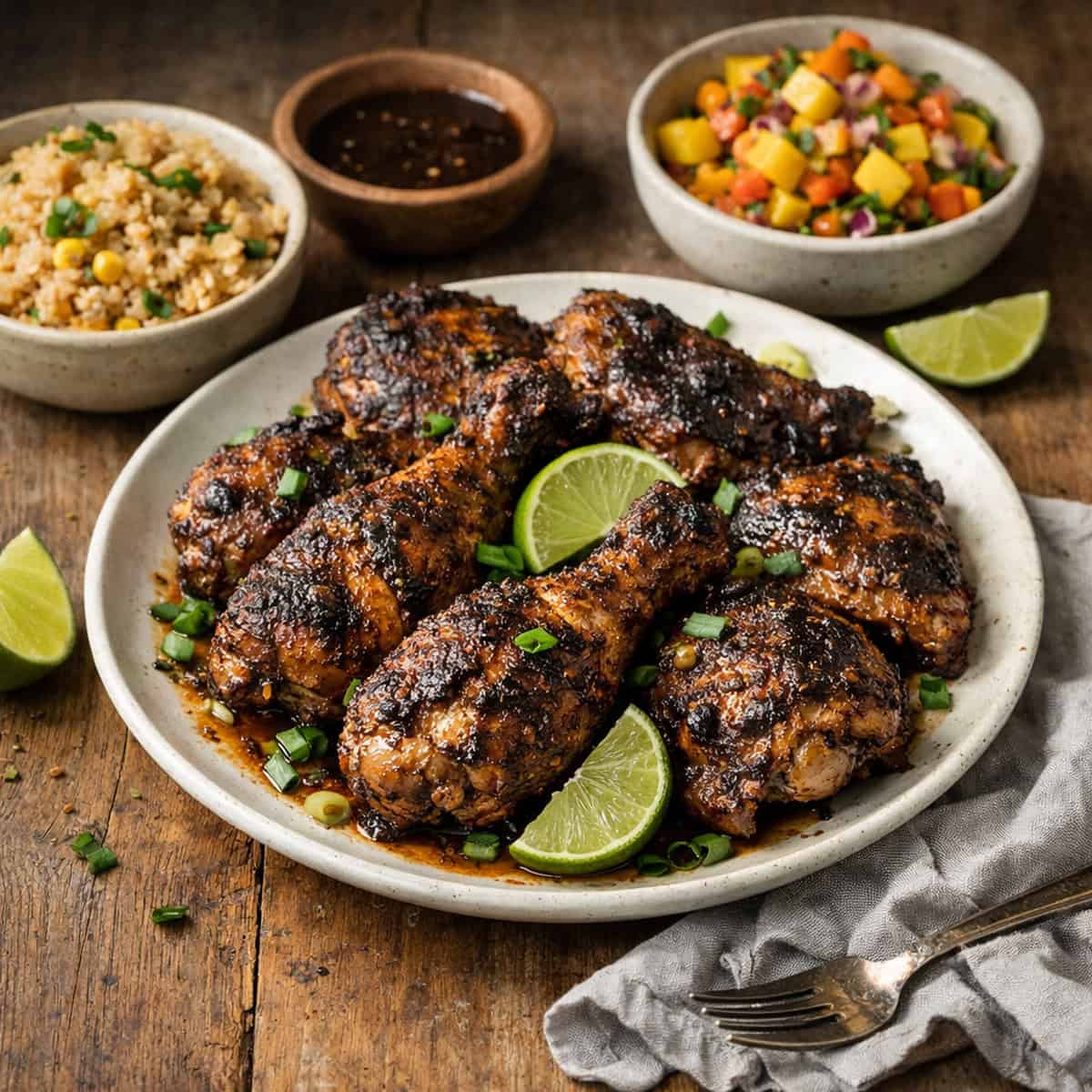
Jamaican Jerk Chicken

Fire, Spice, Smoke, and the Original Caribbean Method Jerk is not a sauce. It is not something brushed on at the end. And it is definitely not Caribbean barbecue. Born […]
Caribbean cuisine is not a single tradition. It’s a convergence.
Indigenous foodways, African survival cooking, European colonial influence, and Asian migration all collide in a region shaped by heat, salt air, sugar, and resistance. The food reflects history that was rarely gentle — but the cooking is vibrant, adaptive, and deeply expressive.
Rice, roots, seafood, chilies, smoke, and spice form the backbone. Flavor is bold not for shock, but for preservation, celebration, and identity.
This page is the map.
The Foundations of Caribbean Cooking
Across the Caribbean, despite differences between islands, a shared logic appears:
- Root vegetables (cassava, yams, sweet potatoes)
- Rice and legumes as staples
- Seafood as primary protein
- Chilies, herbs, and aromatics for depth
- Open fire, grilling, stewing, and smoking
- Food meant to feed communities, not plates
Caribbean cuisine is resourceful cooking — born from limited ingredients, intense climate, and cultural resilience.
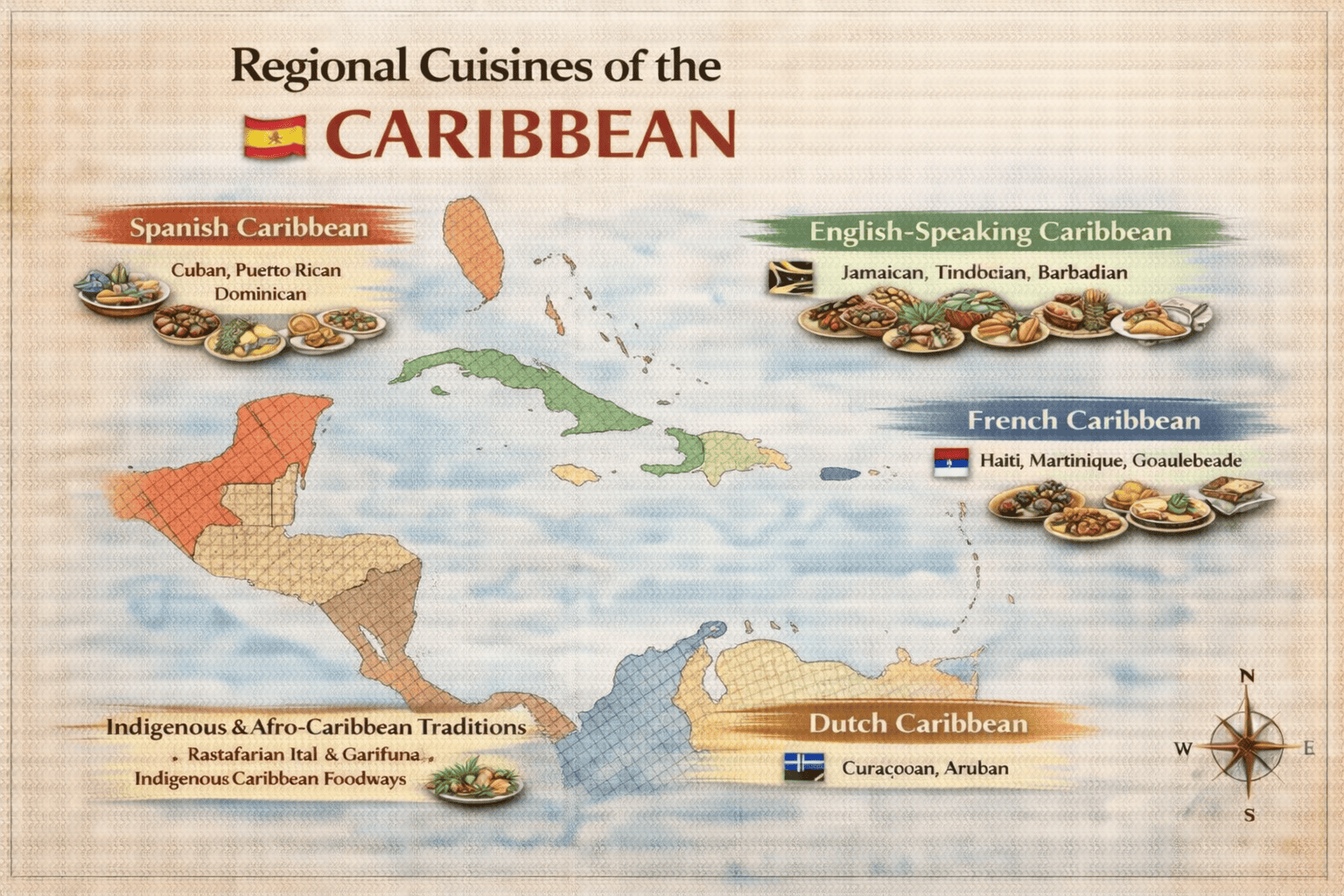
The Major Caribbean Culinary Traditions
Rather than strict borders, Caribbean food clusters around historical and cultural lineages. Each tradition below reflects who arrived, who survived, and what grew.
Spanish Caribbean
Identifying cuisines: Cuban, Puerto Rican, Dominican
Spanish Caribbean cooking balances African, Indigenous, and Spanish influence. Rice, beans, pork, sofrito, and slow-cooked dishes dominate, often paired with bright citrus and herbs.
These cuisines emphasize comfort and repetition — food meant to sustain daily life, not perform. Flavors are layered but familiar, with restraint in heat and an emphasis on aromatics.
English-Speaking Caribbean
Identifying cuisines: Jamaican, Trinidadian, Barbadian
This region leans bold. Spice, smoke, and assertive seasoning define the food, with African and Indian influence strongly present.
Jamaican cuisine introduces grilling, marination, and fire-forward cooking, while Trinidad brings complex curries and roti traditions shaped by South Asian migration. This is Caribbean food at its most outspoken.
French Caribbean
Identifying cuisines: Haitian, Martinican, Guadeloupean
French Caribbean cooking blends French technique with African and Indigenous foundations. Sauces, stews, and layered flavors dominate, often built around slow cooking and careful seasoning.
Haitian cuisine, in particular, stands as one of the most influential and underrepresented food cultures in the region — deeply flavorful, intentional, and rooted in history.
Dutch Caribbean
Identifying cuisines: Curaçaoan, Aruban
Dutch Caribbean cuisines reflect trade and migration. Seafood, stews, and preserved dishes dominate, often incorporating European techniques alongside Caribbean ingredients.
These cuisines tend to be less globally visible but are deeply regional and distinctive.
Indigenous & Afro-Caribbean Traditions
Identifying cuisines: Rastafarian Ital, Garifuna, Indigenous Caribbean foodways
These traditions emphasize plant-forward cooking, minimal processing, and strong connection to land and sea. Cassava, coconut, greens, and seafood appear frequently, prepared simply but intentionally.
This is Caribbean food stripped of colonial overlays — resilient, nourishing, and culturally essential.
Why Caribbean Cuisine Matters
Caribbean cuisine explains how food evolves under pressure. It shows how limited ingredients become expansive through technique, seasoning, and repetition. It also demonstrates how migration reshapes food without erasing its roots.
Understanding Caribbean cooking clarifies:
- The role of spice as preservation, not novelty
- How African foodways survived and spread
- Why grilling, stewing, and marination dominate
This is food that carries memory — and refuses to forget.
Where to Go Next
This pillar establishes the Caribbean as a region of intersecting food systems, not a collection of beach dishes. From here, deeper pages explore:
- Island-specific cuisines
- Afro-Caribbean cooking techniques
- Curries, spice blends, and marinades
- Seafood traditions and preservation
- Pantry essentials and tools
Each page links back here — because Caribbean food makes sense only when you see the whole.