
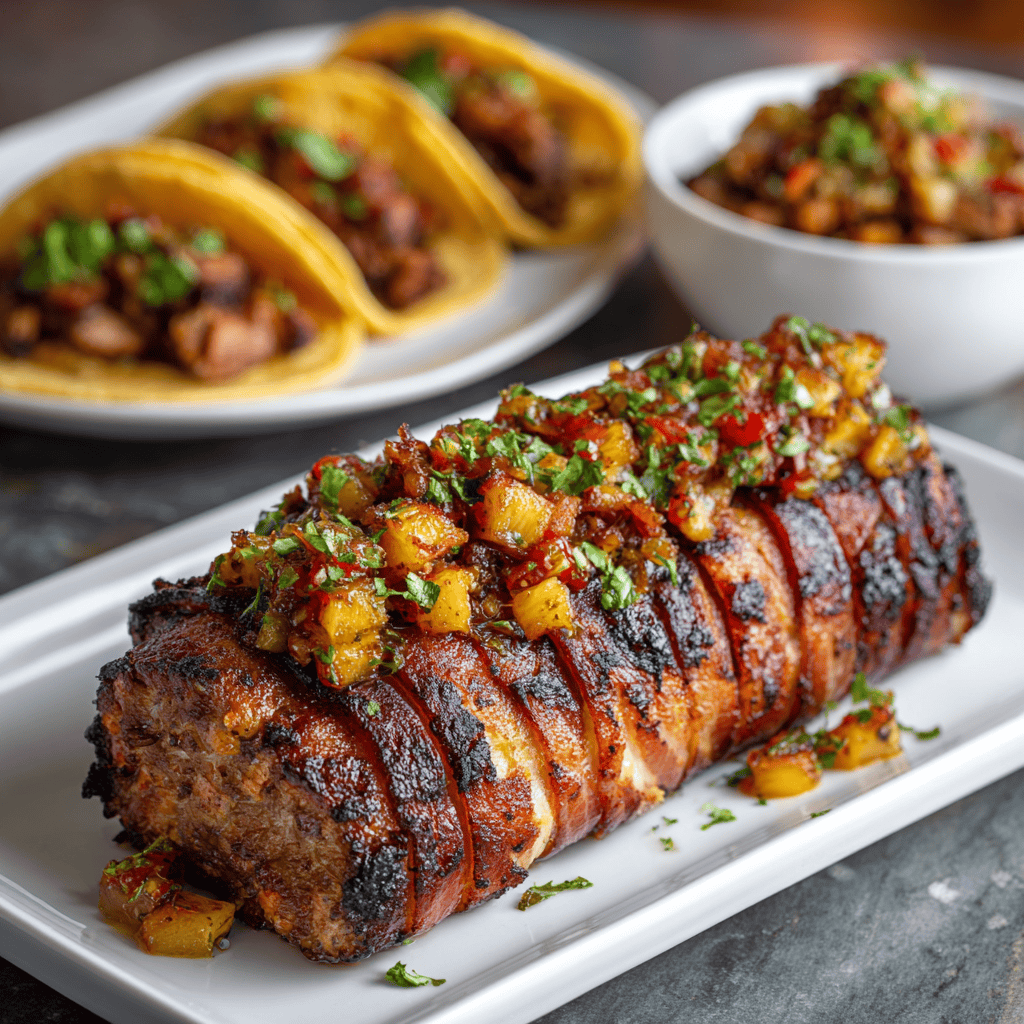
Built Like Shawarma — Why Al Pastor Is About Structure, Not Just Marinade
Al pastor isn’t just marinated pork—it’s engineered layering.
Traditionally, it’s stacked on a vertical spit, where fat renders slowly, bastes the meat, and creates that signature balance of charred edges and juicy interior.
Without the spit, most versions fall apart—either too wet, too soft, or missing that contrast.
This method solves that by building the same structure:
- thin slices
- layered fat
- slow cook → rest → slice → sear
You’re not roasting pork.
You’re recreating a vertical cooking system horizontally.
Technique Intelligence
Al pastor follows a controlled sequence:
toast → hydrate → blend → slice → layer → cook → rest → shave → crisp
Miss one, and the result flattens.
1. Chile Base Must Be Developed
The chiles aren’t just soaked—they’re:
- toasted to activate oils
- hydrated to soften
- blended into a smooth adobo
If the base is weak, the entire dish tastes shallow.
2. Thin Slicing Is Non-Negotiable
This is where most home versions fail.
The meat needs to be:
- very thin
- pounded if necessary
This creates:
- surface area
- layering potential
- proper fat rendering
Chunked pork = wrong dish.
3. Layering Creates the System
Bacon isn’t a shortcut—it’s a stand-in for vertical fat basting.
As it cooks:
- fat renders downward
- meat self-bastes
- structure forms
You’re building a compressed, sliceable mass.
4. Low and Slow Sets the Structure
275°F isn’t random.
It allows:
- collagen breakdown
- fat rendering
- flavor integration
Too hot → dries out
Too fast → no cohesion
5. Resting Is Critical
This is the difference between:
- sliceable structure
- falling-apart braise
Cooling allows:
- fat to set
- proteins to tighten
You’re creating something you can shave, not shred.
6. Final Sear = Identity
The last step defines the dish.
Thin slices hit a hot pan with fat →
they crisp, caramelize, and concentrate.
Without this step, it’s just marinated pork.
Ingredient Intelligence
This is where your version separates from average taco recipes.
Pork (Loin / Sirloin / Shoulder Hybrid Approach)
This recipe leans leaner cuts, balanced by added fat.
That gives:
- cleaner bite
- better slice integrity
- controlled richness
You’re building fat into the system—not relying on the cut alone.
Dried Chiles + Chipotle
This is layered heat, not blunt spice.
- ancho / guajillo → depth + color
- chipotle in adobo → smoke + acidity
The balance is what makes it addictive—not heat level.
Achiote
Non-negotiable for authenticity.
Adds:
- color
- earthy bitterness
- signature al pastor identity
Without it, it’s just chili pork.
Vinegar + Sugar
This is your balance system.
- vinegar → cuts fat, sharpens flavor
- sugar → rounds the acidity
Too much of either, and it tips.
Pineapple
Not just garnish.
Roasted in pork fat, it becomes:
- sweet
- acidic
- caramelized
It balances the entire dish.
Bacon
This is functional.
It replaces:
- vertical spit fat
- constant basting
Skip it, and you lose depth and moisture.
Equipment
- Blender (high-speed preferred)
- Sharp slicing knife
- Aluminum loaf pan (structure mold)
- Oven (stable low heat)
- Cast iron skillet
Optional:
- Meat pounder
- Fat separator
Storage & Reheating
Refrigeration:
Up to 4 days. Improves after resting.
Reheating:
Re-crisp in a hot pan with reserved fat.
Avoid microwave—it kills texture.
Freezing:
Freeze after initial cook, before final sear for best results.
Serving Notes
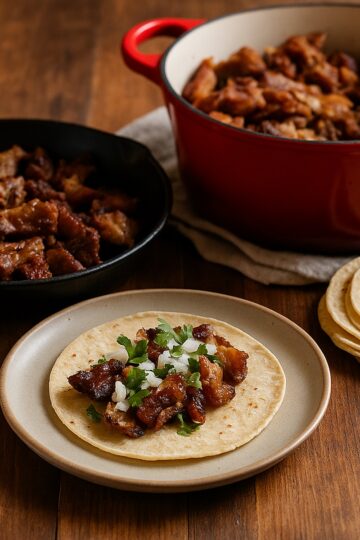
Serve immediately after crisping.
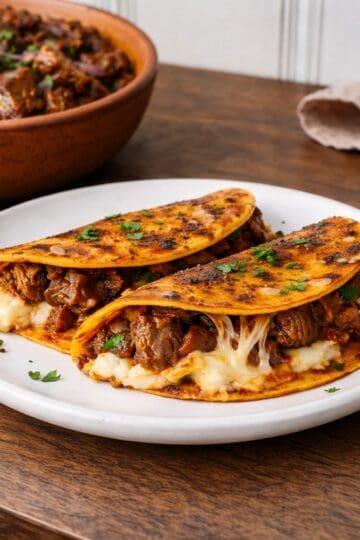
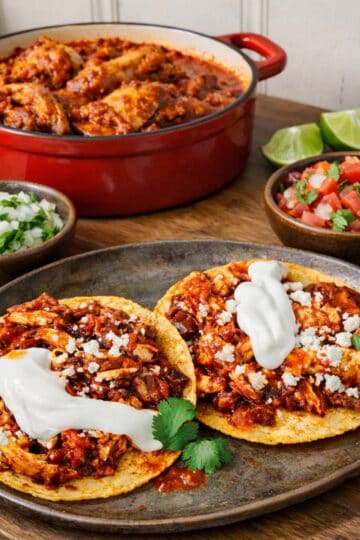
- double corn tortillas
- chopped onion
- cilantro
- roasted pineapple
- salsa
- lime
The meat should be:
- crisp at edges
- moist inside
- lightly glazed, not wet
FAQ
Why is my al pastor mushy?
You didn’t rest and re-slice before searing.
Why doesn’t it taste like street tacos?
You skipped achiote or proper chile development.
Can I skip bacon?
You can—but you lose the self-basting system.
Why is it dry?
Too hot, too fast, or not enough fat in the system.
Pork Al Pastor (Loaf Pan Method, Crisped Finish)

Ingredients
For the Pork + Adobo
- 2 whole ancho chiles seeded
- 2 whole guajillo or pasilla chiles seeded
- ½ cup low-sodium chicken stock
- 2 teaspoons vegetable oil
- 1 teaspoon dried Mexican oregano
- 1 teaspoon ground cumin
- 1 tablespoon achiote paste or powder
- 1 chipotle chile in adobo + 2 teaspoons adobo sauce
- ¼ cup distilled white vinegar
- 2 ½ teaspoons kosher salt
- 2 teaspoons sugar
- 3 cloves garlic
- 2 pounds pork loin or sirloin thinly sliced
- 8 ounces bacon
To Finish
- 1 small pineapple peeled and quartered
- 32 –48 corn tortillas
- 1 cup diced white onion
- ½ cup chopped cilantro
- 1 cup salsa verde
- 3 –4 limes cut into wedges
Instructions
Instructions
Build the Adobo
- Toast 2 ancho chiles and 2 guajillo chiles in a dry pan over medium-high heat for about 5 minutes, turning until fragrant and lightly blistered. Add ½ cup chicken stock, bring to a boil, then transfer to a bowl and let sit for 10 minutes to soften.
- In the same pan, heat 2 teaspoons vegetable oil over medium heat. Add 1 teaspoon cumin, 1 teaspoon oregano, and 1 tablespoon achiote, stirring for about 30 seconds until aromatic. Add 1 chipotle chile plus 2 teaspoons adobo sauce, cook another 30 seconds, then add ¼ cup vinegar, 2 ½ teaspoons salt, and 2 teaspoons sugar. Remove from heat.
- Transfer everything to a blender with the softened chiles and soaking liquid, plus 3 cloves garlic, and blend until completely smooth.
Prepare the Pork
- Slice 2 pounds pork as thinly as possible (partially freeze for 15 minutes if needed), then pound each slice to under ¼ inch thick. Toss thoroughly with the adobo until evenly coated.
Layer the Structure
- Line a loaf pan with 8 ounces bacon, then layer marinated pork. Continue alternating bacon and pork until all meat is used, pressing lightly to compact. Cover and refrigerate at least 4 hours (up to 36 hours).
Cook Low and Slow
- Preheat oven to 275°F. Place the loaf pan on a sheet tray and cook uncovered for about 4 hours, until very tender and fully cooked through.
- Remove, cool slightly, then cover and refrigerate at least 2 hours (or overnight) to set structure.
Slice and Crisp
- Remove the chilled meat from the pan, reserving the rendered fat and juices separately. Slice the meat thinly.
- Heat 1 tablespoon reserved fat in a cast iron pan over medium-high heat. Add sliced pork and cook, stirring occasionally, until browned and crisp in spots. Add a few tablespoons reserved juices and cook until reduced to a light glaze.
Roast the Pineapple
- Brush pineapple with a little reserved fat and roast at 350°F for 20–25 minutes until tender and lightly caramelized. Chop into chunks.
Serve
- Serve pork and pineapple in warm corn tortillas with onion, cilantro, salsa, and lime. Double-stack tortillas for structure.
Notes
Resting the meat before slicing is critical for structure
Final sear defines texture—don’t skip it
Bacon is functional—it replaces vertical spit fat
Comments
No Comments