
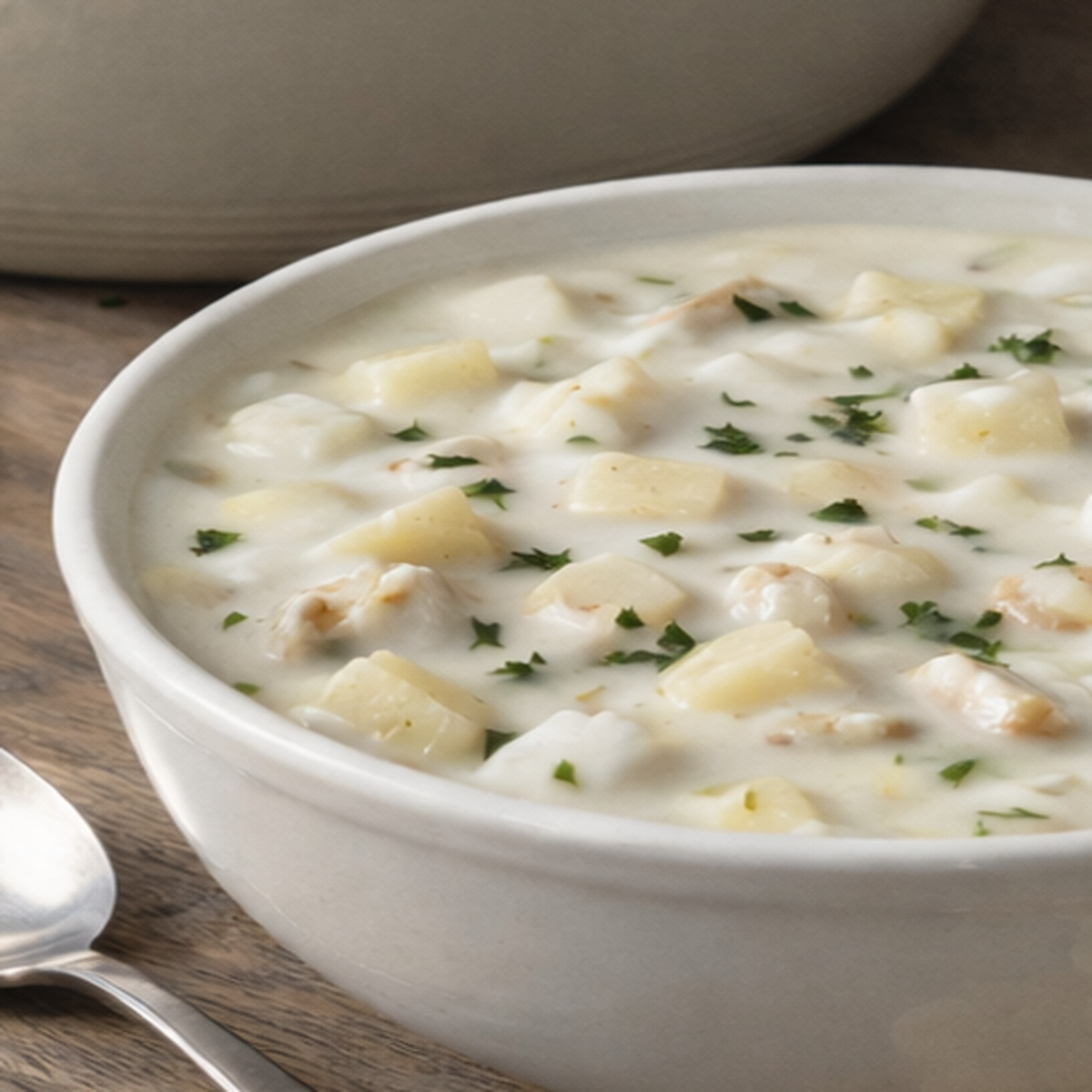
New England clam chowder is built on restraint: clams, potatoes, dairy, and time. It’s one of three regional chowders found along the Northeast coast—and the most dairy-forward of the group—defined by balance rather than excess.
Why This Dish Matters
Clam chowder exists because it feeds people well in cold weather. It’s practical coastal cooking—made from shellfish, storage vegetables, and dairy—designed to be cooked in quantity and eaten slowly.
In New England, chowder isn’t about indulgence. It’s about clarity. When it’s right, you taste the clams first, the broth second, and the cream last. Anything louder misses the point.
Technique Spotlight: Gentle Simmering and Dairy Control
Clam chowder fails when it’s rushed or overheated.
The base is built by slowly softening onions in butter without browning. Potatoes provide body and natural thickening. Clam liquor supplies salinity and depth. Dairy is added at the end, over low heat, to keep the soup smooth and stable.
Boiling after cream goes in breaks the texture. Thickening should come from potatoes, not flour. This is a soup of patience, not force.
Ingredients
Grouped by function, not habit.
Shellfish
Fresh clams, scrubbed
Reserved clam liquor
Aromatics & Fat
Butter
Onion
Celery (optional)
Body
Yukon Gold or other waxy potatoes
Dairy
Heavy cream
Whole milk
Seasoning
Salt
White or black pepper
Bay leaf
No roux. Bacon optional, never dominant.
How It Comes Together
Clams are gently steamed just until they open, then removed and chopped. Their liquor is strained and reserved.
Onions are softened slowly in butter without browning. Potatoes are added along with clam liquor and simmered until just tender. Milk and cream are stirred in gently, followed by the chopped clams.
The chowder is warmed through—not boiled—then seasoned and rested briefly before serving. Resting matters. It allows the broth to thicken naturally and the flavors to settle.
What Can Go Wrong
- Rubbery clams → Overcooked or added too early
- Broken dairy → Heat too high after cream is added
- Gummy texture → Flour or overworked potatoes
- Flat flavor → Weak clam liquor or underseasoning
Chowder doesn’t forgive shortcuts.
Variations & Regional Notes
Clam chowder in the Northeast isn’t singular. It’s regional, and the distinctions matter.
New England clam chowder is dairy-based, thickened naturally by potatoes, and built around restraint. This recipe stays firmly in that lane.
Rhode Island clam chowder skips dairy entirely. It’s clear, briny, and clam-forward—closer to a broth than a soup, with emphasis on shellfish and liquor.
Manhattan clam chowder uses tomatoes for acidity and body, resulting in a brighter, leaner soup shaped more by pantry cooking than dairy.
Each version reflects place, not preference. This one remains New England by design.
Serving & Pairing
Serve hot, not boiling. Chowder thickens as it sits.
Oyster crackers are traditional. Good bread is better.
Wine Pairing
New England clam chowder calls for brightness and restraint.
A dry Sauvignon Blanc or Albariño cuts through the cream and echoes the sea without clashing. For something rounder, an unoaked or lightly oaked Chardonnay works when kept lean and low in alcohol.
Avoid heavily oaked or high-alcohol whites. The soup is subtle. The wine should be too.
Equipment
- Heavy-bottomed pot or Dutch oven
- Slotted spoon
- Fine-mesh strainer
- Ladle
This is stovetop cooking. No gadgets required.
Storage & Make-Ahead
Clam chowder keeps well for up to 2 days refrigerated. Reheat gently over low heat, stirring often. Do not boil.
Freezing is not recommended. Dairy and potatoes don’t recover.
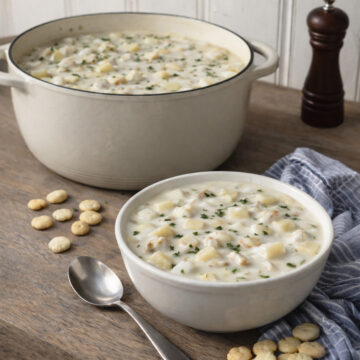
New England Clam Chowder

Ingredients
Ingredients
Option 1: Fresh Clams (Preferred)
- Shellfish
- 3 lb fresh clams scrubbed
- 1 cup reserved clam liquor from steaming
- Aromatics & Fat
- 3 tablespoon unsalted butter
- 1 medium onion finely diced
- 1 celery stalk finely diced (optional)
Body
- 1½ lb Yukon Gold potatoes peeled and diced (½-inch)
Dairy
- 1½ cups whole milk
- 1 cup heavy cream
- Seasoning
- 1 bay leaf
- ¾ teaspoon kosher salt adjust to taste
- ¼ teaspoon white or black pepper
Option 2: Canned Clams (Approved Substitute)
- 3 6.5-oz cans chopped clams, drained
- 1½ cups bottled clam juice
- Snow’s or Bar Harbor recommended
- All other ingredients remain the same.
Instructions
Instructions
Method Using Fresh Clams
- Place clams in a large pot with ½ cup water. Cover and steam over medium heat until clams open, 6–8 minutes. Remove clams; discard any unopened.
- Strain cooking liquid through a fine-mesh strainer and reserve 1 cup clam liquor. Chop clams into bite-size pieces and set aside.
- In the same pot, melt 3 tablespoon butter over medium-low heat. Add onion and celery (if using). Cook until softened and translucent, 5–7 minutes. Do not brown.
- Add potatoes, 1 cup reserved clam liquor, bay leaf, salt, and pepper. Simmer gently until potatoes are just tender, 10–12 minutes.
- Lower heat and stir in 1½ cups milk and 1 cup cream. Warm gently without boiling.
- Add chopped clams and cook just until heated through, 2–3 minutes.
- Remove bay leaf, adjust seasoning, and rest 5 minutes before serving.
Method Using Canned Clams
- Melt 3 tablespoon butter over medium-low heat. Add onion and celery (if using) and cook until softened, 5–7 minutes.
- Add potatoes, 1½ cups bottled clam juice, bay leaf, salt, and pepper. Simmer gently until potatoes are just tender, 10–12 minutes.
- Lower heat and stir in 1½ cups milk and 1 cup cream. Warm gently without boiling.
- Add drained canned clams and cook just until heated through, 1–2 minutes.
- Remove bay leaf, adjust seasoning, and rest 5 minutes before serving.
Comments
No Comments