
Bistecca alla Fiorentina isn’t about seasoning, sauces, or clever technique. It’s about a massive cut of beef, fierce heat, and knowing when to stop interfering.
Why This Dish Matters
In Florence, this steak isn’t a flex—it’s a given. Traditionally cut from Chianina cattle and grilled over wood or charcoal, bistecca exists because Tuscany had cattle, fire, and confidence. It’s eaten rare, shared at the table, and judged quietly. If the beef is good and the cook shows restraint, the dish succeeds. If not, nothing can save it.
This is food that assumes you’re paying attention.
Technique Spotlight: High-Heat Grilling with Restraint
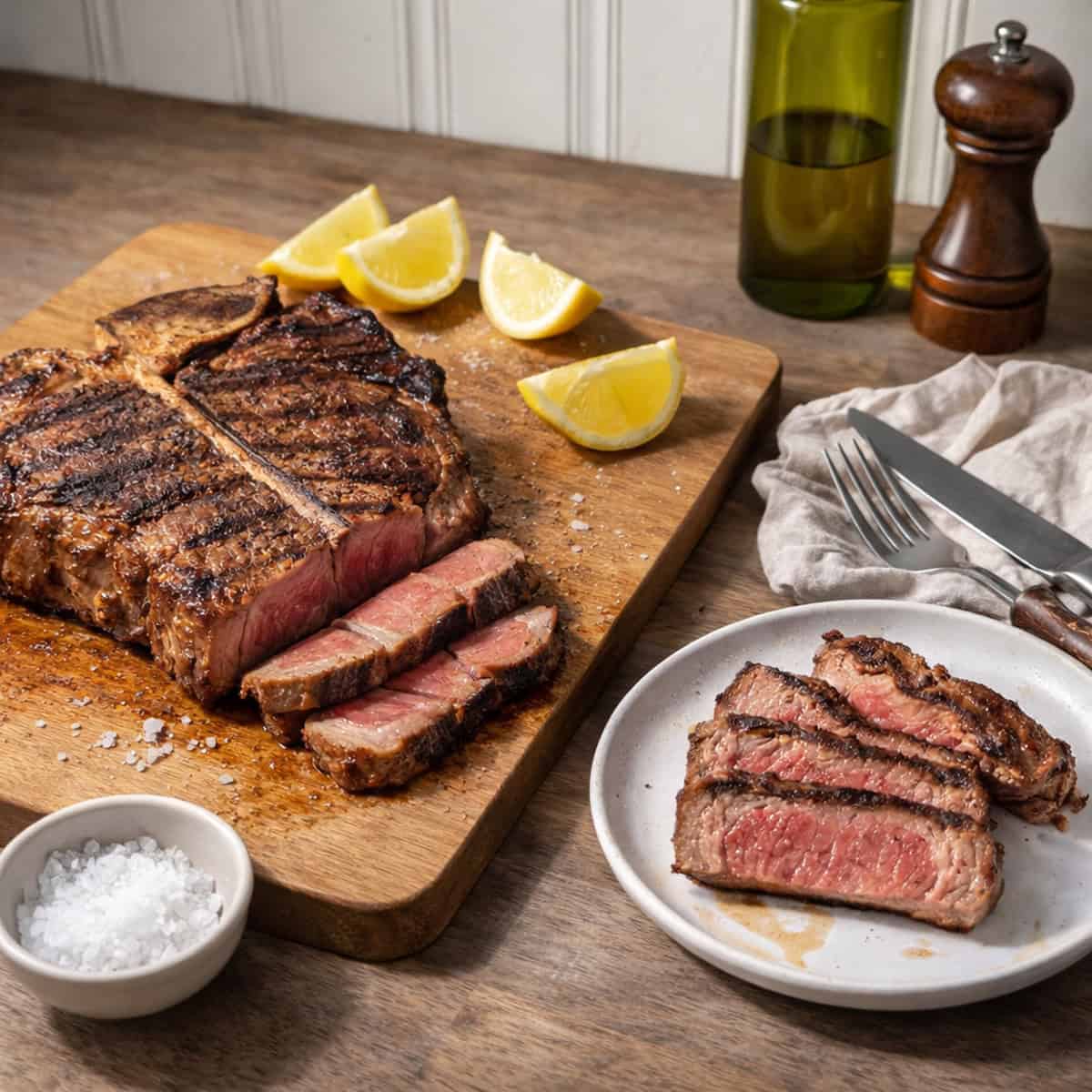
Bistecca alla Fiorentina is an exercise in non-intervention. The steak is thick—often two inches or more—and cooked directly over intense heat. Salt goes on just before grilling. Oil comes after slicing. The goal is contrast: a deep, dark crust; a warm red center; fat that’s rendered but not melted away.
This isn’t a steak you fuss over. Heat does the work. Timing finishes it.
(Internal link target: Italian Grilling & High-Heat Cooking Techniques)
Ingredients (Minimal by Design)
Protein
A thick-cut T-bone or porterhouse steak, preferably from the loin with the bone intact.
Seasoning & Finish
Coarse salt
Extra-virgin olive oil
Black pepper (optional)
Lemon (optional, at the table)
Nothing more is needed. Anything more is distraction.
How It’s Cooked
Bring the steak to room temperature well before cooking. The grill should be aggressively hot—hot enough that you hesitate for a moment before laying the meat down.
Salt the steak immediately before it hits the grill. Let it cook untouched until a crust forms. Flip once. Stand it on the bone to render the fat. Then rest it.
That’s it. Any more attention than that is insecurity.
What Can Go Wrong
- Gray interior → Heat wasn’t high enough.
- Weak crust → Steak was salted too early or surface moisture wasn’t driven off.
- Overcooked → Too much flipping, too much fear.
This dish rewards confidence and punishes hovering.
Variations & Regional Notes
In Florence, bistecca is served without sauce. No butter. No compound anything. Outside Tuscany, cooks may finish with pepper or lemon. That’s acceptable—but it’s not traditional.
What matters more than purity is intent. Keep it simple. Keep it honest.
Serving & Pairing
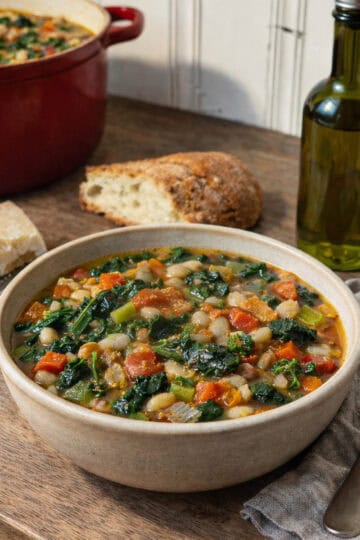
Serve sliced, shared, and hot. Pair with bitter greens, sautéed spinach, or cannellini beans dressed with olive oil and sage. This steak anchors the table; everything else should stay in its orbit.
Wine Pairing
In Florence, the natural pairing is Chianti Classico—not because it’s precious, but because it works. The acidity cuts the fat, the tannin grips the meat, and the wine doesn’t compete for attention.
For a more structured option, Brunello di Montalcino brings depth and seriousness, especially with a well-rendered steak and simple contorni.
Outside Tuscany, look for wines with restraint rather than muscle: traditional Barolo, Barbaresco, or a lean Langhe Nebbiolo. Avoid heavily oaked or overly plush reds. This steak doesn’t need to be wrestled.
Storage & Make-Ahead
Bistecca is best the moment it’s sliced. Leftovers can be wrapped and kept briefly, but reheating is a compromise. Cold slices the next day—on good bread with olive oil—are the better option.
Bistecca alla Fiorentina

Equipment
- Equipment
Ingredients
Ingredients
Protein
- 1 large T-bone or porterhouse steak 2–2½ lb, at least 2 inches thick
Seasoning & Finish
- Kosher or coarse sea salt to taste
- Extra-virgin olive oil for finishing
- Freshly cracked black pepper optional, at the table
- Lemon wedges optional
Instructions
Instructions
- Remove 1 large T-bone steak (2–2½ lb) from refrigeration 1–2 hours before cooking to bring to room temperature.
- Heat a grill or cast-iron surface until very hot; do not oil the grates or the steak.
- Season the steak generously with coarse salt immediately before grilling.
- Place the steak on the grill and cook 5–6 minutes without moving to form a deep crust.
- Flip and cook another 5–6 minutes for rare to medium-rare.
- Stand the steak upright on the bone and cook 2–3 minutes to render the fat.
- Remove from heat and rest 5–10 minutes.
- Slice against the grain, drizzle lightly with extra-virgin olive oil, and finish with black pepper or lemon if desired.
Comments
No Comments