
Crunch against heat. Acid against sweetness. Salt against fruit. Everything happens fast, and nothing is meant to be subtle. When it’s right, it wakes you up. When it’s wrong, it just tastes loud.
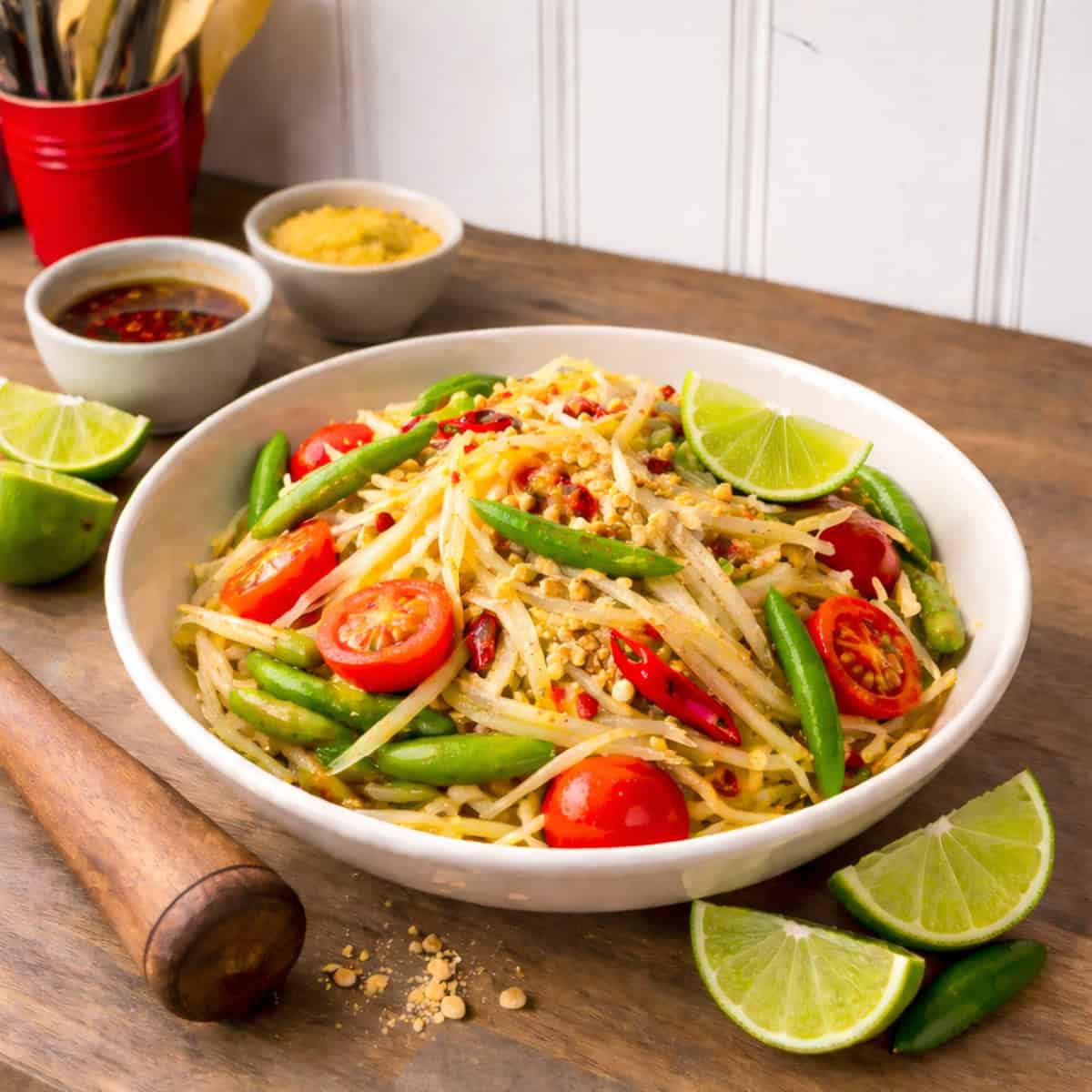
Som Tam comes from northeastern Thailand, where food is built to cut heat, humidity, and appetite all at once. The technique is simple but specific: ingredients are pounded just enough to bruise and release flavor without turning soft. This isn’t tossing. It’s controlled impact.
What This Dish Is Really About
Som Tam isn’t about papaya. It’s about balance under pressure.
You’re managing:
- Acid
- Salt
- Sweetness
- Heat
The papaya is just the vehicle.
Ingredient Spotlight: Why Each One Matters
Green Papaya
Green papaya isn’t fruit here — it’s structure. Picked underripe, it’s crisp, dry, and almost blank, which is exactly why it works. It absorbs lime, fish sauce, and chili without collapsing. Ripe papaya is sweet and soft and has no place in this dish. If it bends instead of snapping, it’s wrong.
Garlic
Garlic sets the base. When pounded rather than chopped, it releases sweetness and depth that slicing never quite delivers. In Som Tam, garlic shouldn’t announce itself — it should support everything else quietly, like a bass line you’d miss if it weren’t there.
Chilies
Chilies bring heat, but more importantly, they bring energy. Thai chilies are sharp and immediate, not lingering. The goal isn’t bravado or endurance — it’s clarity. Pound them gently and stop early. Heat should sharpen the salad, not dominate it.
Palm Sugar
Palm sugar softens acidity instead of competing with it. Its caramel edge rounds sharp corners and keeps lime from feeling aggressive. In Som Tam, sweetness should feel like relief, not dessert. If you can taste sugar clearly, you’ve gone too far.
Fish Sauce
Fish sauce is the backbone. Good fish sauce tastes savory and deep, not aggressively fishy, and carries salt in a way that lingers instead of spiking. In Som Tam, it gives the salad seriousness — the thing that keeps brightness from floating away. Add it gradually. Once it’s overdone, there’s no pulling it back.
Lime Juice
Lime juice is the wake-up call. It cuts through heat, lifts sweetness, and makes the whole dish feel alive. Always fresh. Always added last. Bottled lime juice flattens everything it touches.
Long Beans
Long beans bring resistance. Snapped and lightly bruised, they add crunch and green bitterness that keep the salad from tipping into fruitiness. They don’t soften easily, which is exactly the point. If the papaya is the canvas, the beans are the frame.
Tomatoes
Tomatoes add moisture and softness, but they’re supporting players. Cherry tomatoes work best — they burst gently when pounded, releasing juice without turning the salad watery. Too many tomatoes, or too much force, and the balance slides.
Peanuts
Peanuts come last, after the balance is set. They bring richness, crunch, and a faint bitterness that grounds the salad. Crushed, not powdered, they should be felt in the bite. Think punctuation, not filler.
Technique Intelligence
Thai papaya salad is made by pounding, not mixing. Garlic and chilies are crushed first to build the flavor base, palm sugar is dissolved into that paste, and fish sauce and lime are added next. Green papaya goes in last and is lightly pounded so it absorbs dressing while staying crisp. If the salad turns watery or flat, the issue is force or balance — not the ingredients. Som Tam works because of order, pressure, and tasting as you go, not fixed ratios.
Equipment
- Mortar and Pestle
Traditional and preferred. Allows controlled pounding to bruise ingredients without breaking them down. - Julienne Peeler
The easiest way to create fine, even strands of green papaya with the right crunch and surface area for dressing. - Cutting Board
For trimming papaya, long beans, and tomatoes. - Chef’s Knife
Used for prep only — not for shredding the papaya. - Mixing Spoon or Tongs (optional)
Helpful for tossing if finishing outside the mortar.
Wine Pairing
Som tam is sharp, spicy, and unapologetically bright. The wine needs to cool the heat, handle fish sauce, and refresh the palate without dulling the flavors.
A slightly off-dry Riesling is the most reliable choice. The touch of sweetness tempers chili heat, while high acidity keeps the salad lively rather than cloying. Balance matters more than aromatics here.
Another good option is Gewürztraminer in a restrained style—enough texture and perfume to stand up to lime and garlic without overwhelming the dish.
If you prefer bubbles, a Brut or Extra-Dry sparkling wine works well, especially when the salad is served as part of a larger meal. The carbonation lifts the spice and resets the palate.
Avoid tannic reds and heavily oaked whites. Chili amplifies bitterness and alcohol, and som tam leaves no room for heaviness.
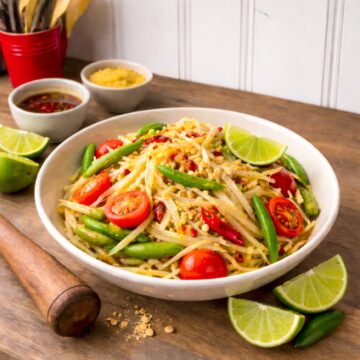
Thai Papaya Salad (Som Tam)

Ingredients
Ingredients
- 2 cups shredded green papaya packed
- 1 –2 cloves garlic peeled
- 1 –3 Thai chilies to taste
- 1½ tablespoons fish sauce plus more to taste
- 1½ tablespoons fresh lime juice plus more to taste
- 1½ teaspoons palm sugar grated (or light brown sugar)
- ¼ cup long beans cut into 1-inch pieces
- ¼ cup cherry tomatoes halved
- 2 tablespoons roasted peanuts lightly crushed
Instructions
Instructions
- In a mortar, pound garlic and chilies until lightly crushed and aromatic.
- Add palm sugar and pound gently to dissolve.
- Add fish sauce and lime juice; stir to combine and taste for balance.
- Add long beans and lightly bruise them with the pestle.
- Add tomatoes and press gently to release some juice without breaking them down completely.
- Add shredded green papaya and toss, pounding lightly just to coat and soften slightly.
- Taste and adjust seasoning with more lime, fish sauce, sugar, or chili as needed.
- Finish with crushed peanuts and toss once more. Serve immediately.
Notes
How to Balance Som Tam (This Is the Skill)
Taste as you go. Always.
If it tastes:
- Flat: add lime, not salt
- Too sharp: add a pinch of sugar
- Too sweet: add fish sauce or chili
- Too salty: add more papaya, not more lime
Som Tam should make you pause — then reach for another bite.
Storage (Short and Honest)
Som Tam is best eaten immediately.
After 2–3 hours, the papaya softens and the balance dulls.
This is a make-and-eat dish, not a meal-prep one.
Table Itinerary: How to Serve Som Tam
Som Tam doesn’t stand alone — it cuts richness, heat, and fat. At a Thai table, it’s almost always part of a larger rhythm. These dishes aren’t interchangeable; each one plays a specific role.
- Gai Yang (Thai Grilled Chicken)
Garlic, coriander root, fish sauce, palm sugar; grilled until smoky and juicy.
Why it works: fat and char soften the salad’s sharpness, while Som Tam keeps the chicken from feeling heavy. - Moo Yang (Thai Grilled Pork)
Pork neck or shoulder marinated with fish sauce, garlic, and white pepper, then grilled hot.
Why it works: richer and deeper than chicken; Som Tam cuts straight through the fat and resets the palate. - Khao Niao (Thai Sticky Rice)
Steamed glutinous rice, served warm.
Why it works: absorbs heat, soaks up dressing, and gives the table balance. Without it, Som Tam feels unfinished.
Comments
No Comments