
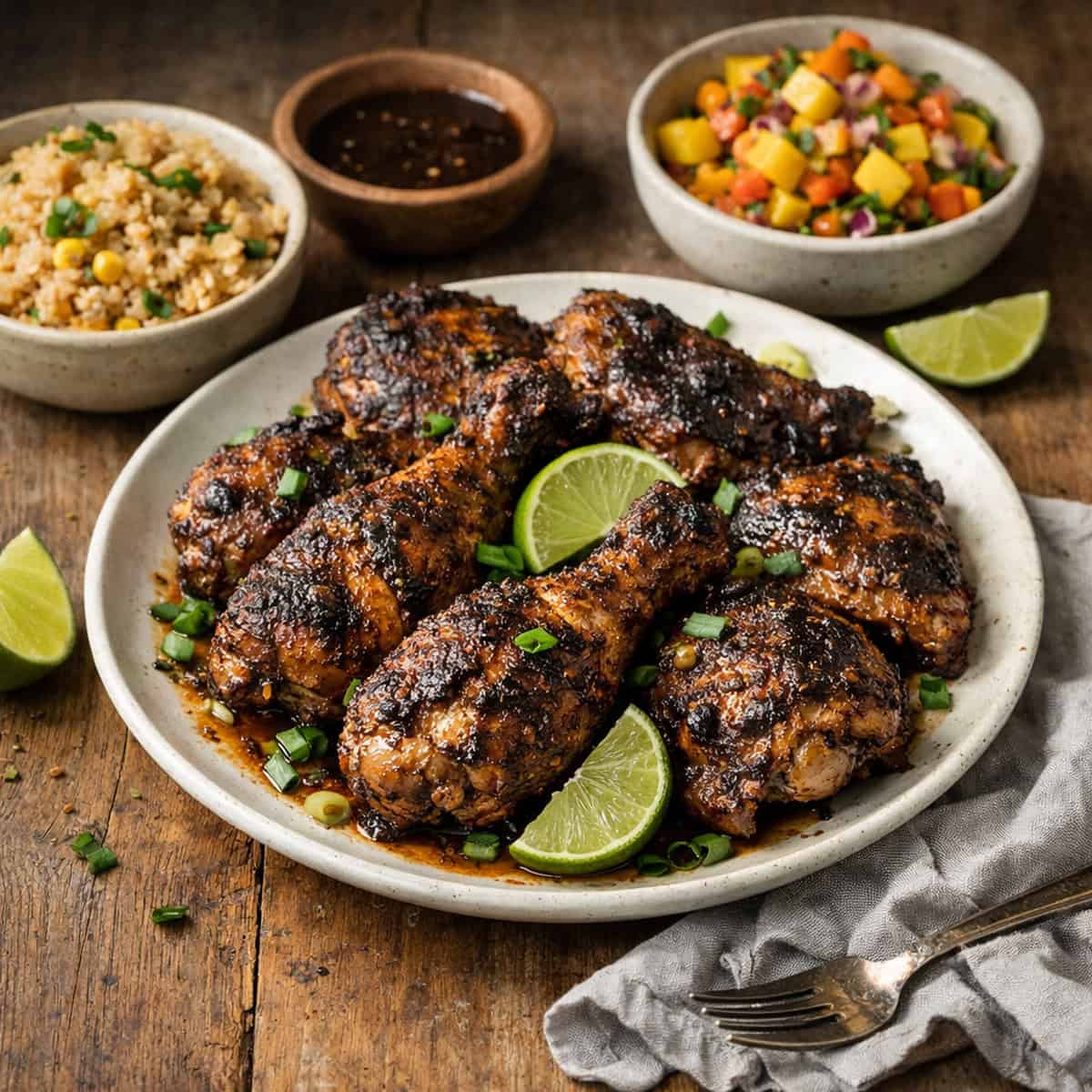
Fire, Spice, Smoke, and the Original Caribbean Method
Jerk is not a sauce. It is not something brushed on at the end. And it is definitely not Caribbean barbecue.
Born in Jamaica’s interior among the Maroon communities—descendants of enslaved Africans who escaped into the mountains—jerk cooking was designed to preserve meat, control smoke, and build flavor using what the land provided. Fire was managed carefully. Smoke was intentional. Spice was layered not just for heat, but for preservation and power.
Traditionally cooked over pimento wood and slow fire, jerk chicken was buried in pits or grilled low and smoky. The result was food that traveled, lasted, and nourished—long before it entertained.
Modern jerk stalls may blast music and flame, but the method underneath hasn’t changed: spice, time, and fire.
The first time I made jerk chicken myself, I was overwhelmed.
The ingredient list felt excessive—too many spices, too many aromatics, too many things that didn’t usually live in the same bowl. It seemed fussy for what was supposed to be rustic food. I remember thinking there had to be a shortcut, some way to simplify it without losing the point.
Then I tasted it.
Not just heat, but warmth. Not just smoke, but depth. The flavors didn’t compete—they clicked. Suddenly, every ingredient made sense. Each one was doing a specific job, and none of them could be removed without breaking the whole.
That was the epiphany: jerk isn’t complicated. It’s complete.
Jerk chicken looks bold because it is bold—but it isn’t difficult. The work happens before the cooking begins. The marinade does the heavy lifting. Time does the rest. When the chicken hits the grill or oven, your job is restraint.
- Let the chicken color deeply.
- Let the spice bloom.
- And don’t rush what fire is already doing.
Ingredients For Jerk Chicken & Why They Matter
Chicken (Bone-In, Skin-On)
Jerk demands fat and bone. Use Thighs and Drumsticks, Boneless chicken dries out and misses the point.
Scotch Bonnet Peppers
Essential. Fruity heat with depth, not sharp burn. Habaneros are the closest substitute.
Allspice (Pimento)
The backbone of jerk. Warm, aromatic, unmistakable.
Thyme & Scallions
Freshness and herbal structure.
Garlic & Ginger
Depth, warmth, and bite.
Soy Sauce & Malt Vinegar
Salt and acid for balance and preservation.
Brown Sugar and Molasses
Not sweetness—roundness and caramelization.
Suggested Equipment
- Grill (charcoal preferred) or heavy roasting pan
- Food processor or blender
- Tongs
- Sheet pan with rack (for oven method)
How to make Jamaican Jerk Chicken
Serves
4–6
Ingredients
Chicken
- 3½–4 lb bone-in, skin-on chicken (legs, thighs, or whole cut up)
Jerk Marinade
- 4 scallions, chopped
- 4 cloves garlic
- 1 thumb fresh ginger
- 2–3 Scotch bonnet peppers, seeded for less heat
- 2 tablespoon ground allspice
- 1 tablespoon fresh thyme leaves
- 2 tablespoon soy sauce
- 2 tablespoon brown sugar
- 2 tablespoon molasses
- 2 tablespoon Malt or apple cider vinegar
- 1 tablespoon lime juice
- 1 teaspoon ground cinnamon
- ½ teaspoon ground nutmeg
- Freshly ground black pepper
- 2 tablespoon neutral oil
Method
1. Make the Marinade
Blend all marinade ingredients into a thick paste.
2. Marinate the Chicken
Cut deep slashes into the chicken to expose the meat.
Rub marinade thoroughly into the chicken, including under the skin. Cover and refrigerate at least 12 hours, preferably 24.
3. Cook the Chicken
Grill Method (Preferred)
Set up grill for indirect heat. Add soaked wood chips if using.
Cook chicken over medium-low heat, turning occasionally, until deeply charred and cooked through, about 45–60 minutes.
Oven Method
Roast on a rack at 375°F / 190°C for 45–55 minutes, finishing under the broiler for char.
Internal temperature: 165°F / 74°C.
4. Rest
Rest chicken for 10 minutes before serving.
Wine Pairing
Jerk chicken is layered with heat, smoke, herbs, and sweetness. The wine needs to cool the spice, handle char, and stay flexible.
A slightly off-dry Riesling is the most reliable match. Bright acidity cuts through fat and smoke, while a touch of sweetness softens Scotch bonnet heat without dulling the seasoning. Balance matters more than aromatics.
Sparkling wine also works surprisingly well. A Brut or Extra-Dry sparkling refreshes the palate between bites and keeps the heat from building, especially when the chicken is heavily charred.
For red wine drinkers, keep it light and chill it slightly. Gamay or a restrained Pinot Noir can work when the jerk leans smoky rather than aggressively hot. Freshness is key.
Avoid heavily oaked, high-alcohol, or tannic reds. Heat amplifies bitterness and alcohol, and jerk doesn’t need help making an impression.
Table Itinerary (Passport Kitchen)
Serve with:
- Rice & peas
- Fried plantains
- Festival (sweet fried dough)
- Lime wedges
Cold beer or rum encouraged.
Chef’s Notes
- Jerk should be dark, not burnt.
- Heat builds over time—control the peppers.
- Marinade penetrates with time, not force.
FAQ
Is jerk chicken extremely spicy?
Aromatic first, hot second. Seed peppers to adjust.
Can I use boneless chicken?
You can, but you lose moisture and character.
Is liquid smoke authentic?
No. We suggest NOT to use this ingredient
Comments
No Comments