
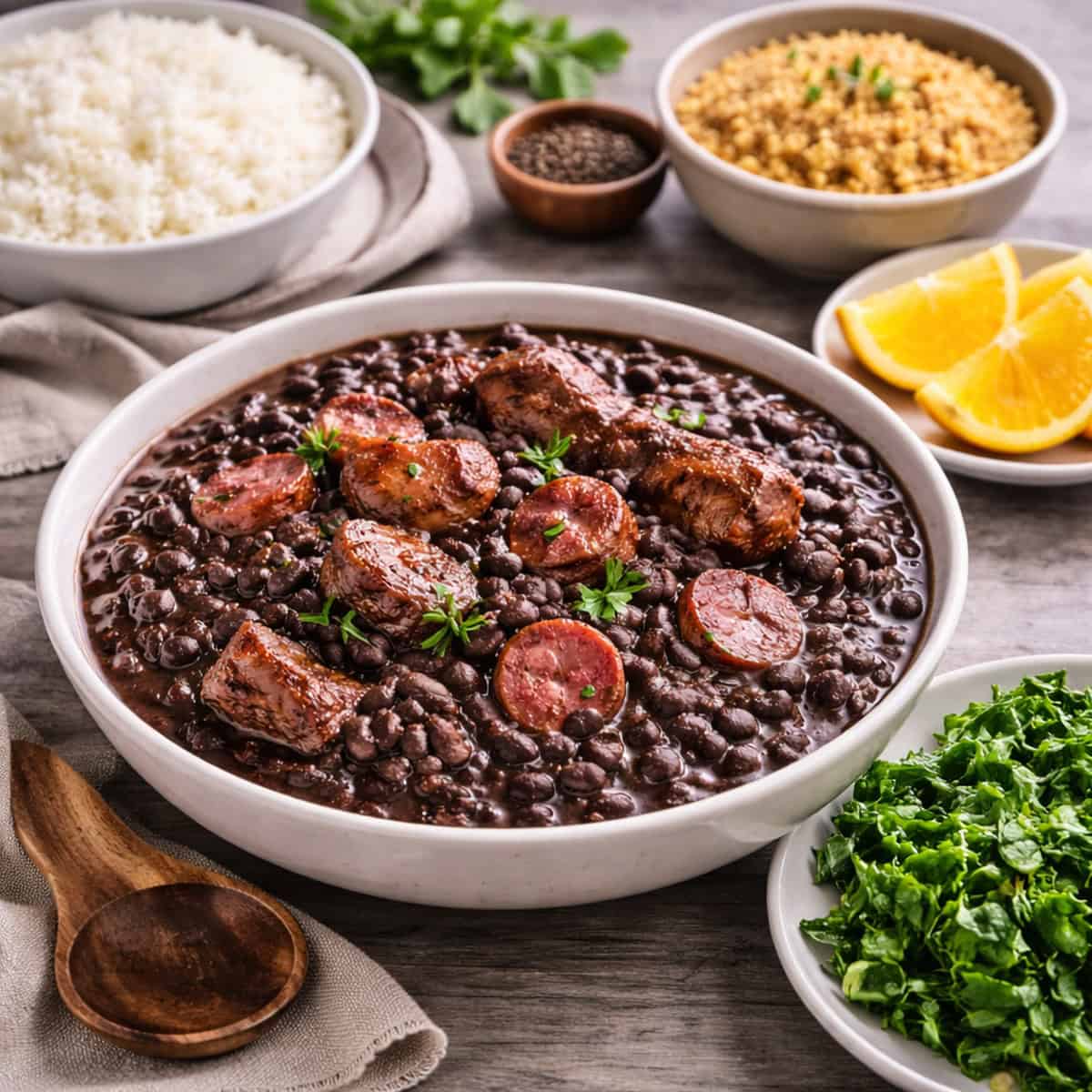
Time, Smoke, Citrus, and the Rhythm of a Saturday Table
It’s food that asks for time—time to soak, time to simmer, time to gather. In Brazil, feijoada is traditionally eaten on Saturdays, when there’s nowhere else to be and no reason to rush. It’s served in stages, with side dishes that cut, brighten, and balance the richness of the stew.
This is a dish born from necessity and endurance, shaped by history, and claimed by everyone. It carries the legacy of enslaved kitchens, Portuguese preservation techniques, and Brazilian ingenuity. Today, it belongs to families, bars, restaurants, and street corners alike.
The first time I ate feijoada properly, I remember how quiet the table became.
Not because people stopped talking, but because everyone slowed down. The stew was rich, almost heavy, but each bite was cut with orange, greens, and crunch. You didn’t eat quickly—you settled in. You learned the rhythm of the meal as you went. It wasn’t indulgent food. It was grounding food.
Although Feijoada looks imposing, it is not difficult.
It’s a matter of layering flavors gently and giving them time to get to know one another. The beans must be soft but intact. The pork should surrender without falling apart. And the broth should be rich without becoming greasy.
This is not a dish to rush or overthink. It asks only for attention—and trust.
Feijoada Ingredients & Why They Matter
Black Beans
The foundation of feijoada. Black beans hold their shape and produce a dark, velvety broth.
Pork (A Mix of Cuts)
Traditional feijoada uses a combination of fresh and cured pork. Each cut contributes something different—smoke, fat, gelatin, depth.
Smoked Sausage
Linguiça or smoked sausage adds spice and aroma. Avoid sweet sausages.
Garlic & Onion
The aromatic base. Simple, slow, and essential.
Bay Leaves
Quiet structure. Don’t skip them.
Orange
Served on the side, not cooked into the stew. Acid and freshness are essential to balance richness.
Suggested Equipment for Feijoada
- Large heavy-bottomed pot or Dutch oven
- Large bowl (for soaking beans)
- Slotted spoon
- Chef’s knife
- Cutting board
How to make Feijoada
Serves
6–8 generously
Ingredients
Stew
- 1 lb dried black beans
- 1 lb pork shoulder, cut into large chunks
- 8 oz smoked sausage (linguiça or kielbasa), sliced
- 4 oz bacon or salt pork, diced
- 1 smoked ham hock or pork shank
- 1 large onion, finely chopped
- 5 cloves garlic, minced
- 2 bay leaves
- Freshly ground black pepper
- Water or light stock, as needed
To Serve
- White rice
- Sautéed collard greens (couve à mineira)
- Farofa (toasted cassava flour)
- Orange wedges
Method
1. Soak the Beans
Rinse beans and soak overnight in plenty of cold water. Drain before cooking.
2. Start the Stew
In a large pot, add beans, pork shoulder, bacon, sausage, ham hock, bay leaves, and enough water to cover by 2 inches.
Bring to a gentle boil, then reduce to a low simmer. Skim foam as needed.
Simmer uncovered for 1½ hours.
3. Build the Base
In a separate pan, sauté onion in a bit of rendered bacon fat or oil until soft. Add garlic and cook briefly.
Add this mixture to the pot.
4. Slow Simmer
Continue simmering 1–2 hours more, until beans are tender and meats are soft but intact. Stir occasionally and add water as needed to maintain a thick, stew-like consistency.
Season with black pepper and salt only if needed (cured meats may provide enough).
5. Rest
Feijoada is better after resting. Let cool slightly before serving—or refrigerate overnight and reheat gently.
Wine Pairing
Feijoada is rich, smoky, and built to be eaten slowly. Black beans, cured pork, and long cooking demand a wine with acidity and backbone rather than elegance.
In Brazil, the traditional pairing is young, rustic red wine—something simple, dry, and unpretentious. Translated to the bottle shop, Portuguese reds make the most sense. Look to Douro or Alentejo blends with moderate alcohol and firm acidity.
Another natural option is Malbec in a restrained style. Its dark fruit and soft tannins complement the richness without overwhelming the dish, especially when served alongside orange slices and greens.
Sparkling wine can also work surprisingly well. A dry Brut cuts through fat and refreshes the palate, keeping the meal from feeling heavy over multiple courses.
Avoid heavily oaked or high-alcohol wines. Feijoada is about depth and comfort, not polish—and the wine should respect that.
Table Itinerary (serve with)
Serve feijoada with:
- Plain white rice
- Garlicky collard greens
- Farofa for crunch
- Fresh orange wedges
Everything on the plate exists to balance the stew.
Chef’s Notes
- Avoid boiling aggressively. Gentle heat matters.
- Don’t over-season early—cured meats vary.
- If the stew is too thick, loosen with water, not stock.
Feijoada should be rich, not muddy.
FAQ
Can I simplify the meats?
Yes, but variety creates depth. At minimum: beans, pork shoulder, and smoked sausage.
Can this be made ahead?
Absolutely. It improves overnight.
Is this spicy?
No. Heat is not traditional.



Comments
No Comments