
Crispy Potatoes, Smoked Paprika, and the Soul of Spanish Tapas
Patatas Bravas belongs to the bar, not the dining room.
It’s the dish you order when you don’t want to think—when you’re standing at a counter in Madrid, shoulder-to-shoulder with strangers, beer sweating onto the wood, plates clattering behind you. Bravas aren’t precious. They’re bold, fast, and designed to keep you talking, drinking, and staying longer than you planned.
The first time I had proper patatas bravas, what surprised me wasn’t the potatoes—it was how serious the sauce tasted.
Smoky, sharp, almost challenging. It didn’t soothe; it demanded another bite. The potatoes were just the vehicle. The sauce was the point. It felt like a dish made by someone who knew exactly what they were doing and didn’t feel the need to explain it.
A Quick Clarification: Not Fries, Not Croquettes
Patatas bravas are often misunderstood outside Spain. They are not French fries, and they are not croquettes.
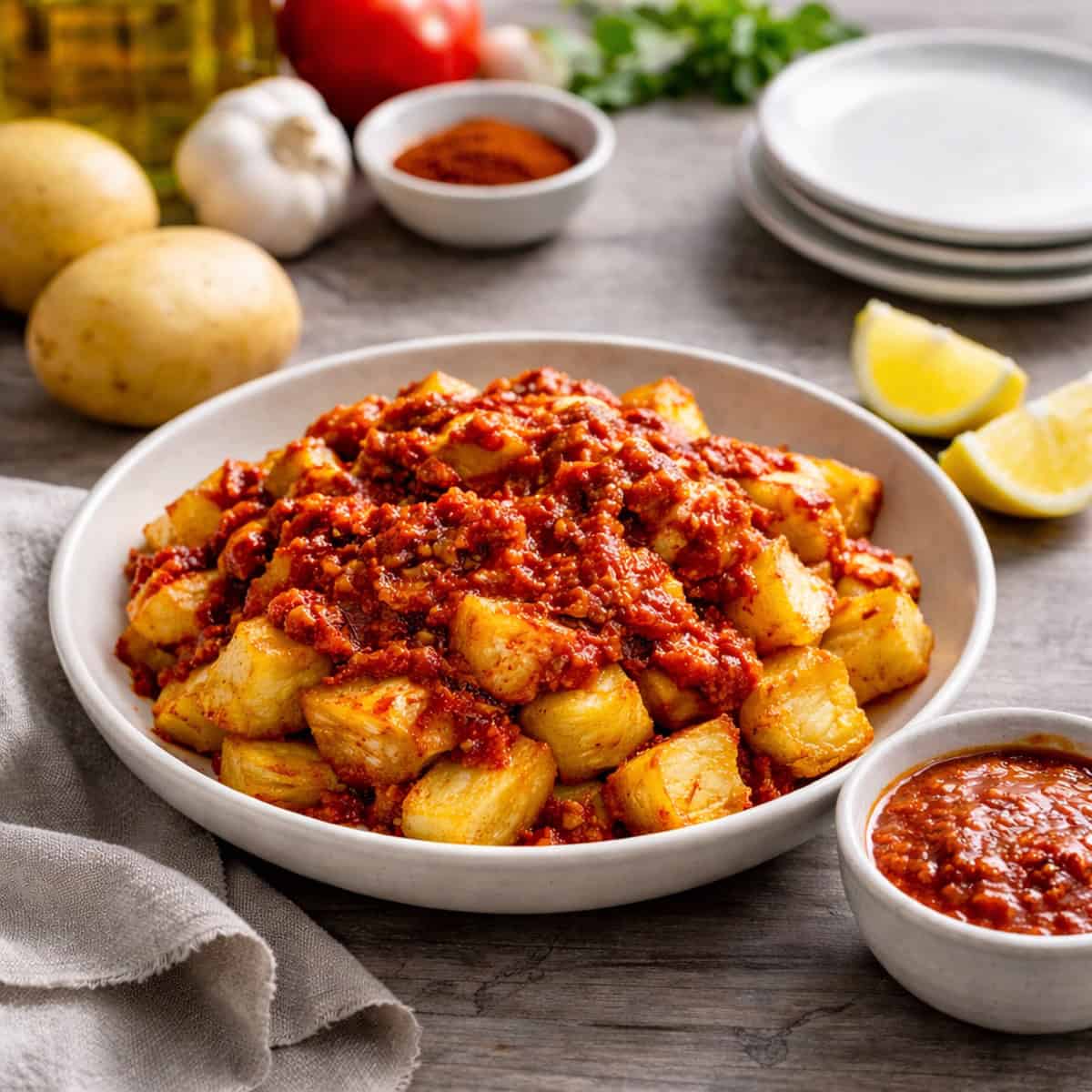
Traditionally, bravas are made from whole potatoes cut into large, irregular chunks, then fried until blistered and crisp on the outside and fluffy within. The rough edges are intentional—they grab the sauce and hold texture. Perfect cubes or skinny fries miss the point entirely.
Croquettes (croquetas) are a different dish altogether—made from thick béchamel or mashed fillings, shaped, breaded, and fried. Patatas bravas are never breaded, never molded, and never bound.
In many restaurants outside Spain, bravas are served as fry-shaped potatoes for speed and familiarity. That version stuck—but it isn’t traditional.
Proper bravas should feel substantial, rustic, and assertive, designed to stand up to a bold sauce, not be dipped delicately.
This recipe follows the traditional approach.
Ingredients for Patatas Bravas & Why They Matter
Potatoes
Starchy potatoes such as Yukon Gold fry fluffy inside and crisp without collapsing. Waxy potatoes stay dense and dull.
Olive Oil
Spanish olive oil brings bitterness and fruit that anchors the sauce. Neutral oil flattens it.
Smoked Paprika (Pimentón)
This is the soul of bravas sauce. Sweet smoked paprika provides warmth; hot smoked paprika brings bite. Use both if possible.
Tomatoes
Crushed or passata-style tomatoes give body without sweetness. Fresh tomatoes are unreliable here.
Vinegar
Essential for balance. Bravas sauce should wake up the palate.
Garlic & Onion
Built slowly, never rushed. This is sofrito-adjacent cooking.
Suggested Equipment
- Heavy-bottomed sauté pan or cast iron skillet
- Medium saucepan
- Spider or slotted spoon
- Chef’s knife
- Cutting board
- Paper towels
- Optional: immersion blender (for smoother sauce)
Recipe: Patatas Bravas with Proper Bravas Sauce
This is not complicated food, but it is deliberate.
The potatoes must be crisp on the outside and steaming inside.
The sauce must be warm, smoky, and acidic—not sweet, not creamy, not timid.
And everything must hit the table immediately, while the potatoes still crackle.
Serves 4
Ingredients for Patatas Bravas
Potatoes
- 2 lb Yukon Gold potatoes
- Olive oil or neutral oil for frying
- Kosher salt
Bravas Sauce
- 3 tablespoon olive oil
- 1 small onion, finely diced
- 3 cloves garlic, minced
- 1½ teaspoon sweet smoked paprika
- ½ teaspoon hot smoked paprika (adjust to taste)
- 1 tablespoon tomato paste
- 1 cup crushed tomatoes
- ½ teaspoon sugar (optional, only if tomatoes are harsh)
- 1–2 tablespoon sherry vinegar or red wine vinegar
- Kosher salt
Optional Finish
- Aioli, lightly drizzled (never drowned)
Method
1. Prepare the Potatoes
- Peel and cut potatoes into large, irregular chunks. Rough edges are encouraged.
- Rinse briefly to remove surface starch, then dry thoroughly.
2. Fry the Potatoes (Two-Stage Method)
- Heat oil to 325°F / 165°C. Fry potatoes in batches until tender but pale, about 6–8 minutes. Remove and drain.
- Increase oil temperature to 375°F / 190°C. Fry again until deeply golden and crisp, 3–4 minutes.
- Drain and salt immediately.
3. Make the Bravas Sauce
- Heat olive oil over medium-low heat. Add onion and cook slowly until soft and translucent, about 8 minutes.
- Add garlic and cook 30 seconds.
- Add paprika and tomato paste. Stir constantly for 30 seconds—do not burn.
- Add crushed tomatoes, salt, and sugar if needed. Simmer gently 10–15 minutes until thick.
- Finish with vinegar. Taste and adjust.
- Blend briefly if a smoother texture is desired.
4. Assemble
- Pile hot potatoes onto a serving dish. Spoon warm sauce over the top—enough to coat, not drown.
- Finish with a restrained drizzle of aioli if using.
- Serve immediately.
Wine Pairing
Patatas bravas are crisp, spicy, and built for sharing. Fried potatoes and bravas sauce—whether tomato-forward, smoky, or chile-heavy—call for refreshment first.
In Spain, the natural match is Cava. Dry, high-acid bubbles cut through fried edges, cool the heat, and keep the table moving. It’s celebratory without being precious, which suits the dish.
For still wine, look to Albariño or a dry Verdejo. Both bring brightness and salinity that play well with spice and garlic without competing with the sauce.
If you prefer red, keep it light and chilled. Garnacha in a fresh, low-oak style works when the sauce leans smoky rather than fiery. Avoid heavy tannins—fried food and chili don’t forgive them.
Beer is common here, but wine works when it stays nimble and dry.
Table Itinerary (Suggested to Serve With)
Serve with:
- Ice-cold lager or Spanish vermouth
- Olives or marinated anchovies
- Crusty bread
- Gambas al ajillo or pan con tomate
This dish wants company.
Chef’s Notes
- Flat sauce needs vinegar, not salt.
- Bravas sauce should sting slightly. That’s correct.
FAQ
Is bravas sauce always spicy?
Not necessarily, but it should be assertive.
Can I roast instead of fry?
You can, but you lose the bar-style texture. Frying matters.
Is aioli traditional?
Sometimes. Always optional. Never the star.
Comments
No Comments