
红烧牛肉面
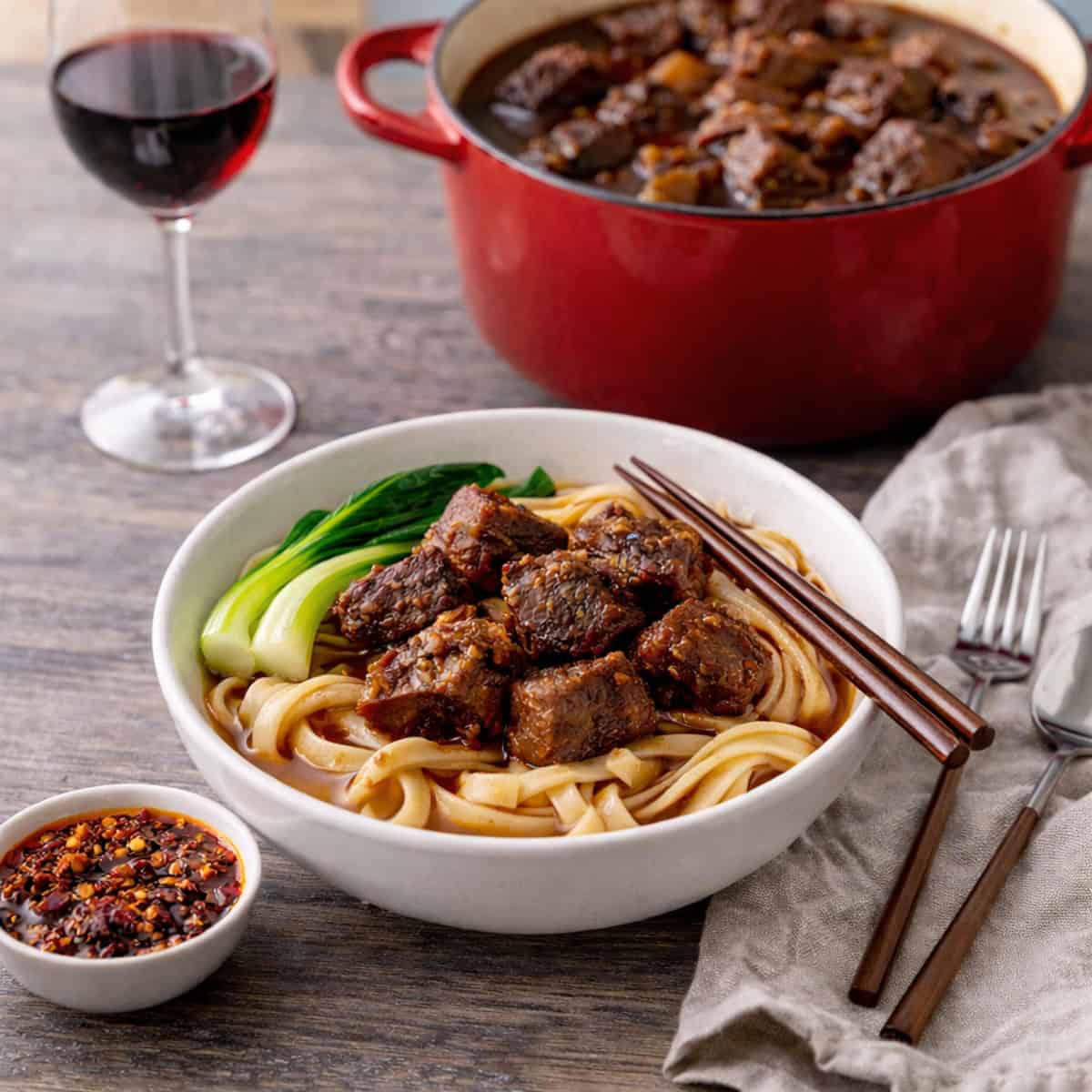
This is not fast food. It’s not weeknight food. It’s the kind of bowl you commit to because the payoff is worth the wait.
Braised red beef noodles are about patience: beef that gives up slowly, broth that deepens by the hour, spices that don’t shout but stay. The color comes from soy and time. The richness comes from collagen and restraint. When it’s right, the broth clings to the noodles instead of running past them.
This is a bowl meant to be eaten quietly, preferably when it’s cold outside.
Primary Technique: Red Brasing 红烧 (hóng shāo)
Red braising is a classic Chinese technique about heat and control. Beef is slowly simmered in a seasoned broth of soy sauces, aromatics, and a small amount of sugar, allowing flavor and color the deepen gradually as it reduces.
What "Red" Means
“Red” in Chinese cooking doesn’t mean spicy. The color comes from soy and time, not chili or carmelization.
Why These Ingredients Matter
The Beef
You want cuts that break down slowly and enrich the broth. Beef shank is traditional and gelatin-rich, but chuck or short ribs also work. Lean cuts don’t belong here.
Soy Sauce (Light + Dark)
Light soy brings salt and umami. Dark soy brings color and depth. Using both gives balance. Too much dark soy alone makes the broth heavy and flat.
Aromatics & Spice
Ginger, scallions, garlic, star anise, cinnamon, and Sichuan peppercorns form the backbone. They should be present but polite.
Wine Pairing
Red-braised beef is rich, savory, and lightly sweet, with depth coming from soy sauce, sugar, and long cooking rather than spice. The wine needs acidity to cut richness and enough softness to handle sweetness without clashing.
A dry to off-dry Riesling works exceptionally well. High acidity balances the sauce, while a touch of residual sugar mirrors the braise without tipping it into heaviness.
For red wine drinkers, keep it supple and low in tannin. Pinot Noir in a restrained style or Gamay works when the dish leans aromatic rather than aggressively sweet. Serve slightly cool to keep things fresh.
Sparkling wine is another strong option. A dry Brut lifts the richness and keeps the palate clean over a long meal, especially when the beef is served with rice and simple greens.
Avoid heavily oaked, high-alcohol reds. Soy and sugar amplify bitterness, and this dish rewards balance over force.
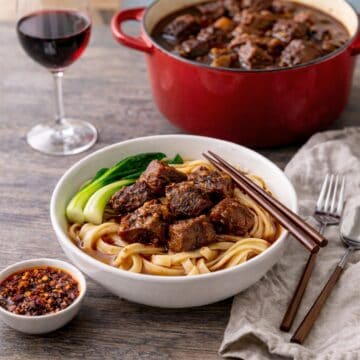
Braised Red Beef Noodles (Hóng Shāo Niú Ròu Miàn)

Ingredients
Beef & Broth Ingredients
- 2½ –3 lb beef shank or chuck cut into large chunks
- Neutral oil
- 4 slices fresh ginger
- 4 scallions cut into large sections
- 5 cloves garlic smashed
- 2 star anise
- 1 cinnamon stick
- 1 teaspoon Sichuan peppercorns
- ¼ cup Shaoxing wine
- ⅓ cup light soy sauce
- 2 tablespoon dark soy sauce
- 1 –2 tablespoon rock sugar or brown sugar
- 2 tablespoon tomato paste or 1 chopped tomato
- Water or beef stock to cover
Instructions
Step 1: Blanch the Beef
- Cover beef with cold water. Bring to a boil for 5 minutes. Drain and rinse well. This keeps the broth clean and focused.
Step 2: Build the Braise
- Heat a heavy pot with oil. Add ginger, scallions, garlic, star anise, cinnamon, and peppercorns until fragrant. Add beef and brown lightly. Deglaze with Shaoxing wine. Add soy sauces, sugar, and tomato. Cover with liquid.
Step 3: Low, Slow Braise
- Bring to a gentle simmer. Cover partially and cook 2½–3 hours until beef is deeply tender. Skim fat as needed. Adjust seasoning at the end.
- Noodles & Assembly
- Cook noodles separately. Blanch greens quickly in noodle water as noodles cook. Assemble with noodles, beef, broth, and greens.
Notes
Noodles & Assembly
Cook noodles separately. Blanch greens quickly in noodle water as noodles cook. Assemble with noodles, beef, broth, and greens.Pot Selection (What Kind of Pot to Use)
For braised red beef noodles (红烧牛肉面), the pot matters more than people think. This dish needs steady heat, long simmering, and zero scorching. The wrong pot flattens flavor before the beef ever gets tender.
Best Overall Choice
Heavy enameled cast iron pot (Dutch oven style).
Why it works:
• Holds steady, low heat for long braises
• Distributes heat evenly with no hot spots
• Traps moisture without sealing too tight
• Non-reactive with soy sauce, wine, and vinegar
This is the closest modern equivalent to traditional long-braise vessels used in Chinese kitchens.
Traditional Chinese Kitchen Option
Thick carbon steel or cast-iron pot with lid.
Pros:
• Excellent heat retention once hot
• Ideal for blooming aromatics before braising
• Develops depth and seasoning over time
Cons:
• Requires careful heat control
• Needs seasoning and maintenance
Acceptable Modern Alternative
Heavy-bottomed stainless steel pot (tri-ply).
Works if the base is thick and heat is kept low.
Guidelines:
• Stir occasionally early in the braise
• Avoid thin stainless steel
Soy-heavy braises scorch easily in lightweight pots.
What Not to Use
• Thin stockpots
• Nonstick cookware
• Aluminum pots
These can lead to burnt bottoms, flat broth, or metallic flavors.
Recommended Pot Size
For 2½–3 pounds of beef:
• Use a 5–6 quart pot
• Beef should be fully submerged without crowding
Crowding leads to uneven cooking and weaker broth.
Passport Kitchen Note
This broth gets better overnight. Don’t rush the salt—soy concentrates as it cooks. Keep garnishes minimal. If it looks dark but tastes flat, it needs time, not more soy.
What to Serve With Braised Red Beef Noodles
- Simple cucumber salad with vinegar
- Garlic-sautéed bok choy
- Pickled mustard greens
- Chili oil on the side (optional)
Comments
No Comments