
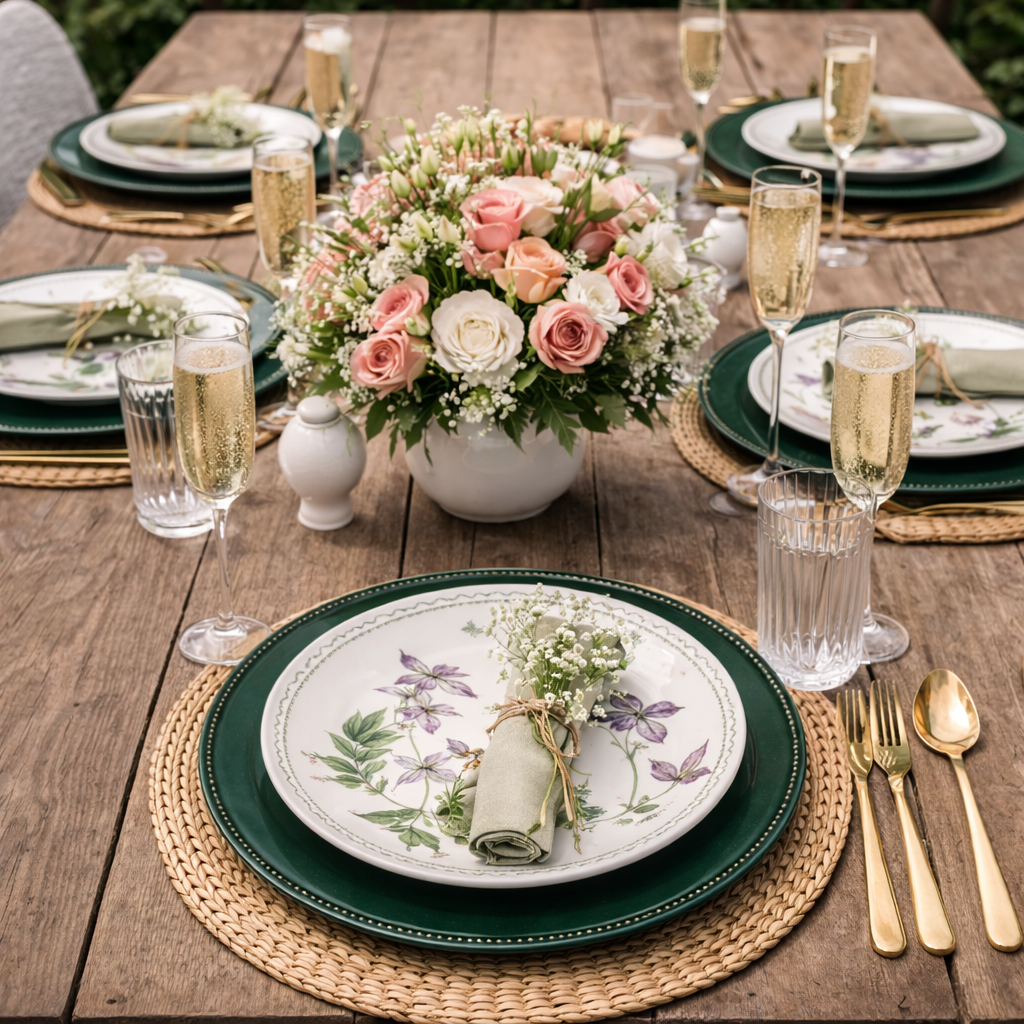
Mother’s Day tends to arrive dressed the same way each year—flowers, a set table, something warm from the oven—but that familiarity is local, not universal.
Look beyond it and the day begins to shift. In some places, it starts before sunrise with music offered at the door. In others, it is tied to the church calendar, or to the return of family after time apart. Sometimes it is quiet, almost understated. Sometimes it fills the house.
What carries across every version is not a specific dish, but a gesture: the table is built for someone who usually builds it for everyone else.
Understanding how different cultures cook for that moment gives you more than ideas. It gives you a way to make the table feel considered.
Mother’s Day Traditions Around the World
The version most recognizable today—brunch, flowers, a meal set aside for the occasion—was formalized in the United States in the early twentieth century and established as a national holiday in 1914.
But the instinct to honor mothers at the table is older.
In the United Kingdom, Mothering Sunday has been observed since the sixteenth century, originally tied to Lent and the return to one’s “mother church.” Over time, it evolved into a day centered around family and food.
What we now call Mother’s Day is not a single origin story, but a convergence. The American version shaped the date and its global spread, while older European traditions grounded the idea in season, ritual, and home.
United Kingdom — Mothering Sunday
In the United Kingdom, the day arrives earlier in the year, when the air still holds winter and the table leans toward what has always been done rather than what feels new.
Mothering Sunday grew out of return—returning to church, returning home—and that sense of continuity still defines the meal. This is not a table built for novelty. It is a table built for recognition.
A roast often anchors the day, with lamb, potatoes, and vegetables prepared in a way that feels unchanged. Dessert brings a note of ceremony. Simnel cake, dense with fruit and layered with marzipan, is finished with a ring of pale, rounded shapes across the top.
The meal does not try to impress. It holds its place.
Mexico — Día de las Madres
In Mexico, Mother’s Day arrives on May 10, and it arrives with energy.
Morning comes early. In some homes, it begins with music—voices or instruments offered before anything else. The house wakes around that moment, and the kitchen follows.
The food leans toward comfort, but it is not casual. Dishes like tamales often appear, not because they define the holiday, but because they require time, coordination, and care. They are the kind of food that signals the day matters. Alongside them, there is atole, warm and thick, and trays of pan dulce.
Later, the table may expand—mole, pozole, or a meal shared out—but even in the morning, there is already a sense of abundance.
This is not a plated brunch. It is a gathering that happens to begin with breakfast.
France — Fête des Mères
In France, Mother’s Day settles into late spring, when the light stretches and the table has time.
The meal is usually a lunch, and it unfolds at a measured pace. There is no urgency to it. Courses arrive when they are ready, and the table adjusts around them.
Dessert carries the center. Cakes are often shaped or decorated with a floral sensibility, echoing the season without overstating it. The presentation is deliberate, but never excessive.
There is a quiet confidence in the structure. The meal does not try to do everything. It does exactly enough.
Japan — Haha no Hi
In Japan, Mother’s Day falls on the same Sunday as in the United States, but the tone is notably more restrained.
The meal is typically prepared at home and reflects the structure of everyday cooking rather than a departure from it. Grilled fish, rice, miso soup, seasonal vegetables—each element placed with care, each portion considered.
There is no excess. Balance is the point.
Even the symbol of the day, a red carnation, carries that same clarity. It is a single gesture, direct and unadorned.
The meal does not announce itself. The intention is understood.
Ethiopia — Antrosht Festival
In Ethiopia, the celebration connected to honoring mothers unfolds after the rainy season, when families return and cooking becomes shared again.
This is not a quiet table. It is a collective one.
Injera is spread wide, forming the base for stews layered across its surface—doro wat, rich and deeply spiced, among them. The meal is eaten together, hands moving across the same platter, each bite taken from a shared space.
Preparation is part of the celebration. Ingredients arrive from different hands, and the meal takes shape over time.
The table is not set all at once. It is built.
How This Connects to Your Menu
A strong Mother’s Day table does not need to replicate a single tradition. It can draw from several.
A composed centerpiece can anchor the table. A dish prepared ahead can carry the meal. A shared element can invite people in. A quieter, more restrained plate can keep everything in balance.
When those pieces come together, the table stops feeling assembled and starts feeling intentional.


Comments
No Comments