
长寿面)
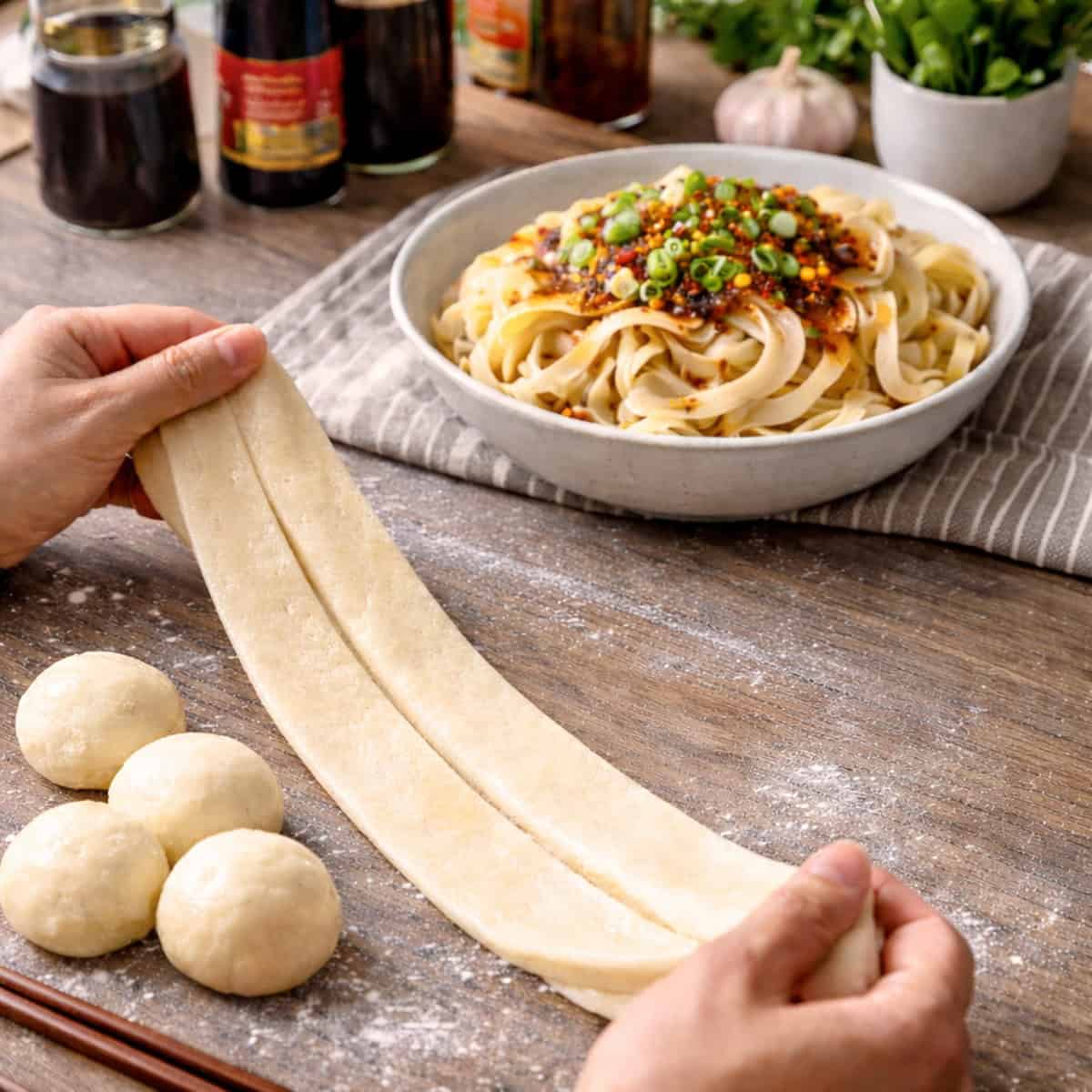
These noodles arrive wide, long, and unapologetic, demanding attention and a little respect from the person eating them. Xi’an-style long noodles are wheat and muscle and heat—slapped into shape by hand and finished with oil hot enough to announce itself.
They’re eaten long on purpose. They’re never cut. And when they appear on a table during Chinese Lunar New Year, they’re there to say one thing clearly: life should be uninterrupted.
Why Long Life Noodles Matter (Especially for Lunar New Year)
In Chinese food culture, length equals life. Long noodles symbolize longevity, continuity, and an unbroken future. Cutting them—before or after cooking—is traditionally avoided, particularly during Lunar New Year celebrations.
Once you understand why these noodles are treated with respect, the rest is simply execution.
What Makes Biáng Biáng Miàn Different
Biáng biáng miàn is defined less by sauce and more by intention. The noodles are pulled and slapped by hand, left wide and flat on purpose, and finished with hot oil poured directly over aromatics so the heat announces itself. Black vinegar, chili, and soy stay in balance, never competing for attention. There are no heavy toppings, no clutter. This is wheat-forward food. The noodle leads, and everything else knows its place.
Why These Ingredients Matter
This dish is built on restraint. When there are this few ingredients, each one has to earn its place.
The Flour (This Is the Backbone)
These noodles live or die by gluten strength. All-purpose flour does not belong here. It lacks the protein needed to survive repeated resting, stretching, slapping, and pulling. Biang Biang mian demands elasticity and resilience. The flour ahs to stretch withour tearding, relax without collapsing, and holdits shape under heat.
High-protein wheat flour gives the noodle its structure, chew and longevity. without it, everything else fails.
Water
Water does more than hydrate the dough- it controls how the gluten develops. Too much and the dough slackens. Too little and it fights back. The ideal dough that softens through resting, rather than force. time does the work here, not extra water.
Salt
Salt tightens gluten and sharpens flavor. it's not about strengthening it. Proper salting gives the dough tension and keeps the final noodle from tasting flat, even before suace is added.
Oil
Oil isn't mixed into the dough for richness- it's used as protection. It prevents sticking during resting and stretching, allowing the noodle to lengthen without tearing. Later, hot oil becomes the delivery system for aroma, not fat.
Black Vinegar, Chili and Soy
These aren't a sauce in the Western sense. They are accents, added with composure. Black vinegar brings depth. chili brings heat, soy brings salt. None of them should dominate. Thier role is to frame the wheat, not compete with it.
Long Life Noodles (Biáng Biáng Miàn)

Ingredients
Dough Ingredients
- 2 cups bread flour
- or Chinese noodle flour
- or Korean wheat flour
- ¾ cup warm water
- ½ teaspoon salt
- Neutral oil for resting
Sauce & Aromatics
- 3 cloves garlic finely minced
- 1 –2 teaspoon Chinese chili flakes to taste
- 1 tablespoon light soy sauce
- 1 tablespoon Chinese black vinegar
- ½ teaspoon sugar
- 3 tablespoon neutral oil peanut or vegetable
Instructions
Make the Dough (Xi’an Method – Elasticity First)
Step 1: Initial Mix + Autolyse (Critical)
- Mix flour and salt in a bowl. Gradually add warm water, stirring until a rough, shaggy dough forms. Do not knead.
- Cover and rest for 30 minutes.
- This autolyse allows the flour to fully hydrate and begins gluten development naturally, making the dough far more cooperative later.
Step 2: Four Knead & Rest Cycles
- After the autolyse, repeat the following four times:
- Knead for 2–3 minutes, until the dough tightens slightly
- Cover and rest for 15 minutes
- Each knead builds strength. Each rest relaxes the dough. By the fourth cycle, it should feel smooth, elastic, and cooperative.
Step 3: Bulk Rest
- Lightly coat the dough with neutral oil, cover tightly, and rest at room temperature for 2–3 hours.
- This bulk rest is what allows the dough to be slapped and stretched without tearing.
Shape the Dough (With Center Indentation)
- Divide the rested dough into 6–8 equal pieces.
- Roll each piece into a long oval, about ½ inch thick.
- Using a chopstick, press a firm indentation down the center lengthwise of each oval.
- Do not cut through the dough.
- The groove should be clearly defined.
- Lightly coat each piece with neutral oil.
- Cover and rest for 20–30 minutes.
- This indentation creates a centerline that allows the noodle to open evenly during stretching.
- This pause is essential. It sets up everything that follows.
The Slapping (Biáng Biáng Technique — Non-Negotiable)
- Hold one dough strip by both ends.
- Lift it slightly and slap the center firmly against the counter.
- As it hits the surface, pull outward — slap → stretch → slap → stretch.
- Rotate your hands slightly so the noodle widens evenly.
- Continue until the noodle becomes a wide, flat ribbon, about 2–3 inches across.
- You should hear a sharp “biáng” when the dough hits the counter. That sound is the name.
Rules:
- Do not cut
- Do not rush
- If it resists, rest 5 more minutes and try again
- The dough should feel elastic, alive, and willing.
Cook the Noodles
- Boil in well-salted water for 1–2 minutes, just until the noodles float and turn silky. Remove directly to serving bowls.
- Do not overcook. Texture is everything.
The Hot Oil Pour (Signature Finish)
- Place garlic, chili flakes, sugar, soy sauce, and black vinegar directly on the hot noodles. Heat oil until shimmering and carefully pour over the aromatics.
- It should sizzle loudly. That sound is flavor being built in real time.
- Toss gently. Serve immediately.
How to Serve
- Serve right away. Do not cut. Eat slowly, lifting and slurping.
- For Lunar New Year, keep the dish simple so the symbolism stays clear.
Notes
What to Serve With Long Life Noodles
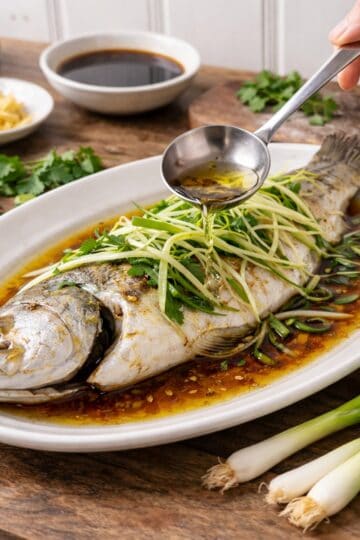
- Steamed whole fish with ginger and scallions
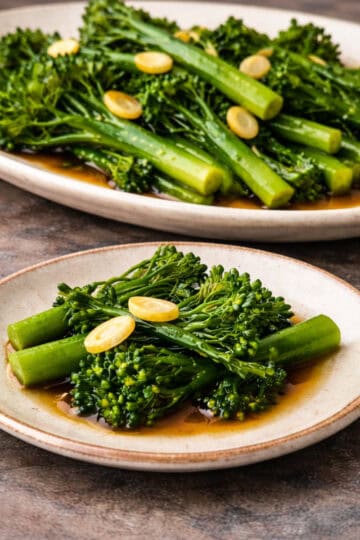
- Stir-fried bok choy or Chinese broccoli
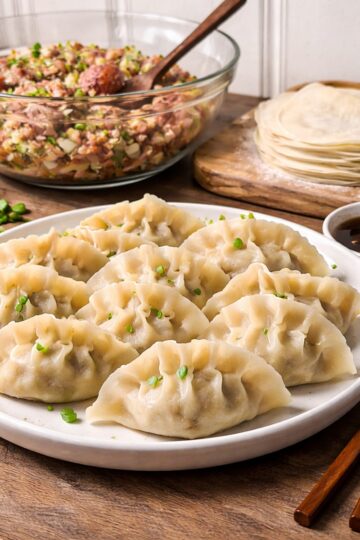
- Half-moon dumplings
- Simple cucumber salad with vinegar
Comments
No Comments