
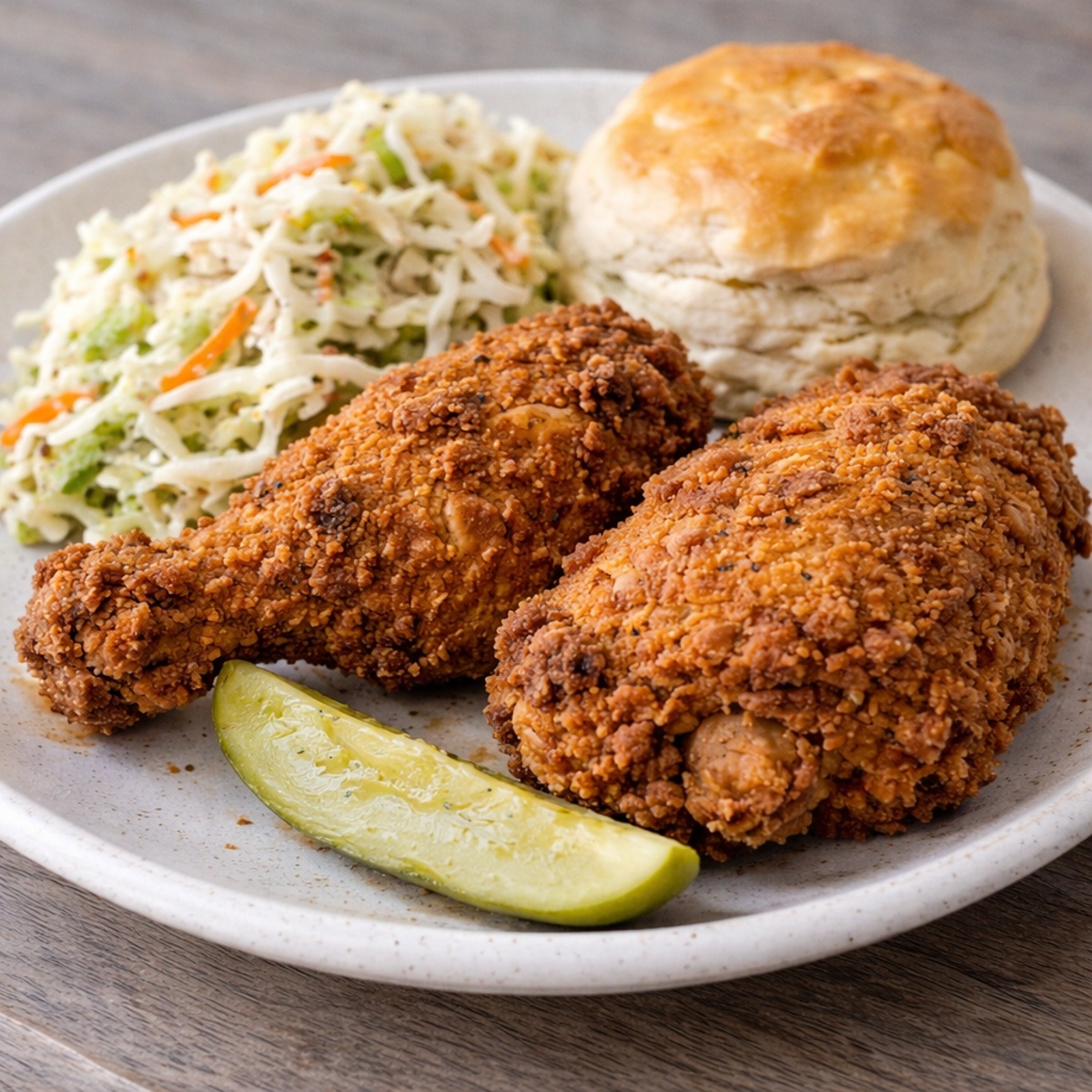
Southern fried chicken isn’t about crunch alone — it’s about control. Properly seasoned meat, a coating that stays where it belongs, and oil held at the right temperature from start to finish. Whether you start with buttermilk or a dry brine, the goal is the same: juicy chicken, crisp crust, and nothing greasy left behind. Done correctly, the crust seals in the moisture while the oil drives off excess water, leaving the chicken crisp rather than heavy.
Why This Dish Matters
Fried chicken was never restaurant food to start. It was a way to stretch a bird, feed a table, and turn time and care into something worth sitting down for. The method depended on what was on hand—some kitchens had buttermilk, some relied on salt and spice—but the intent was always the same: make something honest taste exceptional.
Technique Intelligence
Southern fried chicken is a lesson in moisture management, rest, and heat discipline.
The first dredge isn’t about thickness—it’s about adhesion. After resting, the flour hydrates and bonds to the surface of the chicken. A second, lighter dredge after that rest builds texture without creating a raw or heavy crust. Skip the rest or rush the second coat and the crust will either slide off or turn doughy.
Oil temperature does the rest. Too hot and the coating sets before the meat cooks. Too cool and even a good dredge absorbs fat. Fried chicken rewards patience and punishes shortcuts.
(Link upward to: Frying & Hot Oil Fundamentals)
Ingredients, With Intent
Chicken
Bone-in, skin-on pieces cook evenly and stay moist. The bone moderates heat, giving the crust time to set without drying the meat. Boneless cuts work, but the margin for error is narrower.
Option 1: Buttermilk Marinade
Buttermilk seasons the chicken throughout and gently tenderizes the meat. More importantly, it creates a tacky surface that helps the flour cling. This is the most forgiving method and ideal when time allows.
Option 2: Dry Rub
A dry rub relies on salt to draw moisture to the surface, forming a natural paste that binds the dredge. It’s practical when buttermilk isn’t available and produces a slightly firmer, more direct bite.
Flour & Spice
All-purpose flour provides structure. The first dredge creates the bond; the second creates texture. Black pepper brings bite, paprika warmth, and cayenne stays in the background. The flour should taste well-seasoned on its own.
Frying Fat
Use a neutral oil with a high smoke point. Peanut oil is traditional, but vegetable or canola oil work well. Flavor comes from seasoning and technique, not the oil.
Instructions
Buttermilk Method (Double Dredge)
- Season chicken generously with salt and pepper.
- Submerge in buttermilk, cover, and refrigerate 4–24 hours.
- Combine flour and spices in a wide bowl.
- Remove chicken from buttermilk, letting excess drip off.
- First dredge: Coat chicken in flour, pressing lightly.
- Rest on a rack 20–30 minutes until the coating looks damp and set.
- Second dredge: Lightly coat again, focusing on uneven spots.
- Fry at 325–350°F, turning as needed, until golden and cooked through, 12–15 minutes depending on cut.
- Drain on a rack and rest 5 minutes before serving.
Dry Rub Method (Double Dredge)
- Season chicken generously with salt and spice mix.
- Rest uncovered in the refrigerator at least 2 hours, preferably overnight.
- First dredge: Coat chicken in seasoned flour, pressing lightly.
- Rest on a rack 20–30 minutes.
- Second dredge: Lightly coat again.
- Fry at 325–350°F until golden and cooked through.
- Drain on a rack and rest before serving.
What Can Go Wrong
Crust flakes off → First dredge wasn’t rested long enough.
Thick, doughy crust → Second dredge too heavy or oil too cool.
Uneven crunch → Weak spots missed during second dredge.
Greasy chicken → Oil temperature dropped or pan overcrowded.
Dark crust, raw center → Oil too hot; lower heat and extend cooking time.
Wine Pairing
Southern fried chicken needs acidity and refreshment, not weight or tannin.
A chilled dry sparkling wine—Prosecco or Crémant—cuts through the fat and resets the palate. An unoaked Chardonnay or dry Riesling works well, especially when the seasoning leans peppery.
Avoid red wine. Tannin and fried crust rarely get along.
Table Itinerary
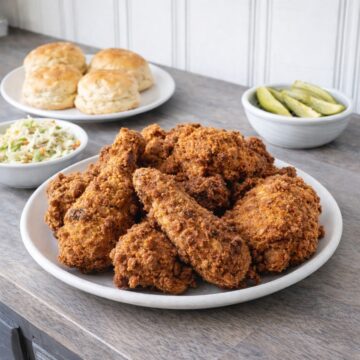
Fried chicken belongs at the center of a simple table:
- Buttermilk Biscuits or plain white rice
- Coleslaw or braised greens for contrast
- Baked Mac and Cheese
- Pickles or hot sauce to keep things moving
This dish is meant to be passed, not plated.
Variations & Regional Notes
- Some Southern cooks double-dredge without resting, but adhesion and texture suffer.
- Skillet frying is traditional for shallow oil methods but requires frequent turning.
- Spice levels vary by household; heat is optional, seasoning is not.
Suggested Equipment
- Cast-iron skillet or Dutch oven for steady heat
- Thermometer to manage oil temperature
- Wire rack for resting and draining
Avoid thin pans and paper towels, which trap steam and soften the crust.
Storage & Make-Ahead
Fried chicken is best the day it’s made but holds well refrigerated up to 2 days. Reheat uncovered in a hot oven to restore crispness. Skip the microwave.
Southern Fried Chicken (Buttermilk or Dry Rub)

Equipment
- Equipment
- Heavy cast-iron skillet or Dutch oven
- Instant-read or clip-on thermometer
- Wire rack
- Tongs or spider strainer
- shallow dredging trays
- Optional but Useful
- Splatter screen
- Fry thermometer clip
Ingredients
Ingredients
Chicken
- 1 whole chicken 3 ½–4 lb, cut into 8 pieces (or 8 bone-in, skin-on pieces)
- Kosher salt and black pepper
Option A: Buttermilk Marinade
- 2 cups buttermilk
- 1 tablespoon kosher salt
- 1 teaspoon black pepper
- Option B: Dry Rub
- 1 ½ tablespoon kosher salt
- 1 teaspoon black pepper
- 1 teaspoon paprika
- ½ teaspoon garlic powder
- ¼ –½ teaspoon cayenne optional
Seasoned Flour (Dredge)
- 2 ½ cups all-purpose flour
- 2 teaspoon kosher salt
- 2 teaspoon black pepper
- 2 teaspoon paprika
- 1 teaspoon garlic powder
- ½ teaspoon onion powder
- ¼ –½ teaspoon cayenne optional
For Frying
- Neutral oil peanut, canola, or vegetable, for frying (about 2–3 inches deep)
Instructions
Instructions
Choose Your Method
- Use the buttermilk method for the most forgiving, classic result.
- Use the dry-rub method when buttermilk isn’t available or when you want a slightly firmer bite.
Method A: Buttermilk (Double Dredge)
- Season the chicken lightly with kosher salt and black pepper on all sides.
- In a large bowl, whisk together 2 cups buttermilk, 1 tablespoon kosher salt, and 1 teaspoon black pepper. Add chicken, cover, and refrigerate 4–24 hours.
- In a wide bowl, mix 2½ cups flour, 2 teaspoons salt, 2 teaspoons black pepper, 2 teaspoons paprika, 1 teaspoon garlic powder, ½ teaspoon onion powder, and cayenne if using.
- Remove chicken from buttermilk, letting excess drip off.
- First dredge: Coat each piece in seasoned flour, pressing lightly.
- Arrange chicken on a wire rack and rest 20–30 minutes, until the coating looks damp and set.
- Second dredge: Lightly coat again, focusing on bare or thin spots. Shake off excess flour.
- Heat oil to 325–350°F. Fry chicken in batches, turning as needed, until golden and cooked through:
- Dark meat: 13–15 minutes
- White meat: 10–13 minutes
- Drain on a rack and rest 5 minutes before serving.
Method B: Dry Rub (Double Dredge)
- Pat chicken dry. Season all over with 1½ tablespoons kosher salt, 1 teaspoon black pepper, 1 teaspoon paprika, ½ teaspoon garlic powder, and cayenne if using.
- Refrigerate uncovered at least 2 hours, preferably overnight.
- In a wide bowl, mix the seasoned flour ingredients listed above.
- First dredge: Coat chicken in flour, pressing lightly.
- Rest on a wire rack 20–30 minutes.
- Second dredge: Lightly coat again, focusing on weak spots.
- Fry at 325–350°F until golden and cooked through.
- Drain on a rack and rest 5 minutes before serving.
Comments
No Comments