
Pulled pork is not about smoke alone. It’s about time, and collagen
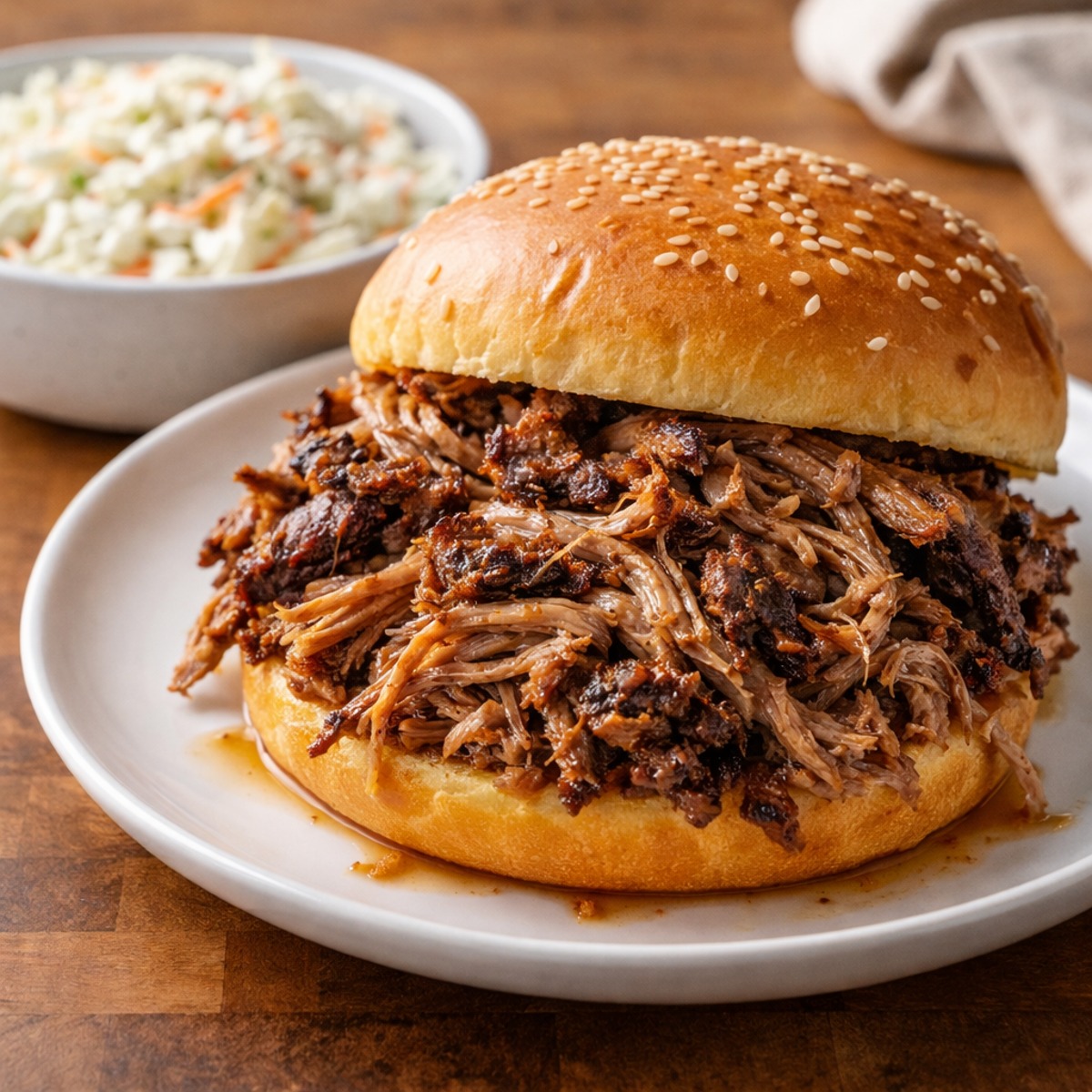
Yes, smoke adds flavor. But long before backyard rigs and competition trophies, pork shoulder was cooked low and slow in enclosed heat until it collapsed under its own weight. The oven can do that just as reliably. The smoker adds character. The oven adds control.
Both are legitimate. The pork doesn’t care how you get there.
Why This Dish Matters
Pulled pork exists because pork shoulder is tough, inexpensive, and full of connective tissue. You can’t rush it. You have to wait it out.
Low heat gives collagen time to melt into gelatin. Fat renders slowly. Muscle fibers relax instead of tightening. What starts out stubborn becomes generous.
That transformation — not sauce, not smoke — is the point.
Technique Spotlight: Collagen Conversion, Not Temperature Chasing
Pulled pork is finished by feel, not numbers.
Internal temperature matters only as a guide. What you’re really waiting for is the moment when the meat offers no resistance and pulls apart without force. That happens when collagen has fully converted, usually after hours of steady, moderate heat.
Whether you use an oven or a smoker, the rules are the same:
- Low temperature
- Long cooking time
- Rest before pulling
Everything else is preference.
Two Legitimate Methods
Oven Pulled Pork (Controlled, Reliable)
The oven version is steady and predictable. Wrapped tightly, the pork cooks in its own rendered fat and juices, protected from drying out.
You trade smoke for consistency. What you get back is moisture, repeatability, and freedom from weather.
This method shines when:
- You’re cooking for a crowd
- Time matters more than theater
- You want dependable results
It also reheats beautifully.
Smoked Pulled Pork (Flavor-Forward, Hands-On)
The smoker adds another layer—wood smoke, bark, and a deeper exterior flavor.
This version rewards attention. Fire management matters. So does restraint. Too much smoke overwhelms pork’s natural sweetness. Too much heat stalls the cook or dries the surface before the inside is ready.
Done right, smoked pulled pork tastes unmistakably itself: rich, savory, and patient.
Smoker Recommendations (Honest, Practical)
You don’t need the “best” smoker. You need the right kind of control for how you cook.
Pellet Smokers (Best for Most Home Cooks)
If you want consistent results without babysitting a fire, this is the smart choice.
Recommended models:
- Traeger Pro 575 / Pro 780 – Reliable temperature control, straightforward operation
- Camp Chef Woodwind Pro – Excellent heat stability and easy ash cleanout
- Recteq RT-590 or RT-700 – Rock-solid build, very accurate controllers
Pellet smokers produce a clean, balanced smoke that works especially well with pork shoulder. Less drama, more repeatability.
Kamado-Style Cookers (Precision + Versatility)
These excel at holding low temperatures for long periods and double as grills and ovens.
Recommended models:
- Big Green Egg Large
- Kamado Joe Classic II
They reward careful setup and produce excellent bark with moderate smoke. Smaller cooking surface, but exceptional control.
Offset Smokers (Maximum Flavor, Maximum Attention)
Offsets deliver the deepest smoke profile—but they demand time and focus.
Recommended models:
- Oklahoma Joe Highland (entry-level, needs tuning)
- Workhorse Pits 1969 (serious investment, serious results)
Choose this path if tending fire is part of the pleasure. It’s not forgiving, but it’s honest.
Sauce: Optional, Intentional, Added After Pulling
Pulled pork doesn’t need sauce to be edible. It needs moisture and restraint.
That said, a good sauce gives you contrast—acidity to cut fat, sweetness to round smoke, heat to keep things from going flat. Sauce should be added after pulling, and only to taste.
A thin, vinegar-forward barbecue sauce works with both oven and smoker methods without masking the meat.
What Can Go Wrong
- Dry pork
Cooked too hot or pulled before it was ready. - Tough texture
Not enough time. Collagen hadn’t finished breaking down. - Mushy meat
Overcooked and aggressively handled. Pull gently.
Pulled pork doesn’t fail suddenly. It fails when patience runs out.
Serving & Pairing
Pulled pork belongs with contrast:
- Soft rolls or buns
- Vinegar-based slaw
- Pickles, mustard, hot sauce
It’s generous food. Let it stay that way.
Storage & Make-Ahead
Pulled pork improves after resting.
- Refrigerate pulled pork in its juices up to 4 days
- Freeze well-wrapped portions up to 3 months
- Reheat gently with reserved fat or cooking liquid
Dry reheating ruins good work.
Equipment
Roasting pan or Dutch oven (oven method)
Smoker (smoker method)
Meat thermometer
Foil or butcher paper
Two forks or gloved hands
No gadgets required. Patience is the tool that matters.
Recipe Cards
The full ingredient lists, measurements, and step-by-step instructions for both methods, plus the vinegar-forward barbecue sauce, live in the recipe cards below:
- Oven Pulled Pork
- Smoked Pulled Pork
- Simple Vinegar Barbecue Sauce
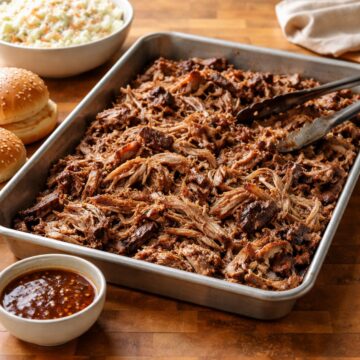
Pulled Pork (Oven or Smoker)

Equipment
- Equipment
- Roasting pan or Dutch oven (oven method)
- Smoker (smoker method)
- Foil (0ven method)
- Two forks or heat-safe gloves
- Meat Termometer
- butcher paper (smoker method)
Ingredients
Ingredients
- Pork
- 1 8–10 lb pork shoulder (Boston butt), bone-in or boneless
- 2½ teaspoon kosher salt
- 2 teaspoon black pepper
Optional Dry Rub (Both Methods)
- 2 tablespoon brown sugar
- 2 teaspoon smoked paprika
- 2 teaspoon garlic powder
- 1 teaspoon onion powder
- 1 teaspoon ground cumin
- ½ teaspoon cayenne optional
Simple Vinegar Barbecue Sauce
- ¾ cup apple cider vinegar
- ¼ cup ketchup
- 2 tablespoon brown sugar
- 1 tablespoon yellow mustard
- 1 teaspoon kosher salt
- ½ teaspoon black pepper
- ½ teaspoon chili flakes optional
Instructions
Instructions
Oven Pulled Pork Method
- Preheat oven to 300°F (150°C).
- Pat pork dry and season evenly with salt, pepper, and optional dry rub.
- Place pork in a roasting pan or Dutch oven. Cover tightly with foil or lid.
- Cook for 4–5 hours, until pork is very tender.
- Uncover and continue cooking 2–3 hours until the meat pulls apart easily.
- Remove from oven and rest 45 minutes before pulling.
Smoked Pulled Pork Method
- Preheat smoker to 250°F (120°C) using apple, hickory, or a mild fruitwood blend.
- Season pork evenly with salt, pepper, and optional dry rub.
- Place pork fat-side up on smoker grates.
- Smoke for 6–8 hours, until bark forms and internal temperature reaches ~165°F.
- Wrap tightly in foil or butcher paper and return to smoker.
- Continue cooking 2–3 hours until pork reaches 195–203°F and probes tender.
- Rest wrapped pork 45 minutes before pulling.
Vinegar Barbecue Sauce
- Combine vinegar, ketchup, brown sugar, mustard, salt, pepper, and chili flakes in a saucepan.
- Simmer gently 10–15 minutes, stirring occasionally.
- Cool slightly before using.
Pulling & Finishing
- Pull pork into large strands using forks or gloved hands.
- Moisten with reserved cooking juices.
- Add barbecue sauce gradually, tossing gently and tasting as you go.

Comments
No Comments