
Italian food isn't built on complexity, but on the quiet confidence of great ingredients shared at the table.
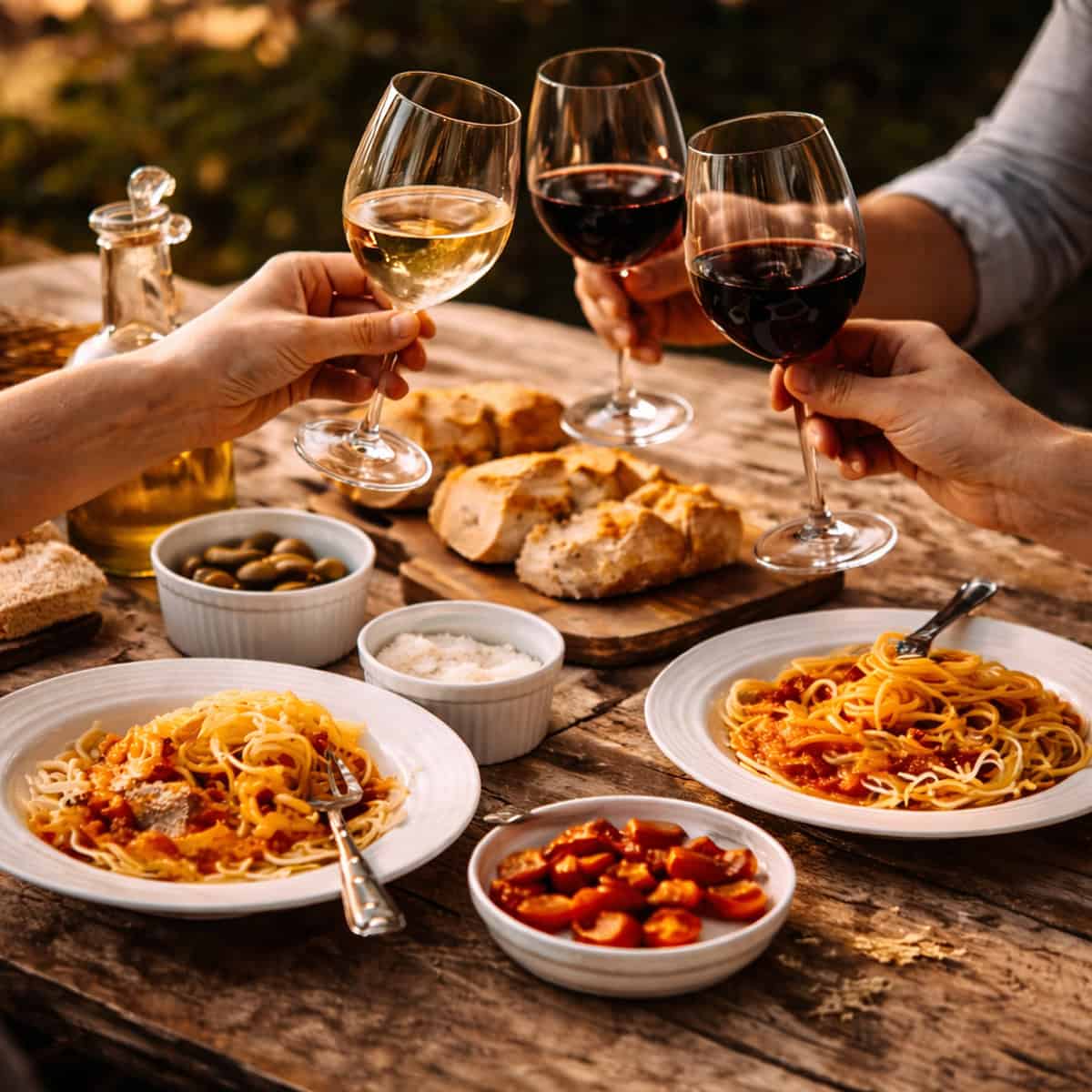
Italian cooking looks simple, but its real strength is restraint. A few exceptional ingredients, handled with precision, matter far more than complexity.
Flavors change by region, yet the guiding idea remains constant: cook with intention, respect the ingredient, and let it speak clearly.
Italy at a Glance
Flavor profile: Clean • Savory • Balanced • Ingredient-forward
Primary fats: Olive oil (south & center), butter (north)
Heat level: Low to moderate
Signature ingredients: Tomatoes, garlic, wheat, aged cheeses, herbs
Texture focus: Al dente, crisp-tender contrast
Cooking style: Few ingredients, precise timing
The Core Idea
Italian cooking is built on three principles:
Quality ingredients
Simple technique
Respect for timing
Master those, and you can cook most Italian dishes without a recipe.
Why Italian Food Tastes So Distinct
Unlike cuisines that rely on spice blends or heavy sauces, Italian food aims for clarity. A tomato sauce should taste unmistakably of tomatoes. Pasta should taste like wheat. Cheese should enhance, not overwhelm.
More ingredients rarely improve a dish. They usually dilute it.
How Italian Meals Are Structured
Traditional meals follow a progression designed to balance appetite and texture rather than piling everything onto one plate.
Antipasto → Primo → Secondo → Contorno → Dolce
At home, these courses are often simplified or combined, but the structure explains why Italian meals feel satisfying without being heavy.
North to South: A Gradual Shift
Italian cuisine changes with climate and agriculture rather than political boundaries.
Northern Italy
Butter, rice, braising, polenta, dairy
Central Italy
Meats, grains, legumes, balanced flavors
Southern Italy
Olive oil, tomatoes, seafood, bright acidity
Think of it as a spectrum, not a divide.
Core Techniques You’ll See Everywhere
Italian cooking relies on controlled heat and sequencing rather than elaborate methods.
• Gently sautéing aromatics
• Simmering sauces until integrated
• Cooking pasta to al dente
• Roasting for flavor concentration
• Braising tougher cuts until tender
• Finishing with olive oil, butter, or cheese
The Italian Pantry in One Sentence
A small set of ingredients used in endless combinations.
Olive oil, tomatoes, garlic, onions, hard cheeses, wheat products, herbs, beans, and seasonal vegetables form the backbone of most dishes.
Restaurant Italian vs. Everyday Italian
Restaurant versions tend to emphasize richness, portion size, and visual impact. Home cooking prioritizes practicality, seasonality, and repeatability.
If a dish feels heavy or complicated, it likely reflects restaurant interpretation rather than traditional home cooking.
Why Timing Matters So Much
Italian recipes often look deceptively simple because the critical details are not ingredient lists but technique:
Pasta must be cooked precisely
Vegetables should retain texture
Sauces should integrate, not reduce excessively
Proteins should remain juicy
Small timing errors matter more than missing minor ingredients.
A Simple Way to Judge Your Results
If the finished dish tastes clean, balanced, and clearly of its main ingredient, you are on the right track.
If it tastes muddy, heavy, or indistinct, something was overcooked or overcomplicated.
Explore Italian Cooking Further
New to Italian cooking? Begin with the essential guides below: