
Controlled Sweetness, Proper Caramelization, and Why Cutting Late Matters
Carrots like this get ruined by good intentions.
Too much honey too early, and they burn before they ever develop flavor. Cut too soon, and they lose structure, collapsing into something soft and forgettable.
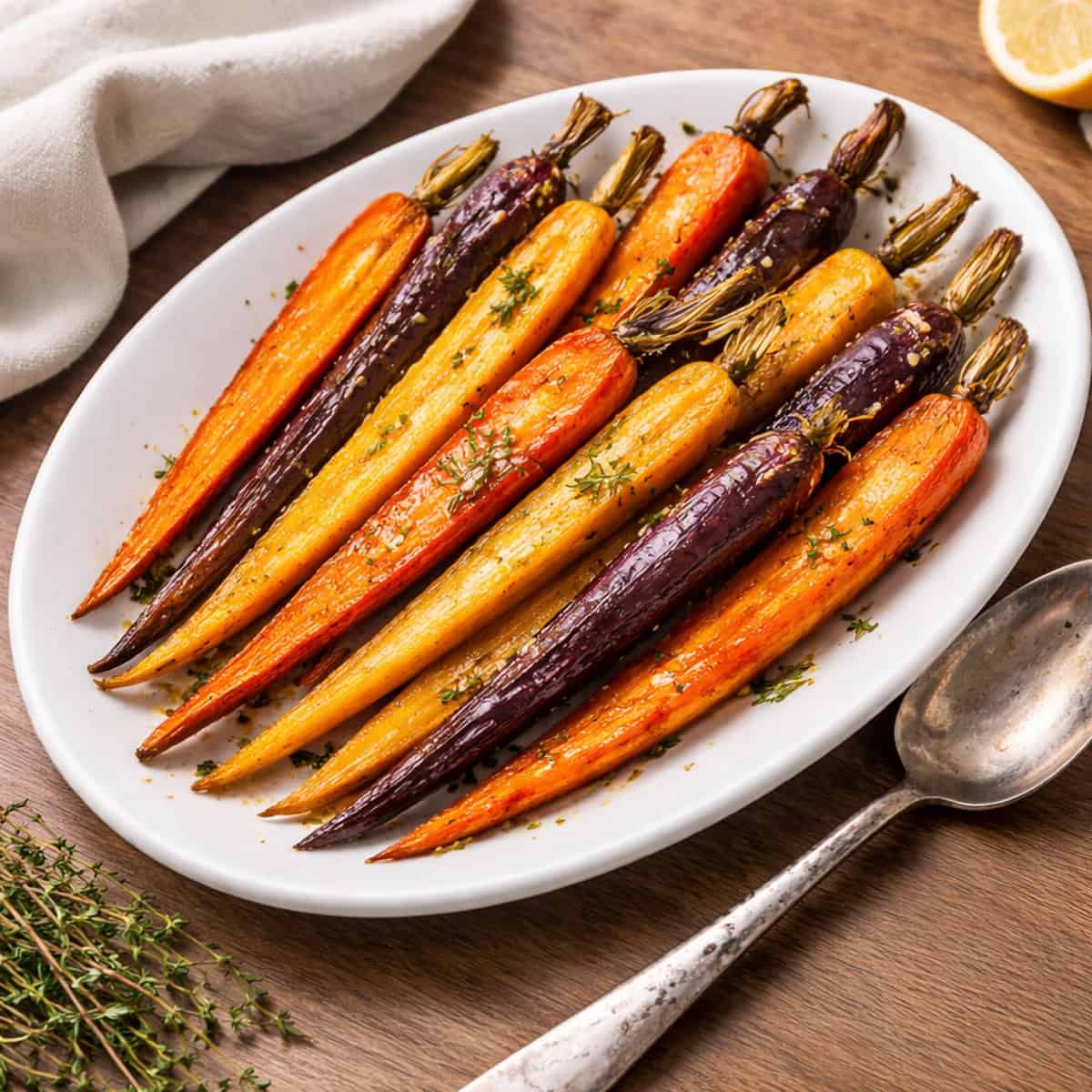
Done properly, they hold their shape, take on color gradually, and finish with a glaze that clings instead of pooling.
This isn’t about roasting vegetables.
It’s about timing.
Technique Intelligence
The key decision here is when you cut them.
Roasting the carrots whole does two things. It protects their structure, and it slows down how moisture leaves the vegetable. Instead of drying out or softening too quickly, they cook evenly from the inside out, staying intact while becoming tender.
If you cut them first, you expose too much surface area too early. They shrink, lose moisture, and you end up chasing texture instead of controlling it.
The glaze comes later.
Honey doesn’t belong in the oven at the start—it burns before the carrots are ready. By waiting until they’re fully tender, then slicing them lengthwise, you create fresh surface area at exactly the right moment. That’s when the glaze can grab, coat, and caramelize instead of scorching.
The second trip into the oven is brief, but it’s where the dish actually comes together.
You’re not cooking anymore—you’re finishing.
Ingredient Intelligence
This dish is simple, but not casual. Each ingredient needs to behave.
Carrots
Rainbow carrots aren’t just visual.
They vary slightly in sweetness and texture, which gives the dish more dimension than standard carrots. Roasting them whole keeps that variation intact.
Look for carrots that are similar in size so they cook evenly. If they’re wildly different, you’ll end up with some overdone and others undercooked.
Leave a bit of stem if you can—it adds structure and makes them easier to handle.
Honey
Honey is the backbone of the glaze, but it needs restraint.
It brings sweetness, but more importantly, it creates the conditions for caramelization. Too much, and it overwhelms. Too early, and it burns.
Used at the right moment, it coats and tightens just enough to give you a light, glossy finish that actually tastes like carrots—not sugar.
Fat (Olive Oil or Butter)
You need just enough fat to carry heat and help the glaze adhere.
Olive oil keeps it clean and sharp. Butter rounds it out and adds depth. Either works—it depends on how rich the rest of your table is.
Salt
Salt is what keeps this from turning into dessert.
Carrots are naturally sweet. Honey amplifies that. Without enough salt, the whole dish leans too far in one direction.
Salt brings it back into balance.
Equipment
- Sheet tray
- Parchment or foil
- Mixing bowl
- Knife (for finishing cut)
Storage & Reheating
Refrigeration:
Up to 3 days.
Reheating:
Reheat in a hot oven (375–400°F) to re-activate the glaze. Avoid the microwave—it softens everything and dulls the finish.
Serving Notes
Serve warm.
They should be:
- tender but intact
- lightly caramelized
- glazed, not wet
These sit perfectly next to:
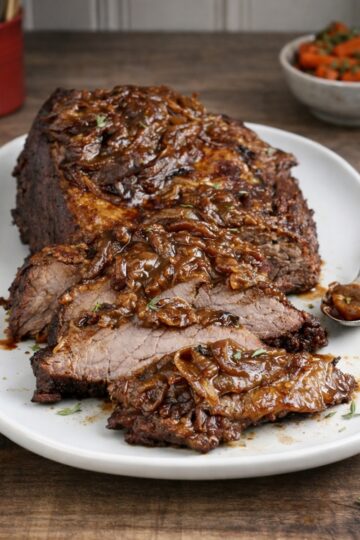
- brisket
- roasted proteins
- anything rich that needs contrast
FAQ
Why roast whole first?
To control texture and prevent moisture loss.
Why not add honey at the beginning?
It burns before the carrots are cooked.
Why slice after roasting?
To create fresh surfaces for the glaze to caramelize.
Can I cut them first?
You can—but you lose control of the final texture.
Honey Roasted Rainbow Carrots (Whole Roasted, Honey Glazed Finish)

Equipment
- Sheet tray
- Parchment paper or foil
- Mixing bowl
- Chef’s knife
Ingredients
- 2 pounds rainbow carrots Whole or peeled, tops trimmed (leave a bit of stem if desired)
- 2 tablespoons olive oil or melted butter
- 1 teaspoon kosher salt
- ½ teaspoon black pepper
- 2 tablespoons honey
Instructions
- Preheat oven to 375°F.
- Place whole carrots on a sheet tray. Toss with: 2 tablespoons olive oil or butter, 1 teaspoon kosher salt, ½ teaspoon black pepper
- Roast for 25–35 minutes, turning once, until: carrots are tender, lightly caramelized on the outside, still holding their shape
- Remove from oven and let cool slightly.
- Slice carrots lengthwise into halves (or quarters if large).
- Transfer sliced carrots to a parchement lined sheet panl cut side up, and toss with: 2 tablespoons honey,
- Roast again for 5–8 minutes, until: honey is lightly caramelized, glaze clings to the surface (not pooling)
Notes
Roasting whole preserves structure and prevents early moisture loss.
Adding honey at the end prevents burning and allows proper caramelization.
Slice after roasting to create fresh surfaces for the glaze to adhere.
Do not overcrowd the pan—carrots should roast, not steam.
Comments
No Comments