
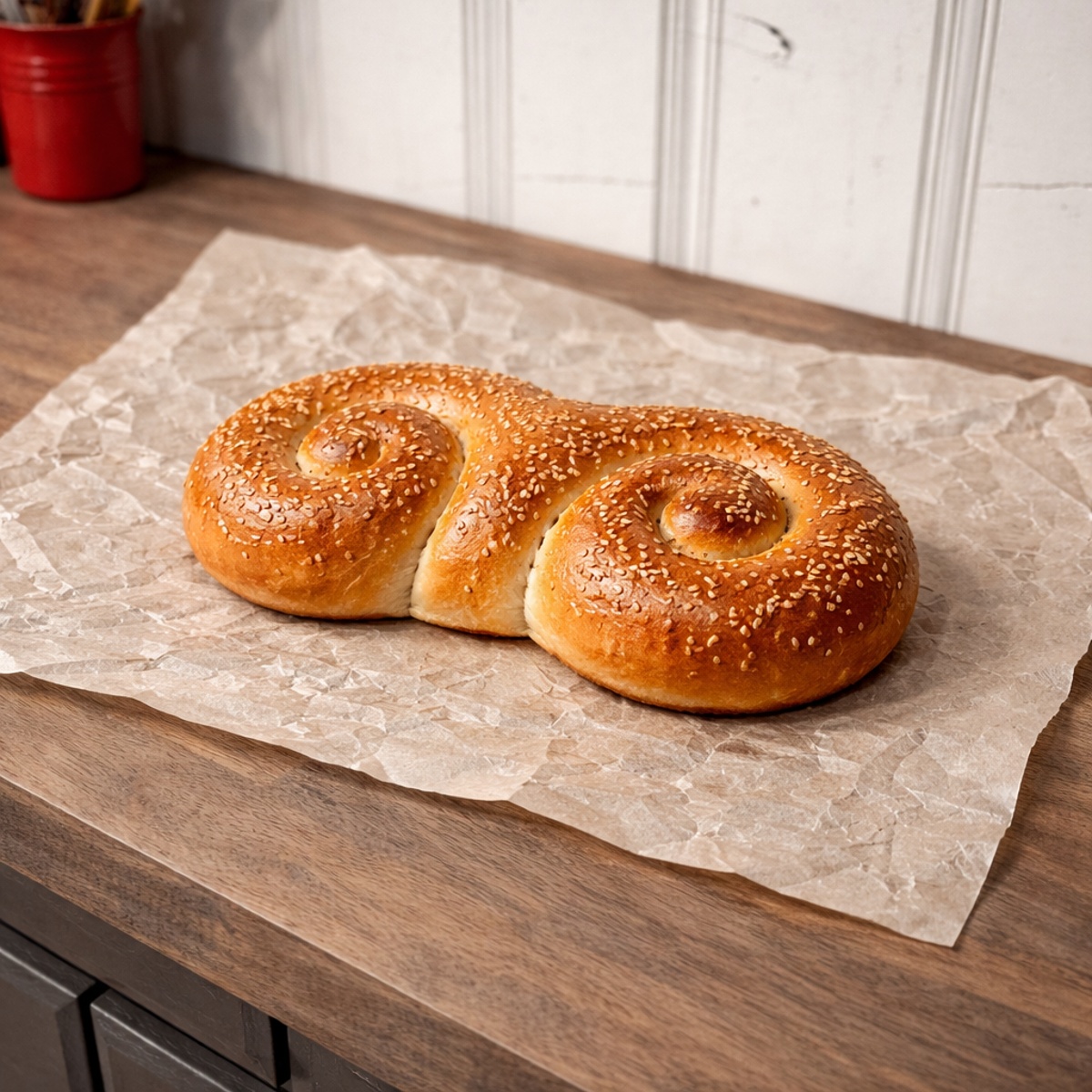
The Bread That Doesn’t Need Sugar to Matter
Some breads are built to impress. This one was built to survive.
Across Sicily, In southern Italy—this bread appears on the table for the Feast of St. Joseph, a day rooted in gratitude after famine. When the rains finally came, people didn’t celebrate with excess. They celebrated with what they had.
No sugar.
No butter.
No nonsense.
Just flour, water, yeast, salt, and olive oil—transformed by time and hands that knew what they were doing. And here’s the thing most people miss: That simplicity is the point.
Why You Should Make This
Pane di San Giuseppe is about restraint. It doesn’t rely on sugar to wake up the yeast or butter to make it feel rich. It asks you to do a few simple things properly—mix the dough, knead it until it feels alive, give it time to rise, and shape it with intention.
You start to understand what dough is supposed to feel like. When it’s ready. When it’s not. Why one loaf rises and another falls flat. There’s no guessing because there’s nothing in the way.
That’s why this bread matters.
It strips everything back to the fundamentals—flour, water, yeast, salt, olive oil—and forces you to rely on technique instead of ingredients. And when it comes out of the oven, golden and sesame-crusted, it tastes exactly like it should: clean, structured, and honest.
Not sweet. Not heavy. Just right.
And once you’ve made it this way, you don’t really go back.
Cultural Backstory
This bread shows up on St. Joseph’s tables across southern Italy—especially Sicily—where entire altars are built with food as an offering of thanks.
The shapes aren’t decorative. They mean something:
- Braids and ropes → Joseph’s staff
- Crosses → protection
- Rings → continuity
You don’t need to overthink it.
Just don’t treat it like dinner rolls.
Ingredient Intelligence
Flour
All-purpose works beautifully here. You’re not chasing extreme chew—this is about balance.
Yeast
No sugar means patience. Let it wake up properly. If it doesn’t foam, it’s dead. Start over.
Olive Oil
Not for richness—for structure and subtle flavor. Use something clean, not aggressive.
Sesame Seeds
They’re not garnish. They bring nutty depth and texture to an otherwise lean bread.
The Recipe Overview
This is a straight dough:
- Bloom yeast in warm water
- Mix with flour, salt, and olive oil
- Knead until smooth and elastic
- Let it rise
- Shape with intention
- Proof again
- Egg wash, sesame
- Bake until deeply golden
No shortcuts. No tricks.
Technique Intelligence
This is where the recipe either earns respect—or exposes you.
Fermentation builds flavor
Without sugar, you’re relying on yeast and time.
If you rush it, the bread tastes flat.
If you let it develop, you get depth.
Shaping is structure
Every twist, braid, or loop should feel tight and intentional.
Loose dough spreads.
Tension gives you lift.
Proofing is visual, not a timer
Press the dough lightly:
- Springs back fast → not ready
- Doesn’t move → overproofed
- Slow return → perfect
That’s your cue.
Color equals flavor
If your bread comes out pale, you didn’t bake it long enough.
Golden is good.
Deep golden is where the flavor lives.
How to Serve It
Tear, don’t slice.
Serve it alongside:
- Pasta Mollica
- Braised fennel and citrus
- Olive oil with a pinch of salt
Or just eat it warm, standing at the counter like you weren’t planning to.
FAQ
Why is there no sugar?
Because this is a traditional lean bread. Sweetness has no place here.
Can I make it ahead?
Yes. Let it cool completely, then wrap. Reheat in the oven to bring it back.
Why didn’t my dough rise?
Dead yeast, wrong water temperature, or a cold kitchen. Pick one.
Can I use bread flour?
Yes. Expect a slightly chewier result.
Pane di San Giuseppe (Traditional St. Joseph’s Bread – Single Loaf)

Equipment
- Mixing bowl
- Stand mixer with dough hook (optional)
- Baking sheet
- Kitchen towel or plastic wrap
- Pastry brush
Ingredients
- 2 cups 250g all-purpose flour
- ¾ cup 180ml warm water (105–110°F)
- 1 teaspoon active dry yeast
- ¾ teaspoon kosher salt
- 1 tablespoon olive oil
- 1 egg beaten (for egg wash)
- 2 –3 tablespoons sesame seeds
Instructions
Activate the yeast
- In a mixing bowl, combine ¾ cup warm water (105–110°F) and 1 teaspoon active dry yeast.
- Let sit for 10–12 minutes until fully foamy.
Make the dough
- Add 2 cups flour, ¾ teaspoon kosher salt, and 1 tablespoon olive oil.
- Mix until a shaggy dough forms.
- Knead by hand or with a mixer for 8–10 minutes until smooth, elastic, and slightly tacky.
First rise
- Place dough in a lightly oiled bowl and cover.
- Let rise at room temperature until doubled, about 1 hour.
Shape
- Punch down the dough and shape into a ring, braid, or cross, creating surface tension.
- Transfer to a parchment-lined baking sheet.
Second rise
- Cover loosely and let rise for 30–40 minutes until slightly puffed.
- The dough should spring back slowly when pressed.
Finish
- Brush the loaf with beaten egg.
- Sprinkle evenly with 2–3 tablespoons sesame seeds.
Bake
- Bake at 375°F (190°C) for 20–25 minutes until deep golden brown.
- The loaf should sound hollow when tapped.
Cool
- Transfer to a rack and cool completely before slicing.
Comments
No Comments