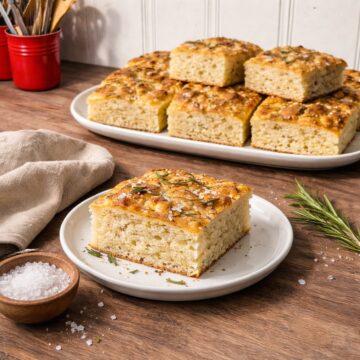
Focaccia (Same Day Bake or Overnight Ferment)

This recipe is built as one dough, two timelines. You can bake it the same day for a soft, pillowy loaf with clean flavor, or let it ferment overnight for deeper aroma, better structure, and a crust that tells you it waited.
Ingredients
Ingredients
- 500 g bread flour
- 400 g water 80% hydration, room temperature
- 10 g fine sea salt
- 7 g instant yeast
- 40 g olive oil plus more for pan and finishing
- Flaky sea salt for finishing
- Optional: rosemary olives, sliced onion
Instructions
Instructions – Base Dough (Shared)
- In a large bowl, combine flour, yeast, and water. Mix until no dry flour remains.
- Rest the dough for 20 minutes (autolyse).
- Add salt and olive oil. Mix until fully incorporated.
- Perform 2–3 sets of stretch-and-folds, resting 10 minutes between each.
- Cover and proceed with Bake Today or Bake Tomorrow timeline below.
Bake Today (Same-Day Focaccia)
- Best when you want focaccia now: soft crumb, mild flavor, classic texture.
Timeline Same Day Bake
- Bulk ferment at room temperature: 2–2½ hours, until doubled and airy.
- Oil a sheet pan generously.
- Transfer dough to pan and gently stretch to corners.
- Rest uncovered 20–30 minutes.
- Dimple deeply with oiled fingers.
- Drizzle with olive oil, add toppings, finish with flaky salt.
- Bake at 425°F (220°C) for 22–25 minutes, until golden and crisp at edges.
Result
- Light, pillowy, clean. Perfect for sandwiches, soups, or tearing apart while still warm.
Bake Tomorrow (Overnight Focaccia)
- This is the patient version. Same dough, better flavor.
Timeline Overnight Ferment
- Bulk ferment at room temperature: 60 minutes.
- Refrigerate dough overnight (12–24 hours).
- Remove from fridge 2–3 hours before baking.
- Oil pan generously and transfer dough.
- Rest until relaxed and bubbly.
- Dimple, oil, top, and salt.
- Bake at 425°F (220°C) for 22–25 minutes.
Result
- More aroma. Better crust. Slight tang. This is the focaccia you remember.
Notes
Chef Notes (Why This Works)
High hydration creates the open crumb — don’t fight it.
Stretch-and-folds build strength without kneading.
Overnight fermentation improves flavor without sourness.
Oil the pan like you mean it. Focaccia should fry slightly as it bakes.
What Can Go Wrong
Dense crumb: under-fermented dough
Pale crust: not enough oil or oven not hot enough
Tough texture: too much flour during handling
Bread always tells you what you did. Listen.
Tried this recipe?Let us know how it was!
