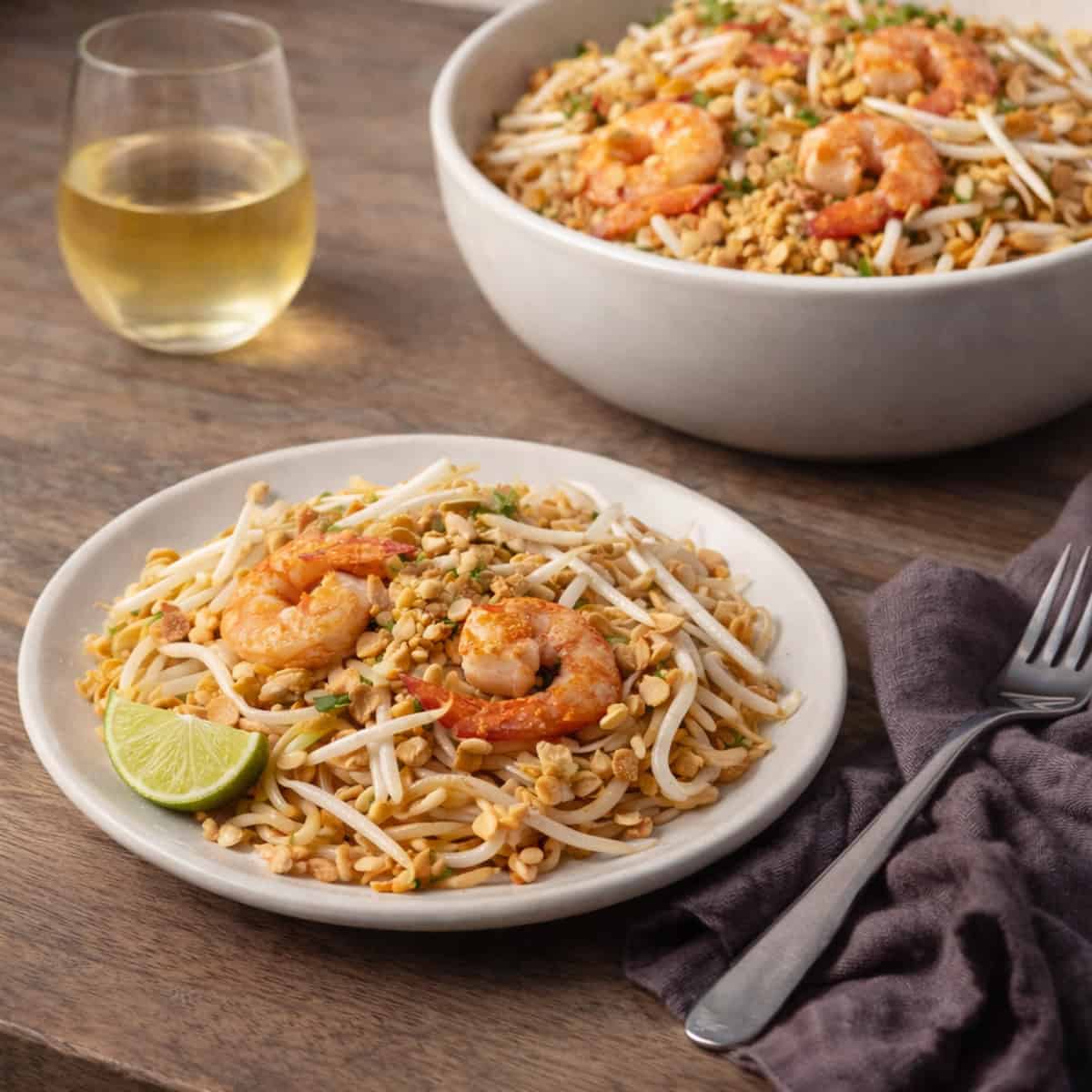
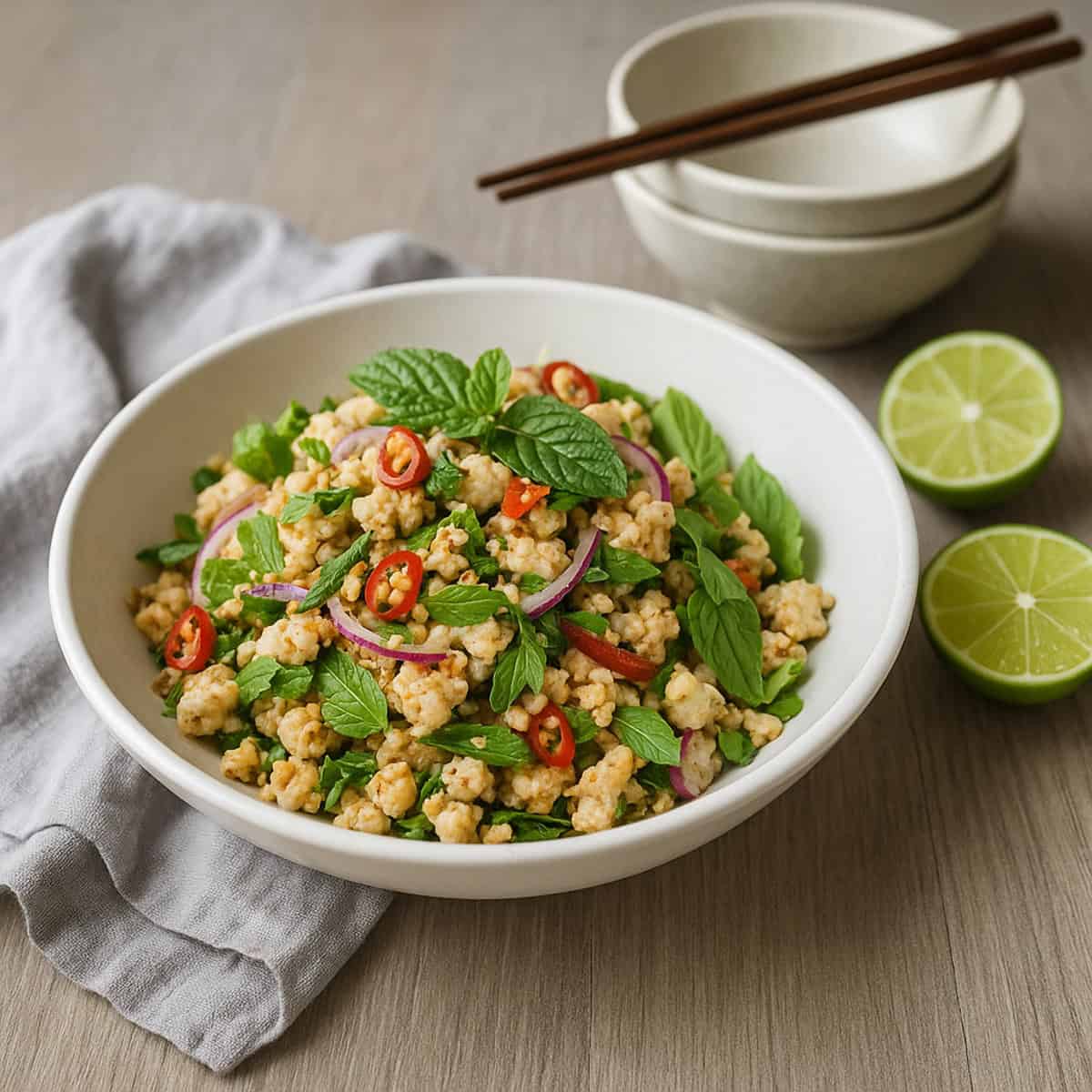
Thai cooking is built on balance. Sweet, sour, salty, and heat are adjusted continuously as a dish comes together, often finished with fresh aromatics added at the last moment. Flavor isn't layered slowly; it's corrected as you cook. Tehcnique lives in tasting and knowing when the balance is right.
-
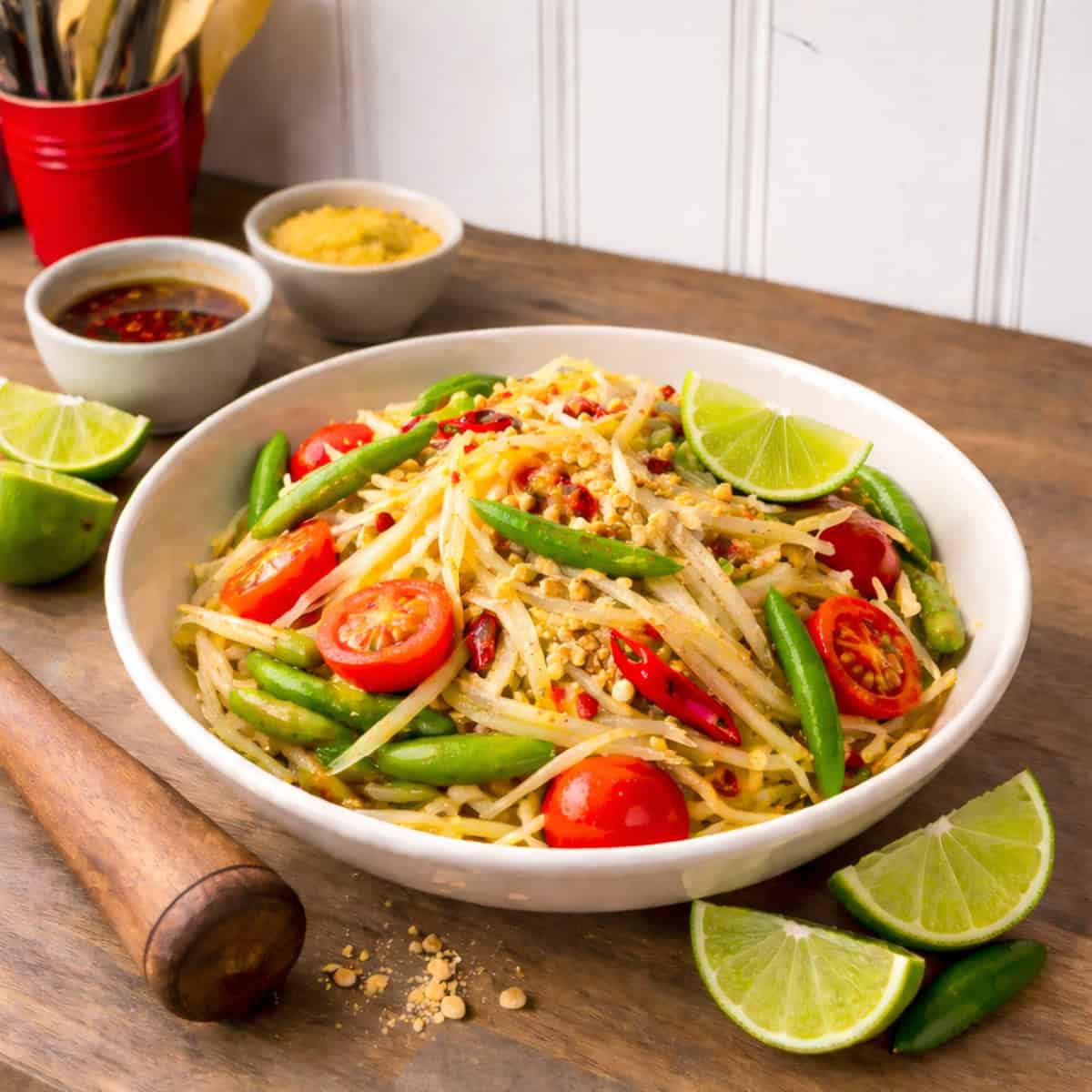
Thai Papaya Salad (Som Tam)
Crunch against heat. Acid against sweetness. Salt against fruit. Everything happens fast, and nothing is meant to be subtle. When it’s right, it wakes you up. When it’s wrong, it […]
-
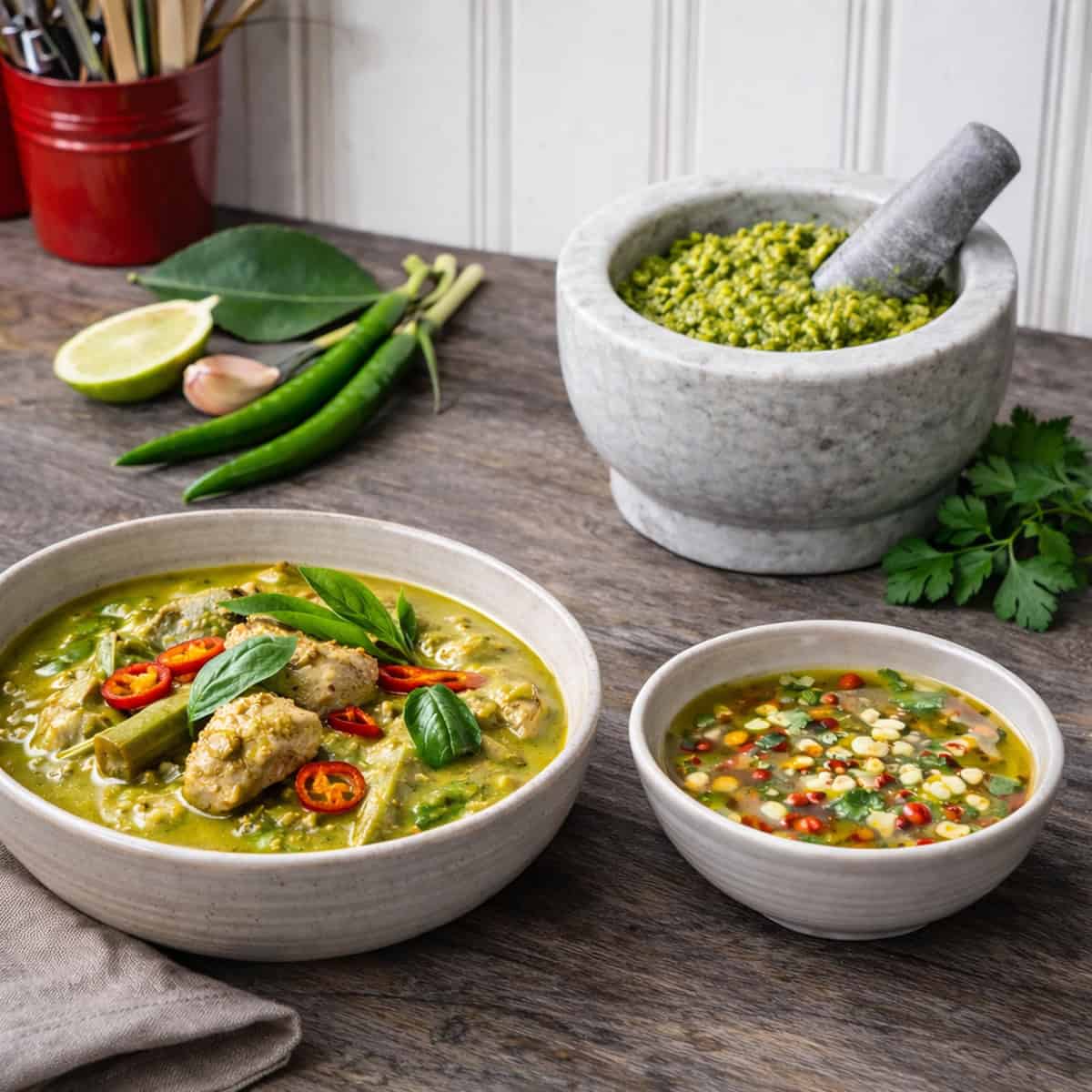
Thai Green Curry with Chicken (Gaeng Keow Wan Gai)
Thai green curry with chicken, or Gaeng Keow Wan Gai, is one of Thailands most recognizable dishes — fragrant, creamy and built on balance rather than heat. Made with fresh […]
-
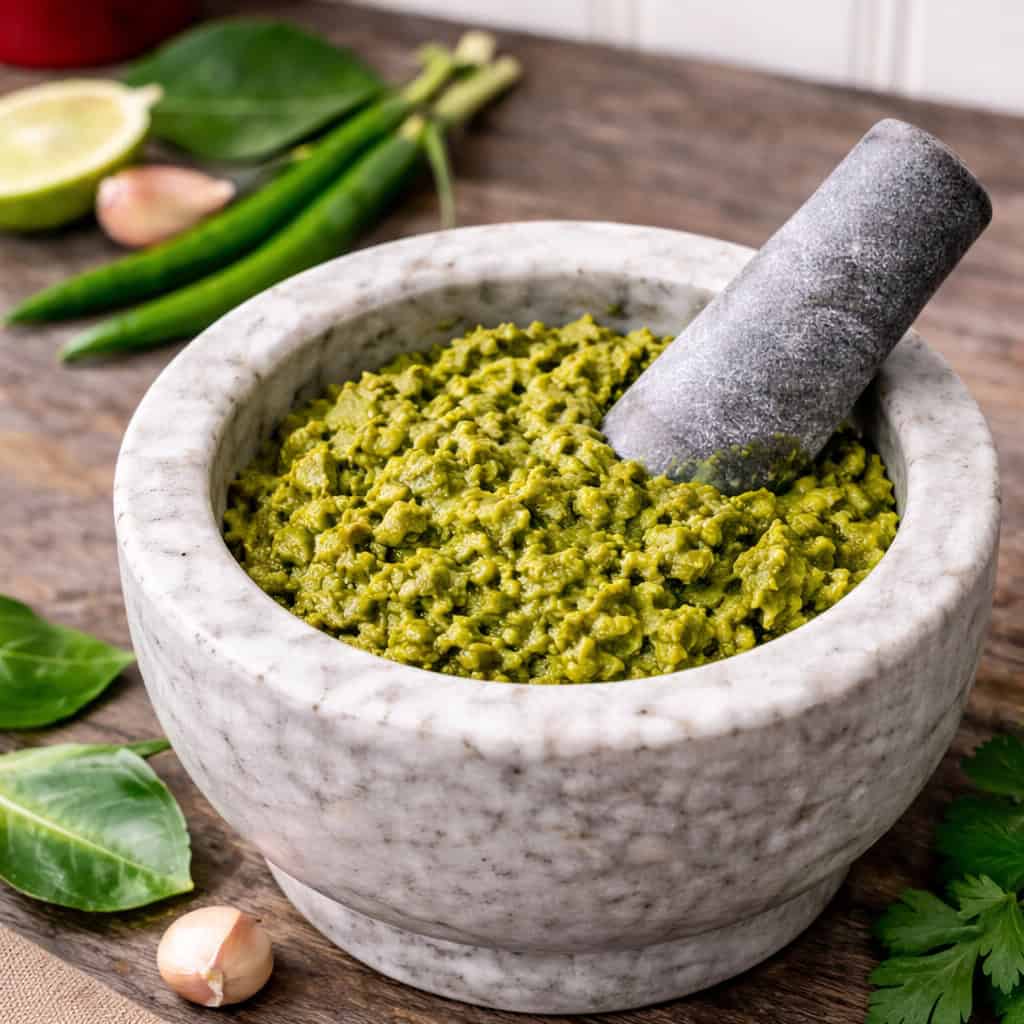
Thai Green Curry Paste (Nam Prik Gaeng Khiao Wan)
Authentic Thai green curry paste made from fresh herbs and spices. Learn balance, aroma, and how to use it across Thai cooking. If you’ve ever wondered why restaurant Thai green […]

Thai food doesn’t ask for permission. It grabs you by the collar, wakes up your mouth, and reminds you that balance doesn’t mean polite. Sweet fights sour. Heat dares you to keep going. Salt holds the whole thing together like a dirty secret.
To understand Thai cuisine, you don’t memorize recipes. You follow geography. Mountains, rivers, coastlines, borders. Each region cooks the way it has to — based on what grows, what survives, and what people crave after a long, hot day.
These are the regions that matter.
Central Thailand — The Bangkok Balancing Act
Central Thai cuisine is where the rules live. Not boring rules — useful ones.
This is the Thailand most outsiders think they know: noodles slick with sauce, curries that hit every note without blowing out your sinuses, soups that feel effortless but aren’t. Central Thai cooking is about control. Sweet, sour, salty, spicy — all present, none screaming.
It’s the food of river plains, markets, and busy cities. Food that has to work for everyone, every day. If Thai cuisine had a grammar book, it would be written here.
This is where you learn how Thai food thinks.
Northern Thailand (Lanna) — Quiet Confidence, No Coconut
Head north into the mountains and the food changes its posture.
Northern Thai — often called Lanna cuisine — doesn’t shout. It doesn’t drown things in coconut milk. It leans into herbs, bitterness, smoke, and texture. Sticky rice replaces jasmine rice. Meat is grilled, minced, or pounded. Flavors are earthy, restrained, and deeply satisfying if you’re paying attention.
This is food that grew up without abundance and learned how to make that irrelevant.
If Central Thai cuisine is composed, Lanna cuisine is confident enough not to care.
Northeastern Thailand (Isan) — Heat, Acid, and Zero Apologies
Isan food doesn’t negotiate.
Born on a dry plateau along the border with Laos, this cuisine is sharp, loud, and honest. Lime burns bright. Chilies don’t mess around. Fermented fish sauce shows up whether you’re ready or not. Salads slap harder than some curries.
This is food for people who work hard, sweat hard, and don’t romanticize discomfort — they eat it.
If someone tells you Thai food isn’t spicy, they’ve never eaten in Isan.
Southern Thailand — Coconut, Fire, and the Sea
Then there’s the south. And the south doesn’t play.
Southern Thai cuisine is tropical, coastal, and aggressively flavorful. Coconut milk shows up thick and unapologetic. Turmeric stains everything yellow. Chilies come in swinging. Seafood is fresh, fast, and fearless.
Curries here are richer, spicier, more intense than anywhere else in Thailand — food shaped by heat, humidity, and centuries of trade that brought spices from everywhere and restraint from nowhere.
This is Thai food turned all the way up.
Why This Matters
Once you know the regions, Thai food stops being mysterious.
You understand why one curry is gentle and another is savage. Why some dishes are creamy and others razor-sharp. Why balance sometimes happens on the plate — and sometimes across the table.
These regions aren’t categories. They’re personalities.
Each one links out to deeper dives — dishes, pantry setups, techniques — but this page is your compass. You don’t need to memorize it. You just need to recognize where you are before you take the next bite.
Thai cuisine is built on balance.
Not just heat, but the precise interplay of salty, sour, sweet, bitter, and spicy—each flavor present, none allowed to dominate. A successful Thai dish doesn’t shout. It harmonizes.
At its core, Thai cooking is driven by freshness and immediacy. Aromatics are pounded, not blended. Curries are built from pastes made moments before cooking. Herbs are added at the end, not the beginning, to preserve their brightness. The food is alive, responsive, and deeply sensory.
Unlike cuisines that rely heavily on long simmering, Thai food favors quick cooking and sharp contrasts. Heat is layered through chilies and spices, then tempered by lime, herbs, coconut milk, palm sugar, or fish sauce. Every element has a job.
The Structure of Thai Flavor
Thai dishes are engineered around contrast. Rich curries are paired with crisp vegetables. Fried dishes are cut with acid. Fresh herbs—cilantro, Thai basil, mint—lift heavier components. Rice anchors the meal, absorbing heat and intensity.
Fish sauce provides salinity and depth. Shrimp paste adds umami. Tamarind delivers acidity. Palm sugar rounds edges. When these ingredients are balanced correctly, the result is bold yet clean, complex yet refreshing.
Explore Thai Cooking on Passport Kitchen
This category is designed to help you understand Thai cuisine as a system, not a collection of takeout classics.
Here you’ll explore:
- Regional Thai dishes and traditions
- Essential ingredients and fresh herbs
- Traditional equipment and preparation tools
- Core techniques like curry-paste making, stir-frying, grilling, and balancing flavors
Each recipe and guide focuses on why flavors are combined the way they are—so you can cook Thai food that tastes vibrant, intentional, and true to its roots.
Thai cuisine is bright.
It is disciplined.
And when balanced correctly, it is one of the most expressive cuisines in the world.