
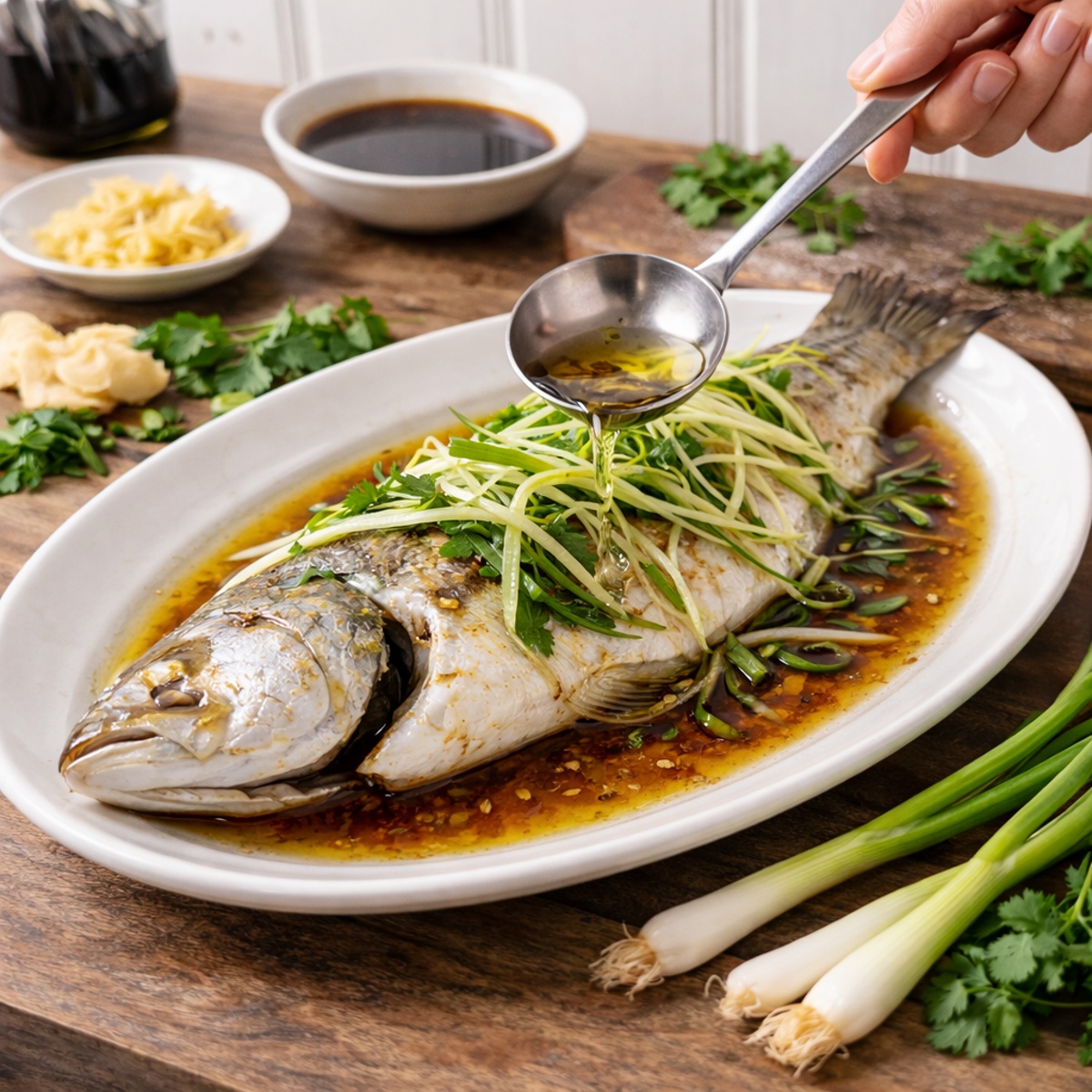
There’s a moment, just before a steamed whole fish hits the table, when the lid comes off and the room smells like ginger and clean heat. Not sauce. Not oil. Just freshness.
That moment tells you everything you need to know.
清蒸全鱼 isn’t about showing off. It’s about knowing when to stop. The fish is whole, the seasoning is restrained, and the technique leaves nowhere to hide. When it’s right, the flesh is barely set, sweet at the bone, and fragrant without being perfumed. When it’s wrong, it’s overcooked and apologetic.
This is the kind of dish chefs cook when they trust their ingredients — and their timing.
What This Dish Is Really About
Steamed whole fish isn’t about steaming.
It’s about restraint under pressure.
You’re managing:
- Freshness that can’t be faked
- Gentle heat that doesn’t tighten the flesh
- Aromatics that support instead of dominate
- A finishing sauce that wakes the fish up, not weighs it down
This dish doesn’t forgive hesitation. It rewards confidence.
Fish Intelligence(鱼的选择)
The Fish
This dish starts and ends with the fish. Clear eyes. Bright gills. A clean smell that reminds you of water, not docks.
Branzino, sea bass, flounder, snapper — they all work, as long as they’re fresh and properly cleaned. Leave the head and tail on. Not for drama, but because whole fish cook more evenly and arrive at the table with intent.
If you wouldn’t eat it simply grilled with salt, don’t steam it.
Aromatic Intelligence(香料的作用)
Steamed fish lives on aromatics used sparingly and at the right moment.
- Ginger does the heavy lifting. It cuts richness and keeps the flavor clean.
- Scallions bring sweetness and freshness.
- Cilantro is optional and should show up at the end, not during cooking.
Some aromatics go inside the cavity, some sit on top, but none of them are meant to cook into the fish. This isn’t a braise. It’s perfume, not stew.
Technique Intelligence: Steaming Without Killing the Fish
(技术关键)
The biggest mistake with steamed whole fish is overcooking it out of fear.
The fish is done when the flesh turns opaque and separates easily from the bone — not when it looks “safe.” Carryover heat finishes the job whether you like it or not.
Pour off the steaming liquid before finishing. Leaving it on the plate dilutes everything you just worked for.
The final move — hot oil poured over fresh ginger and scallions — is essential. That brief sizzle wakes the dish up and brings everything together. Skip it, and the fish falls flat.
Wine Pairing
Steamed whole fish is built on freshness, restraint, and clean aromatics. The wine should support that delicacy, not intrude on it.
A dry Riesling is the most reliable choice—high acidity, minimal oak, and enough lift to handle ginger, scallion, and soy without masking the fish. Look for lean, mineral-driven styles rather than overtly fruity ones.
Another strong option is Albariño. Its salinity and brightness echo the sea while staying light enough to respect the steaming technique.
If you prefer something softer, a dry Chenin Blanc or a clean Pinot Grigio works well, especially when the sauce leans more toward soy and oil than aromatics.
Avoid tannic reds and heavily oaked whites. Steam leaves nowhere to hide, and so should the wine.
Steamed Whole Fish(清蒸全鱼)

Ingredients
Ingredients
- 1 whole fresh fish 1½–2 lb, scaled, gutted, and cleaned
- 2 inches fresh ginger julienned
- 3 scallions cut into fine slivers
- 2 tablespoons light soy sauce
- 2 tablespoons neutral oil such as peanut or grapeseed
- Optional: fresh cilantro for garnish
Instructions
Instructions
- Rinse the fish under cold water and pat completely dry.
- Score the fish lightly on both sides and place on a heatproof plate that fits inside a steamer.
- Place a few slices of ginger inside the cavity and scatter some over the top of the fish.
- Bring water in a steamer or wok to a rolling boil.
- Steam the fish uncovered over high heat until the flesh turns opaque and separates easily from the bone, 10–12 minutes, depending on thickness.
- Carefully remove the fish from the steamer and pour off any accumulated liquid.
- Scatter scallions evenly over the fish.
- Heat oil until just smoking, then immediately pour over the scallions to release their aroma.
- Drizzle soy sauce around the fish (not directly on top) and garnish with cilantro if using.
- Serve immediately.
Notes
Leftovers can be refrigerated for up to 1 day and gently reheated, though texture will soften.
Common Mistakes(常见错误)
- Steaming too long “just in case”
- Using aromatics like a blanket instead of an accent
- Leaving watery liquid on the plate
- Treating this like a sauce dish instead of a timing dish
This is not careful cooking. It’s precise cooking.
How 清蒸全鱼 Is Traditionally Served
(食用方式)
Steamed whole fish is meant to be shared, placed at the center of the table.
It’s eaten with:
- Plain rice
- A few simple vegetables
- Nothing that competes
The fish is finished just before serving with light soy sauce and hot oil, then eaten piece by piece. The head often points toward the guest of honor — not because it’s quaint, but because tables have rules, and rules keep things running smoothly.
Cultural Note(文化背景)
Whole fish symbolizes completeness and abundance in Chinese culture, especially at celebrations. Head and tail intact, nothing wasted.
But even on an ordinary night, this dish says something simple and powerful: we trust what we’re cooking.

Comments
No Comments