
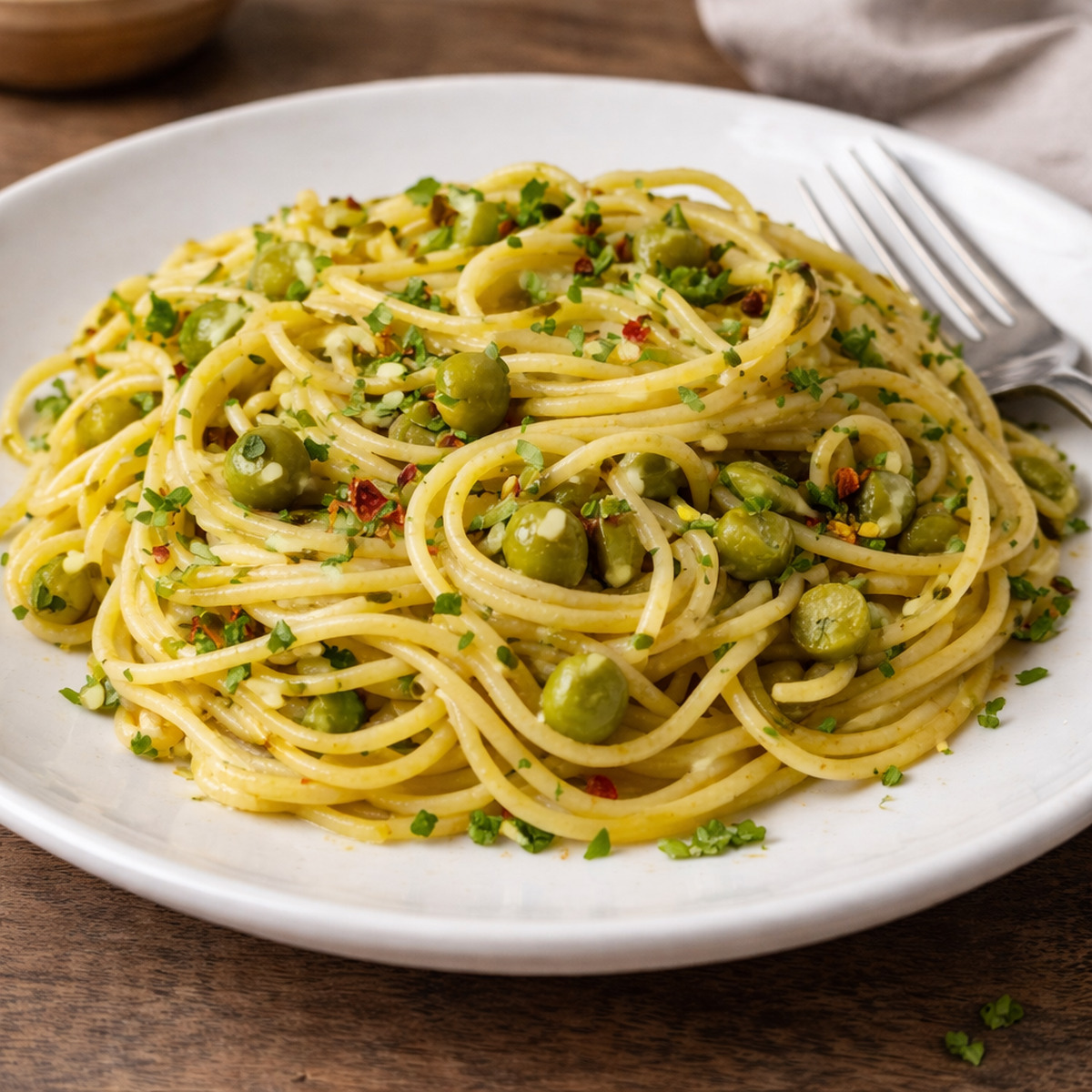
Spaghetti Aglio e Olio with Green Olives
Spaghetti aglio e olio is Roman cooking reduced to its essentials: pasta, olive oil, garlic, and restraint. A small addition of green olives adds salinity and bite, sharpening the dish without pulling it away from its roots.
Why This Dish Matters
Spaghetti aglio e olio works because it’s fast, reliable, and built from pantry staples. It’s everyday Italian cooking—olive oil, garlic, chili, and pasta—where technique matters more than abundance.
The addition of green olives reflects how the dish is actually cooked at home: using what’s on hand with intention. Their salinity sharpens the dish without pulling it away from its Roman roots.
Technique Spotlight: Garlic-Infused Oil, Emulsion, and Salinity
This dish is about control, not speed.
Garlic is gently infused in olive oil until fragrant, never browned. Chili provides heat. Green olives provide salinity and texture. Pasta water—starchy and hot—is what binds the oil into sauce.
The olives go in at the end, just long enough to warm through. Add them too early and they dominate. Add them late and they punctuate the dish without taking it over.
This is an oil-based pasta emulsion. Heat, timing, and agitation matter more than ingredients.
Ingredients
Pasta (Structure & Sauce Carrier)
Spaghetti or Spaghettoni
Long pasta is essential. Spaghetti delivers the classic aglio e olio experience; spaghettoni adds chew and holds the olive oil–olive emulsion more aggressively. Thickness matters when the sauce is built from oil, starch, and salt alone—short pasta drops the plot.
Fat & Aromatics (The Flavor Engine)
Extra-Virgin Olive Oil
This is the sauce. Choose a clean, balanced oil that performs under gentle heat without turning bitter. Peppery is fine; harsh is not.
Recommended: California Olive Ranch Everyday Extra Virgin Olive Oil — consistent, accessible, and reliable for cooking-forward olive oil dishes.
Garlic, Thinly Sliced
Sliced garlic infuses the oil slowly and evenly, softening into sweetness instead of turning sharp. Minced garlic burns too fast and overwhelms the dish. Thin slices keep the flavor present but controlled.
Heat (Italian, Not Generic)
Italian Chili Flakes or Crushed Calabrian Chili
This dish wants warmth, not blunt heat. Italian dried chili—especially Calabrian—adds fruitiness and depth that works with olive oil and garlic instead of fighting them.
Recommended: TuttoCalabria Crushed Calabrian Chili — bold, aromatic, and unmistakably Italian.
Fallback: Standard dried red chili flakes, used sparingly.
Salinity & Finish (Control, Then Contrast)
Fine Sea Salt (for Pasta Water)
This is about control. You want a clean, fast-dissolving salt that seasons evenly and supports emulsification. Pasta water should taste decisively salty.
Recommended: Diamond Crystal Kosher Salt — light crystals, precise seasoning.
Green Olives, Pitted and Lightly Crushed
Olives replace both cheese and lemon in this version. Choose firm, briny green olives—not sweet Castelvetranos and never canned black olives. Crushing releases brine and oil, seasoning the pasta and helping the sauce come together.
Recommended options:
- Divina Greek Frescatrano Olives — bright salinity, clean bite
- Colavita Sicilian Green Olives — firmer texture, classic Italian profile
Maldon Sea Salt Flakes (Finishing)
Optional but effective. A light pinch at the end adds texture and a clean salt pop that sharpens the oil without weighing the dish down.
Recommended: Maldon Sea Salt Flakes
Parsley (Optional)
Adds freshness and visual contrast. Use it if you want lift; skip it if you want the dish stark and oil-driven.
No cheese. No lemon. No filler.
Just pasta, olive oil, garlic, heat, and olives—each chosen with intent.
This ingredient list now does three jobs simultaneously:
search clarity, reader confidence, and affiliate conversion.
Next logical step is mirroring this exact structure across all Italian pantry-driven recipes so the site reads like one mind, not many.
How It Comes Together
Cook the pasta in well-salted water until just shy of al dente. While it cooks, gently warm olive oil with sliced garlic and chili over low heat until fragrant.
Transfer the pasta directly into the pan with a splash of pasta water. Toss vigorously to form a loose, glossy emulsion. Add the olives and continue tossing, adjusting with more pasta water as needed.
The sauce should cling lightly to the noodles. The garlic should be sweet. The olives should sharpen, not overwhelm.
What Can Go Wrong
- Bitter garlic → Heat was too high
- Greasy pasta → No emulsion formed; not enough pasta water
- Overly salty dish → Olives added too early or water over-salted
Aglio e olio doesn’t forgive guessing.
Variations & Regional Notes
Some Roman cooks add breadcrumbs for texture. Others add anchovy to deepen the oil before the garlic goes in. Olives fall into the same category—common, practical, and acceptable when used with care.
Change the dish deliberately - or don’t change it at all.
Serving & Pairing
Serve immediately, while the emulsion is intact. This is a first course meant to wake up the palate, not fill it.
Wine Pairing
Aglio e olio is driven by olive oil, garlic, chili, and salinity. The wine needs acidity and restraint, not weight.
A chilled Frascati is the natural Roman choice—clean, dry, and unobtrusive, letting the oil and garlic stay in focus.
Verdicchio dei Castelli di Jesi works especially well with the addition of green olives, its mineral edge handling salinity without turning sharp.
A dry Soave is also a comfortable fit.
Avoid red wine. Garlic, chili, and olive oil leave no room for tannin.
Equipment
- Large pot – for boiling pasta in well-salted water
- Wide sauté pan – to gently infuse oil and build the emulsion
- Tongs or pasta spider – for transferring pasta directly from water to pan
If you need more tools than this, the technique is off.
Storage & Make-Ahead
This dish is meant to be eaten immediately. Leftovers lose their structure and gloss. If reheating is unavoidable, add a small splash of water and warm gently, knowing it won’t be the same dish.
Spaghetti Aglio e Olio with Green Olives

Equipment
- Equipment
Ingredients
Ingredients
Pasta
- 8 oz spaghetti or spaghettoni
Fat & Aromatics
- ¼ cup extra-virgin olive oil
- 4 cloves garlic thinly sliced
- ½ teaspoon dried chili flakes adjust to taste
Salinity & Finish
- ¼ cup green olives pitted and lightly crushed
- Fine sea salt to taste
- 1 –2 tablespoon chopped parsley optional
Instructions
Instructions
- Bring a large pot of water to a boil and season generously with salt. Add 8 oz spaghetti and cook until just shy of al dente. Reserve 1 cup pasta cooking water.
- While the pasta cooks, heat ¼ cup olive oil in a wide sauté pan over low heat. Add 4 sliced garlic cloves and ½ teaspoon chili flakes. Cook gently until fragrant, 1–2 minutes. Do not brown.
- Transfer the pasta directly to the pan along with ¼ cup reserved pasta water.
- Toss vigorously over low heat until the oil and water emulsify into a light, glossy sauce.
- Add ¼ cup crushed green olives and continue tossing, adding more pasta water as needed to maintain a loose emulsion.
- Taste and adjust seasoning with salt. Remove from heat and finish with parsley if using. Serve immediately.
Comments
No Comments