
Indian cooking is defined by regional logic and layered flavor. Spices are bloomed, ground, and combined with intention — depth comes from technique, not heat alone
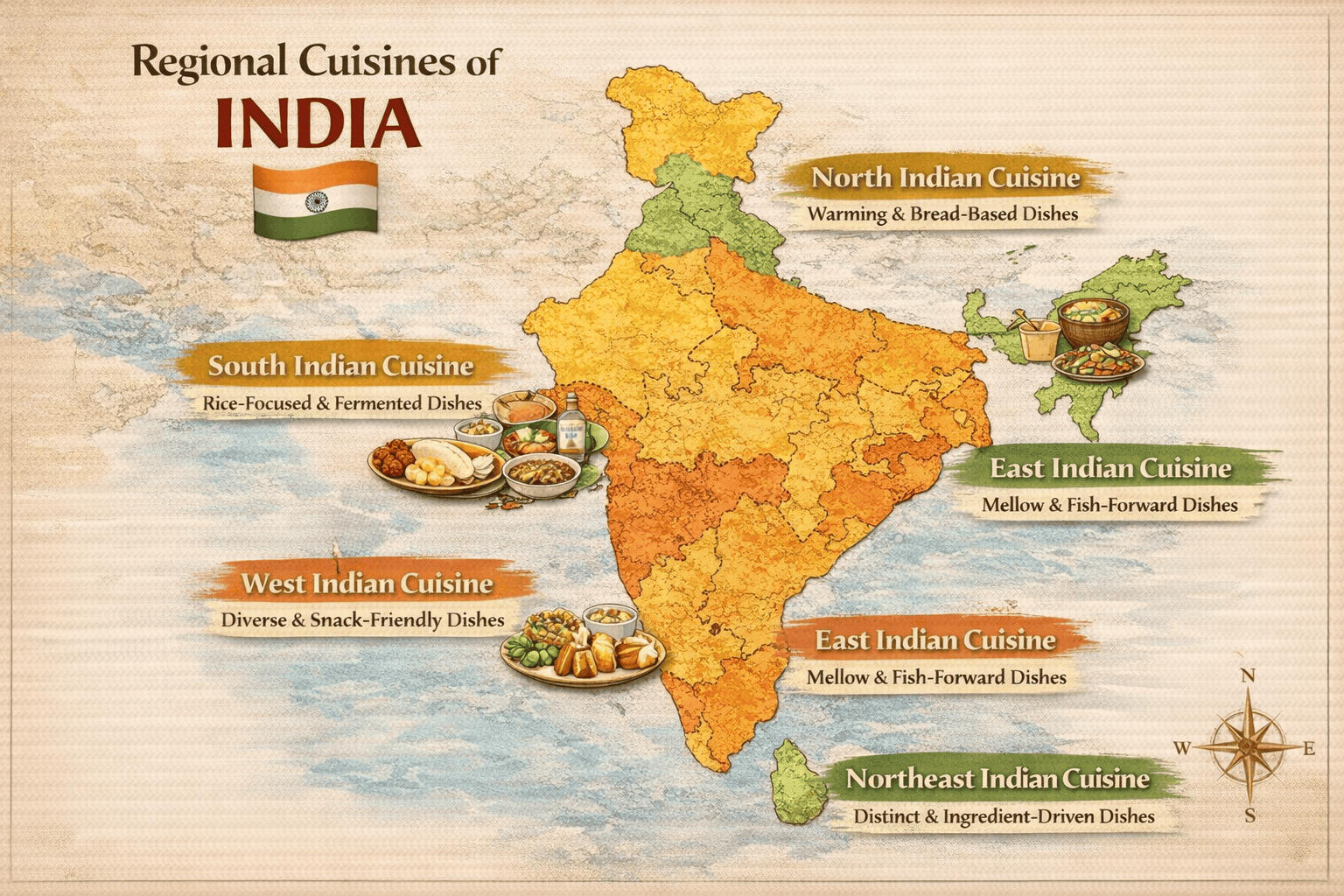
Indian cuisine isn’t one cuisine—it’s dozens of regional food cultures stitched together by trade, religion, climate, and a shared obsession with building flavor properly. The biggest misconception is that “Indian food = curry.” In reality, Indian cooking is a set of regional systems: different grains, different fats, different spices, different techniques, and often completely different definitions of what a “meal” looks like.
This page gives you the practical map: major regional cuisines and what makes each one distinct, so you can explore with confidence and link out to deeper guides when you’re ready.
India’s Major Regional Cuisines
North Indian Cuisine
North Indian cooking is shaped by wheat, dairy, and colder winters, which show up as flatbreads, rich sauces, and warming spice blends. Grilling and roasting (often associated with tandoor-style cooking), long-simmered dishes, and yogurt-based marinades are common. This region is where many restaurant favorites live, but it’s also where you learn the core logic of breads, gravies, and layered spice.
South Indian Cuisine
South Indian cuisine is rice-forward, coconut-friendly, and built around tangy, bright flavors. Fermentation plays a starring role, creating batters and textures that are light but deeply satisfying. Tamarind, curry leaves, mustard seed, and lentils are foundational, and meals often feature crisp, savory items paired with broths, chutneys, and vegetable-forward dishes.
West Indian Cuisine
Western India includes cuisines that range from coastal seafood traditions to inland vegetarian food cultures. You’ll see bold heat in some areas, sweetness in others, and a strong presence of legumes, grains, and preserved ingredients. This region is also a major home of snack culture—crispy, spicy, and designed to be eaten with tea, on the move, or at the edge of a market stall.
East Indian Cuisine
Eastern Indian cuisine is shaped by rivers, fertile farmland, and coastal influence. Flavors can be lighter and more delicate compared to some northern and western styles, with a strong presence of fish, rice, and mustard-forward seasoning. This region also has a major tradition of sweets and desserts, often built around dairy and sugar with very specific textures.
Northeast Indian Cuisine
Northeast Indian cuisine is its own world—less dairy-heavy, often less “curry” focused, and strongly shaped by local agriculture and border influences. Fermentation, smoking, and simple preparations that emphasize ingredients over heavy spice blends are common. This region is essential if you want your India content to feel credible and complete rather than generic.
How Indian Regions Work Together
Indian cooking is often described through spices, but it’s more accurate to think in terms of structure: grains, fats, acids, aromatics, and technique. Regions vary wildly, yet the shared idea is consistent—flavor is built in layers, not dumped in at the end.
Once you understand the regional map, you can tell why one dish is creamy and bread-based, another is bright and rice-forward, and another is smoky and minimalist—without reducing the whole country to “hot curry.”
Each region above links to deeper pages that go into signature dishes, pantry setup, essential equipment, and technique in more detail, keeping this pillar clean while supporting serious deep dives.