
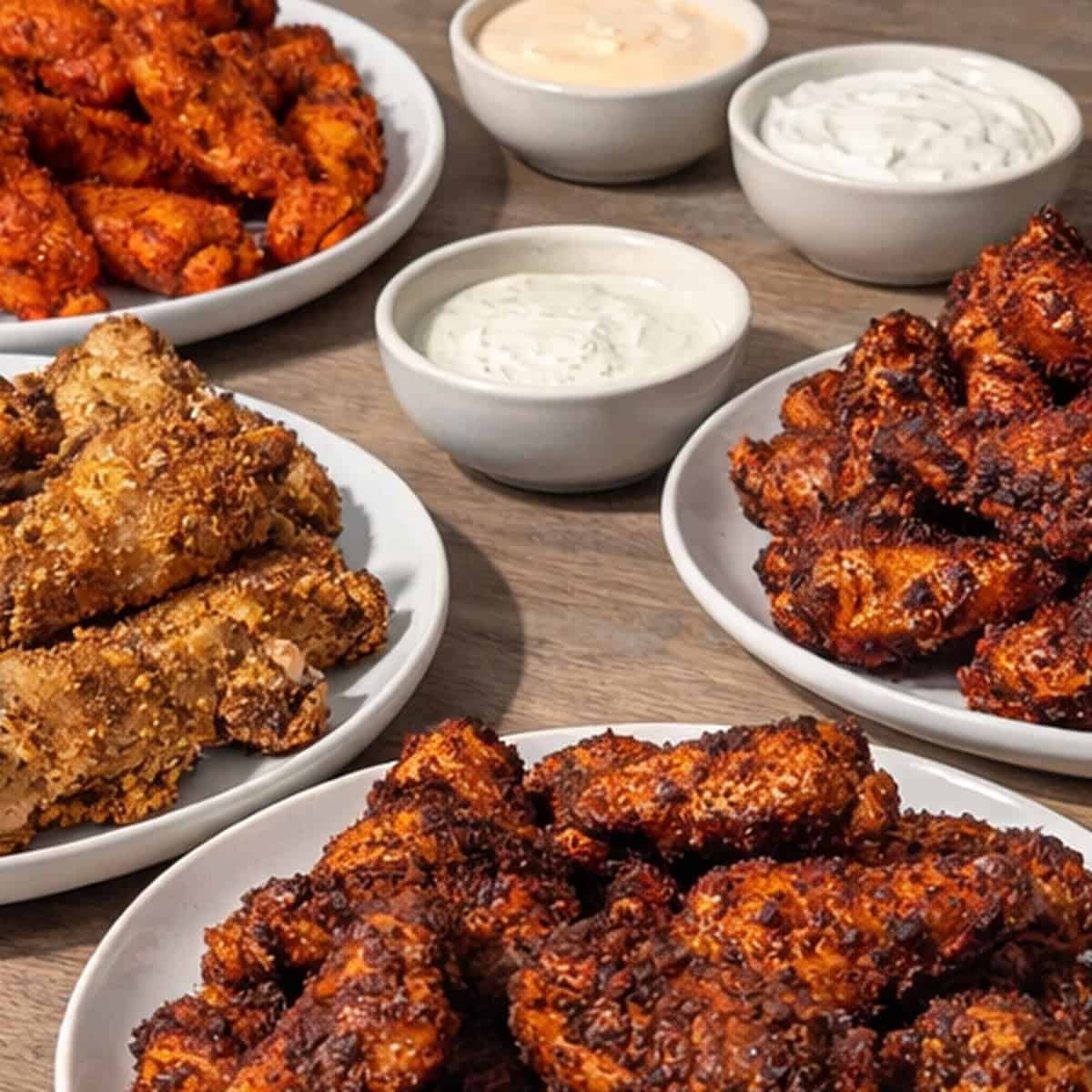
Chicken wings usually show up wearing one of two uniforms.
Brined-and-fried wings are built for juiciness. You soak them, coat them, drop them into oil, and let crunch do most of the talking. When they’re good, they’re spectacular. They’re also messy, fragile, and at the mercy of timing.
Dry rub wings play a different game. No brine bath. No flour armor. No sauce to hide behind. You season the skin with intent, cook them hard, and let heat do honest work—rendering fat, crisping skin, and locking spice into the surface where it belongs.
This recipe lives in that second camp. Wings that taste like chicken first, then spice, then smoke, and stay crisp long after they hit the table.
Why This Dish Matters
Dry rub wings weren’t born from trend cycles. They came from kitchens that needed food to move—bars, clubs, sports rooms where speed and consistency mattered more than drama. Sauce slows things down. Dry rubs don’t.
They’re also the wings you make when you want control. Sauce can forgive mistakes. Dry rub doesn’t.
Technique Intelligence
Primary technique: Dry seasoning + high heat
Brined wings work by adding moisture, then sealing it in with oil. Dry rub wings do the opposite. Salt draws surface moisture out of the skin. Heat renders the fat underneath. Spices dissolve into that fat and bloom without burning. When it works, the wing tastes seasoned all the way through without ever feeling wet.
The common failure is predictable: too much sugar, too much rub, or not enough airflow. Dry rub wings reward restraint. They punish excess.
Ingredients — Flavor Logic & Ingredient Intelligence
Dry rub wings are simple, but they aren’t casual. Every ingredient has a job. This is skin seasoning, not meat seasoning.
Protein
Chicken wings (split, tips removed)
Split wings expose more skin surface, which matters because dry rub needs contact to work. Whole wings trap steam and soften texture.
Salt & Structure
Kosher salt
Salt is the foundation. It controls moisture and enables browning. Flat wings aren’t under-spiced—they’re under-salted.
Aromatics & Savory Depth
Garlic powder, onion powder
Powders melt into rendered fat and season evenly. Fresh garlic burns before the wings finish cooking. Onion powder adds sweetness without sugar.
Heat & Spice Psychology
Black pepper, cayenne, chili powder
Heat works in layers. Pepper hits immediately. Cayenne lingers. Chili powder rounds the edges. Together they feel intentional, not aggressive.
Color, Warmth & Smoke
Paprika (sweet or smoked)
Paprika builds aroma and expectation. Sweet paprika supports color; smoked paprika pulls flavor toward BBQ without sauce.
Brightness Without Moisture
Dried lemon peel or vinegar powder
Dry rub wings still need lift. These ingredients give the palate acidity without softening the skin. That’s how lemon pepper and Buffalo-style dry rubs work.
Sugar (Used With Restraint)
Brown sugar or turbinado sugar
Sugar belongs only in BBQ-style rubs and only in small amounts. Its role is caramelization, not sweetness. Too much burns early and ruins everything.
A Shortcut That Still Respects Technique
Not everyone wants a spice cabinet that looks like a lab. Spiceology produces professionally balanced dry rubs designed for proteins like chicken wings, with salt levels calibrated, sugar kept in check, and heat layered correctly. If you’d rather focus on cooking than measuring, use a good blend and trust the technique.
Most Popular Dry Rub Wing Flavors
Buffalo Dry Rub (No Sauce)
Cayenne, black pepper, paprika, garlic powder, onion powder, optional vinegar powder. Built for heat with the illusion of acidity.
BBQ Dry Rub
Smoked paprika, chili powder, garlic powder, onion powder, mustard powder, restrained brown sugar. Smoke, sweetness, and structure in balance.
Lemon Pepper
Cracked black pepper, dried lemon peel, garlic powder, kosher salt. Fat plus citrus equals perceived crispness.
Cajun / Creole
Paprika, garlic powder, onion powder, cayenne, oregano, thyme. Warmth over burn, complexity over aggression.
Suggested Equipment
The goal is airflow and heat, not containment.
Use a rimmed sheet pan with a wire rack for oven cooking, or a basket-style air fryer if speed matters. A large mixing bowl helps coat evenly. A digital thermometer keeps you honest.
Avoid crowded pans, deep vessels without airflow, and wet marinades before seasoning. All three kill crispness.
Instructions
- Pat wings completely dry until the skin looks matte.
- Toss wings with dry rub until evenly coated.
- Refrigerate uncovered for 2–12 hours to dry the skin and set seasoning.
- Cook at 425°F with airflow until deeply browned and crisp.
- Confirm doneness at 175–185°F internal.
- Rest 5 minutes before serving.
What Can Go Wrong
If the skin isn’t crispy, the wings were wet, crowded, or steamed.
If the rub tastes bitter, there was too much sugar or the spices burned.
If the flavor feels dull, the issue is salt—not heat.
Wine Pairing
Dry rub wings don’t need a wine that tries to impress them. They need something that understands spice, smoke, salt, and fat—and knows when to stay out of the way.
A fruit-forward California Zinfandel is the classic move. Ripe blackberry and plum absorb heat, moderate alcohol softens spice, and gentle tannins keep the rub from turning bitter. Bottles like Ridge Three Valleys, Seghesio Sonoma Zinfandel, and Bogle Old Vine Zinfandel regularly score above 90 points and usually land in the ten-to-fifteen-dollar range. They’re generous wines, not clever ones, which is exactly what wings want.
If the rub leans hotter—Buffalo-style heat or Cajun spice—an off-dry Riesling does quiet, professional work. A little residual sugar cools the palate while bright acidity keeps things from feeling heavy. Dr. Loosen Blue Slate, Kung Fu Girl, and Chateau Ste. Michelle Columbia Valley Riesling consistently overdeliver for the price.
And sometimes wine is just overthinking it. A clean American lager is still the most honest pairing on the table. Yuengling Traditional Lager is crisp, lightly malty, and dry enough to reset the palate without scrubbing flavor away. Sierra Nevada Summerfest brings a brighter snap when available. Miller High Life remains the neutral classic—high carbonation, mild sweetness, no agenda.
Skip big Cabernet Sauvignon and heavily oaked Chardonnay. Tannin and oak fight spice instead of supporting it.
Table Itinerary
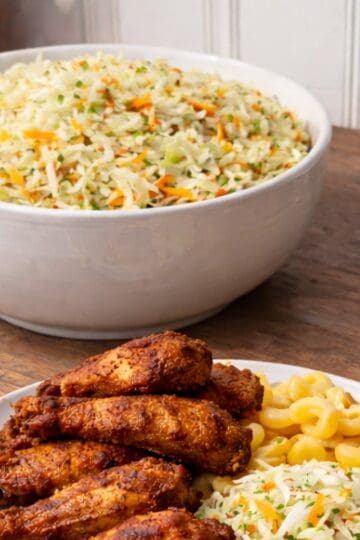
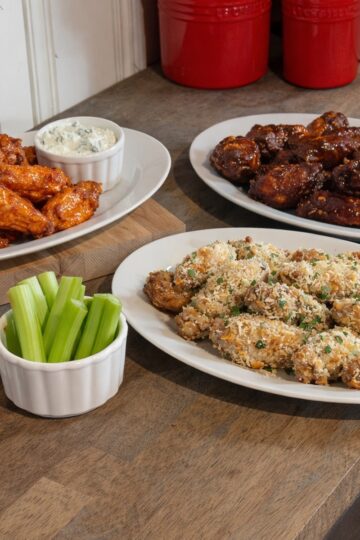
Dry rub wings want contrast and crunch. Pair them with fries or cornbread, celery and carrots with blue cheese, and something sharp on the side—vinegar slaw, pickles, or a cold chopped salad.
Variations & Regional Notes
Buffalo-style dry heat dominates the Northeast. Lemon pepper holds strong in the Midwest and South. Cajun rubs show up hardest where Gulf flavors influence bar menus.
Storage & Make-Ahead
Cooked wings hold refrigerated for up to three days. Reheat uncovered at 425°F in an oven or air fryer until crisp again. Microwaving softens the skin permanently.
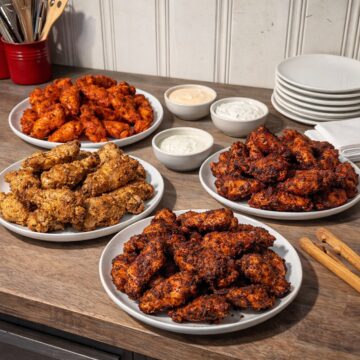
Dry Rub Chicken Wings | Buffalo, BBQ, Lemon Pepper & Cajun

Equipment
- Suggested Equipment
- Rimmed sheet pan
- Wire rack (fits inside sheet pan)
- OR basket-style air fryer (5–6 qt)
- Large mixing bowl
- Paper towels
Ingredients
Ingredients
Chicken
- 2 –2½ lb chicken wings split, tips removed
Base Dry Rub (Use for all flavors)
- 2 teaspoon kosher salt
- 1 teaspoon black pepper
- 1 teaspoon garlic powder
- 1 teaspoon onion powder
- 1 teaspoon paprika sweet or smoked
Flavor Variations (Choose One)
Buffalo Dry Rub (No Sauce)
- Base dry rub
- ½ teaspoon cayenne
- ½ teaspoon paprika
Optional: ¼ teaspoon vinegar powder
- BBQ Dry Rub
- Base dry rub
- 1 teaspoon smoked paprika
- 1 teaspoon chili powder
- ½ teaspoon mustard powder
- 1 teaspoon brown sugar
Lemon Pepper
- Base dry rub
- 1½ teaspoon cracked black pepper
- 1½ teaspoon dried lemon peel or lemon pepper seasoning
Cajun / Creole
- Base dry rub
- ½ teaspoon cayenne
- ½ teaspoon dried oregano
- ½ teaspoon dried thyme
Instructions
Instructions
- Pat chicken wings completely dry with paper towels until skin appears matte.
- Combine base dry rub ingredients in a bowl. Add chosen flavor variation and mix thoroughly.
- Toss wings with dry rub until evenly coated.
- Refrigerate wings uncovered for 2–12 hours for best texture.
Oven Method
- Preheat oven to 425°F. Arrange wings on a wire rack set over a rimmed sheet pan.
- Bake 40–45 minutes, turning once, until wings are deeply browned and crisp.
Air Fryer Method
- Preheat air fryer to 425°F.
- Cook wings in a single layer for 20–25 minutes, shaking halfway through.
- Wings are done when internal temperature reaches 175–185°F.
- Rest 5 minutes before serving.
Comments
No Comments