
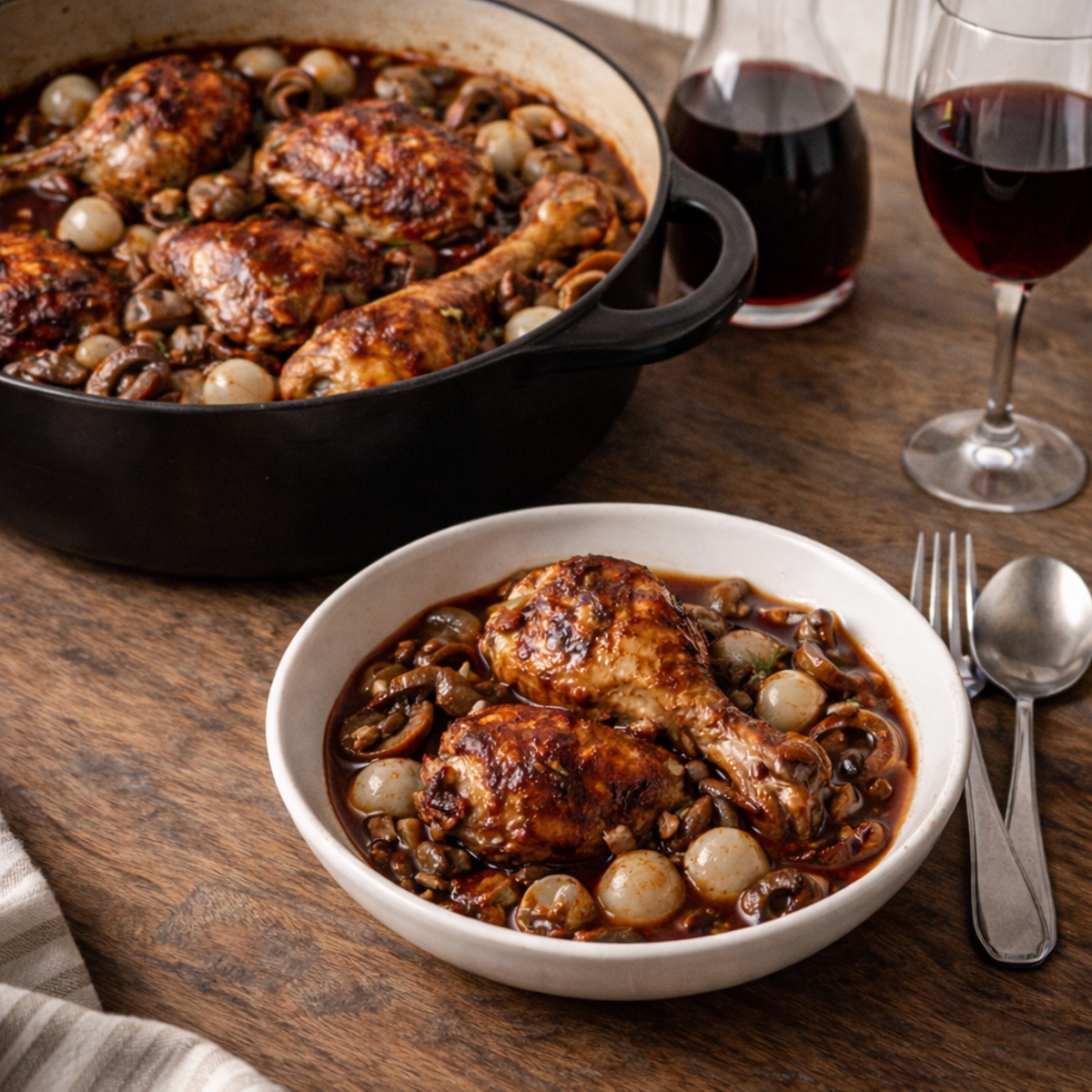
Coq au Vin is chicken braised slowly in red wine with lardons, mushrooms, and pearl onions. It comes from Burgundy, where wine is not an accent but a cooking liquid. The method is simple: sear, deglaze, braise, reduce.
Why This Dish Matters
This is climate cooking. Burgundy is cold and agricultural. Older birds were tough, wine was abundant, and slow braising turned both into something elegant. It is peasant technique refined by patience.
Technique Intelligence
Primary Technique: Red Wine Braise
Wine is not added for flavor at the end. It is the cooking medium. Time softens tannins and melts collagen. The sauce forms by reduction, not thickening alone.
Common failure: boiling. A rolling simmer tightens protein and hardens the wine. This dish wants a quiet, steady heat.
(Internal Link: Braising & Long Cooking – Technique Pillar)
Ingredient Intelligence
(Purpose-driven. No measurements here.)
Protein
Chicken, bone-in and skin-on
Coq au Vin was originally made with mature rooster. The meat was tough and required long cooking. Modern chicken stands in, but the principle remains: bone provides structure and gelatin, skin provides fat, dark meat tolerates time. Boneless breasts fight the method.
Aromatics
Lardons
Rendered pork fat forms the base. It seasons the entire braise before wine ever touches the pot. Without it, the dish tastes thinner and less grounded.
Onion and carrot
These are structural sweetness. Wine brings acidity and tannin; the vegetables temper it. They are not garnish. They are balance.
Garlic
Used with restraint. Enough to support depth, never enough to dominate.
Sauce / Base
Dry Burgundy or Pinot Noir
This is regional logic. Burgundy cooks with Burgundy. Pinot Noir’s moderate tannin allows long reduction without bitterness. Heavy, jammy wines collapse into harshness when reduced.
Tomato paste
A reinforcing note. It deepens color and umami without turning the dish into tomato stew.
Flour
Stability, not thickness. The sauce should coat a spoon, not sit like gravy.
Thyme and bay
Background structure. Herbal restraint is the point.
Garnish & Structural Finish
Mushrooms
Earth meets wine. They should be sautéed separately so they keep integrity rather than dissolving in the braise.
Pearl onions
Sweetness and shape. They punctuate the richness.
Butter
A small finish to round acidity and add gloss.
Parsley (optional)
Freshness against depth. The dish stands without it.
Suggested Equipment
- 5–6 qt heavy Dutch oven
- Tongs
- Wooden spoon
Weight matters. Thin pots scorch wine.
What Can Go Wrong
Bitter sauce
Wine reduced too aggressively or too tannic. Simmer gently and finish with a small amount of butter.
Dry chicken
Used lean cuts or overcooked.
Thin sauce
Insufficient reduction. Simmer uncovered.
Thick, pasty sauce
Too much flour. Thin with warm stock and whisk.
Wine Pairing
Flavor logic: moderate acidity, restrained tannin.
Canonical: Burgundy Pinot Noir.
Alternatives: Oregon Pinot Noir, Beaujolais.
Avoid: Cabernet Sauvignon or heavily oaked reds.
Table Itinerary
Starch: Buttered egg noodles or pommes purée.
Vegetable: Haricots verts with shallots.
Contrast: Frisée salad with Dijon vinaigrette.
Storage & Make-Ahead
Refrigerate up to 3 days.
Improves overnight.
Reheat gently; do not boil.
Freezes well without mushrooms.
FAQ (Schema-Friendly)
Can I make Coq au Vin ahead of time?
Yes. It is ideal for making one day in advance. Reheat gently before serving.
Can I use chicken breasts?
Dark meat is traditional and preferred. Breasts tend to dry out during long braising.
What wine is best for Coq au Vin?
Dry Burgundy or Pinot Noir with moderate tannin. Avoid sweet or heavily oaked wines.
Why does my sauce taste bitter?
The wine likely reduced too aggressively or was too tannic. Simmer gently and finish with a small amount of butter to round acidity.
Can I make Coq au Vin without bacon?
You can, but the dish will lack depth and traditional structure.
Coq au Vin - Classic French Red Wine Braised Chicken

Equipment
- Equipment
- 5–7 quart heavy Dutch oven
- Tongs
- Sauté pan
- Avoid thin-bottomed pots.
Ingredients
Ingredients
For the Braise
- 4 bone-in skin-on chicken thighs
- 4 bone-in skin-on drumsticks
- about 3–3½ lbs total chicken
- Kosher salt and freshly cracked black pepper
- 4 oz lardons or thick-cut bacon diced
- 1 medium yellow onion diced
- 2 carrots sliced
- 2 garlic cloves minced
- 2 tablespoons tomato paste
- 2 tablespoons all-purpose flour
- 2½ cups dry Burgundy or Pinot Noir
- 1 cup chicken stock
- 2 sprigs fresh thyme
- 1 bay leaf
For the Garnish
- 8 oz cremini mushrooms halved
- 1 cup pearl onions peeled
- 1 tablespoon unsalted butter
- Chopped parsley optional
Instructions
Instructions
- Pat dry 4 chicken thighs and 4 drumsticks (about 3–3½ lbs total) and season generously with salt and black pepper.
- Render 4 oz lardons in a Dutch oven over medium heat until golden, 6–8 minutes. Remove and reserve.
- Increase heat to medium-high and sear the chicken skin-side down in batches until deeply browned, about 6–7 minutes per side. Remove and reserve.
- Reduce heat to medium. Add 1 diced onion and 2 sliced carrots and cook 5–6 minutes. Add 2 minced garlic cloves and cook 30 seconds.
- Stir in 2 tablespoons tomato paste and cook 1 minute.
- Sprinkle in 2 tablespoons flour and cook 1–2 minutes, stirring constantly.
- Deglaze with 2½ cups dry Burgundy or Pinot Noir, scraping up fond. Simmer 3–4 minutes.
- Add 1 cup chicken stock, 2 sprigs thyme, 1 bay leaf, and reserved lardons. Return chicken. Liquid should reach halfway up the pieces.
- Cover and braise at 325°F (or maintain a gentle simmer) for 65–75 minutes, until both thighs and drumsticks are tender.
- Sauté 8 oz mushrooms and 1 cup pearl onions in 1 tablespoon butter until golden, about 8–10 minutes.
- Remove chicken. Discard thyme and bay. Reduce sauce uncovered 10–15 minutes until it coats a spoon.
- Return chicken, mushrooms, and onions to the pot and simmer 5 minutes. Adjust seasoning.
- Rest 10 minutes before serving.
Notes
Store in an airtight container up to 3 days. Flavor improves on day two. Reheating:
Reheat gently over low heat. Do not boil. Add a splash of stock if the sauce tightens too much. Freezing:
Freeze up to 2 months. For best texture, freeze without mushrooms and add freshly sautéed mushrooms when reheating.
Comments
No Comments