
Classic carrot cake relies on oil-based cake technique for lasting moisture and structure. Freshly grated carrots and brown sugar hydrate the crumb naturally, while gentle mixing prevents toughness. The layers bake evenly and stay plush, finished with cream cheese frosting for a tangy counterpoint that keeps the cake balanced rather than overly sweet.
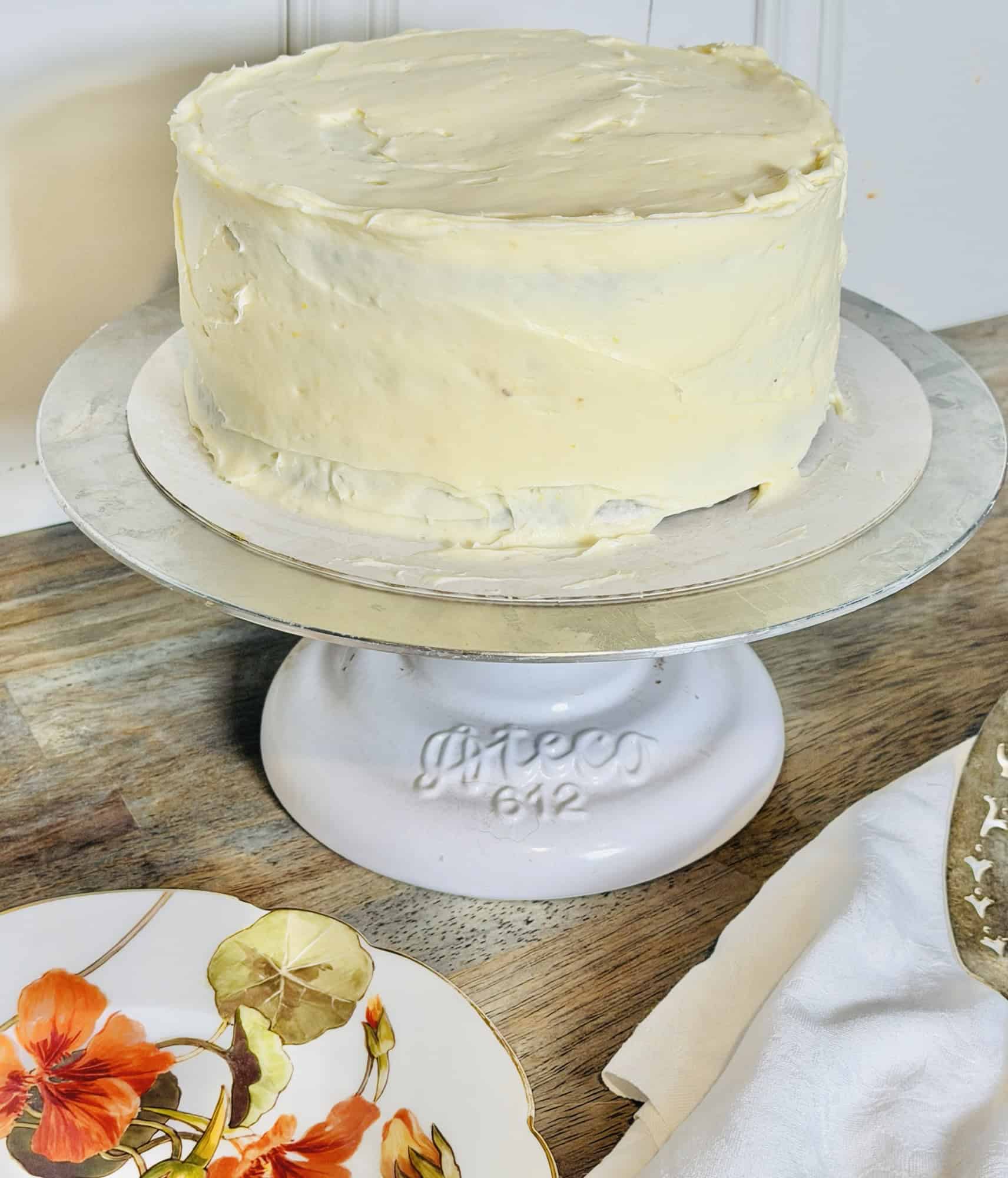
Why This Cake Matters
Carrot cake lives in that rare space between comfort and celebration. It’s humble enough for brunch, polished enough for a spring dinner party.
It also performs. Search volume stays consistent year-round and spikes hard at Easter. But most versions are overloaded with mix-ins.
Stripping it back gives you control. And control gives you repeatable results.
Technique Intelligence
Oil vs Butter
Oil coats flour proteins more evenly than butter. That limits gluten development and creates a softer center. Butter firms up when chilled. Oil cakes stay moist even straight from the refrigerator.
Carrot Texture Matters
Use the shredding disc on a food processor or the small holes of a box grater. Coarse shreds create wet pockets and uneven texture. Finer shreds integrate into the batter and almost dissolve during baking, giving you moisture without structural weakness. Do not use pre-shredded carrots. They’re too dry and too thick.
Moisture Control
Carrots release water as they bake. That’s why we skip pineapple. Pineapple adds additional liquid and acidity that can destabilize the crumb unless heavily adjusted.
Mixing Discipline
Why the Carrot-Coating Technique Matters
Fresh carrots release significant moisture during baking. Coating them in flour:
- Prevents dense, gummy pockets
- Distributes moisture evenly
- Improves crumb structure
- Helps suspend carrots throughout the cake
- Produces a lighter, more uniform texture
Professional bakeries often use this step for high-moisture mix-ins.
Three 8-Inch Layers (True Bakery Style)
Using three 8-inch pans changes the cake in your favor.
Shallower batter depth means:
- More even baking
- Less doming
- Reduced risk of a gummy center
- Cleaner slice structure
Bake time will be shorter than two thicker layers. Start checking around 22 minutes. The cake is done when a toothpick comes out with moist crumbs, not wet batter.
Professional move:
Weigh the batter and divide evenly between pans for perfectly level layers.
Three layers also allow for balanced frosting distribution — thin, even filling layers instead of one heavy center slab.
Ingredient Intelligence
All-Purpose Flour
Provides enough structure to support carrot density without becoming delicate or fragile.
Why This Recipe Uses White Sugar and Cinnamon Only
After years of baking carrot cake professionally, I simplified the formula to focus on flavor, structure, and consistency. Many recipes call for brown sugar and a blend of spices, but those additions aren’t necessary — and can actually muddy the result.
White sugar produces a cleaner sweetness and a more stable crumb. Brown sugar contains molasses, which adds extra moisture and acidity. While that can make a cake softer, it can also lead to a heavier texture and a stickier interior, especially in large cakes.
Using only white sugar allows the natural sweetness of the carrots and the tang of the cream cheese frosting to stand out without becoming overly rich.
Cinnamon alone provides warmth without overwhelming the cake. Spice blends that include cloves, nutmeg, ginger, or allspice can dominate the flavor and push carrot cake into “holiday spice cake” territory. A single spice keeps the profile balanced and lets the carrots remain the star.
This is the version I use for bakery production — the one customers request for birthdays, holidays, and special occasions.
Moisture Control
Fresh carrots contain a significant amount of water. During baking, they release moisture into the surrounding batter. If added directly to a fully mixed batter, this moisture can create dense or gummy pockets.
Coating the carrots in flour absorbs surface moisture and distributes it evenly throughout the cake, producing a lighter, more uniform crumb.
Even Suspension
Flour-coated carrot shreds are less likely to clump together or sink. This ensures the carrots are evenly dispersed from edge to center rather than forming wet streaks.
Structure Protection
Introducing wet ingredients gradually into a flour-coated carrot mixture reduces the risk of overworking the batter. This helps limit gluten development, keeping the cake tender rather than tough.
Cleaner Texture
Professional bakeries often use this technique for high-moisture mix-ins such as fruit, vegetables, or chocolate. The result is a cake that feels moist without being heavy or pasty.
Why the Wet Mixture Is Added Last
Once the carrots are coated, the sugar-oil-egg mixture is folded in gently. This approach:
- Maintains the emulsion created during mixing
- Prevents breaking the batter structure
- Minimizes overmixing
- Produces a finer, more even crumb
The Result
This method produces a carrot cake that is:
- Moist but not gummy
- Tender yet stable enough to stack
- Evenly textured from top to bottom
- Reliable across different home baking conditions
Why the Recipe Also Includes Baking Powder
Professional formulas often rely solely on baking soda, which reacts with acidic ingredients in the batter to create lift and deeper browning.
For home baking, however, conditions vary widely:
- Ingredient freshness
- Carrot moisture
- Pan size and material
- Oven accuracy
- Mixing technique
Including a small amount of baking powder acts as insurance, ensuring the cake rises properly even if the batter’s acidity is lower than expected. It produces a lighter, more forgiving crumb without compromising flavor.
If you prefer a slightly denser, more bakery-style cake, you may omit the baking powder and use only baking soda.
Salt
Critical for balancing sweetness and sharpening spice.
Cream Cheese Frosting
Full-fat cream cheese only. Tang is essential to offset sweetness.
Equipment
Box grater or food processor with fine shredding disc
Three 8-inch round cake pans
Parchment paper
Stand mixer or hand mixer
Large mixing bowls
Rubber spatula
Offset spatula
What You’ll Do | Overview
Whisk the dry ingredients until evenly combined.
Fold half of the dry mixture into the batter, then add half of the finely grated carrots. This staged mixing distributes moisture gradually and prevents the flour from clumping.
Add the remaining dry ingredients and fold gently, then finish with the remaining carrots. Mix only until no dry streaks remain. Stop there.
Staging the dry ingredients and carrots prevents overworking the batter and reduces gumminess. Dumping everything in at once can overhydrate pockets of flour and create a dense, slightly wet crumb.
Divide the batter evenly between three 8-inch pans, smooth the tops, and bake until just set in the center.
Cool completely, you’ll frost between layers with tangy cream cheese frosting and finish clean — either smooth or lightly rustic.
Frosting Philosophy
Cream cheese frosting should be tangy and controlled — not sugar paste.
Beat cream cheese and butter smooth first. Add powdered sugar gradually. A pinch of salt sharpens flavor. Chill slightly before assembling for cleaner layers.
Serving & Styling
Leave it clean and smooth, or finish with:
- Thin carrot ribbons
- Light cinnamon dusting
- Minimal piping
- A clean offset swipe finish
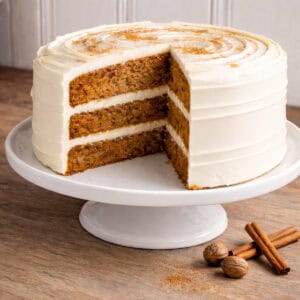
Classic Carrot Cake | Bakery Recipe

Equipment
- Food processor with shredding disc or box grater
- Three 8-inch round cake pans
- Digital kitchen scale (for dividing batter evenly)
- Stand mixer or hand mixer
- Rubber spatula
- Offset spatula
- Acetate cake collar (8-inch width, extends above rim)
- Cake board
Ingredients
Ingredients
Dry Ingredients
- 2½ cups 315 g all-purpose flour
- 2 teaspoon baking soda
- 1 teaspoon baking powder
- 1 teaspoon fine salt
- 2½ –3 teaspoon ground cinnamon
Wet Ingredients
- 1½ cups 300 g granulated sugar
- 1¼ cups 300 ml neutral oil
- 4 large eggs room temperature
- 2 teaspoon vanilla extract
- Add-Ins
- 3 cups 300–330 g finely grated carrots
- Optional: 1 cup toasted walnuts or pecans
Instructions
Instructions (Stand Mixer Method)
Preheat oven to 350°F (175°C).
- Grease and line three 8-inch round cake pans with parchment.
Prepare the dry mixture.
- In a large bowl, whisk together 1 ½ cups flour, 2 teaspoon baking soda, 1 teaspoon baking powder, 1 teaspoon salt, and 2½–3 teaspoon cinnamon.
Coat the carrots (prevents gumminess).
- Add half of the dry mixture to 1 cups finely grated carrots and toss until the carrots are thoroughly coated.
Create the batter emulsion.
- In the bowl of a stand mixer fitted with the wisk attachment, mix 1½ cups granulated sugar and 1¼ cups oil on medium speed until glossy and fully combined.
- Add 4 eggs, one at a time, mixing well after each addition and scraping the bowl as needed.
- add 2 teaspoon vanilla extract. mix well, remove bowl from mixer
- Fold the carrot–flour mixture into the wet batter and stir until incorporated.
- Add the remaining 1½ cups flour and fold until incorporated.
- Finish with the remaining 1½ cups grated carrots and continue folding just until incorporated.
Add nuts (optional).
- Fold in 1 cup toasted walnuts or pecans, if using.
- Divide batter evenly among the three pans, (about 600–650 g per pan).
- Bake 25–30 minutes, until a toothpick inserted in the center comes out clean or with a few moist crumbs.
- Cool in pans for 10–15 minutes, then turn out onto racks to cool completely before frosting.
Comments
No Comments