
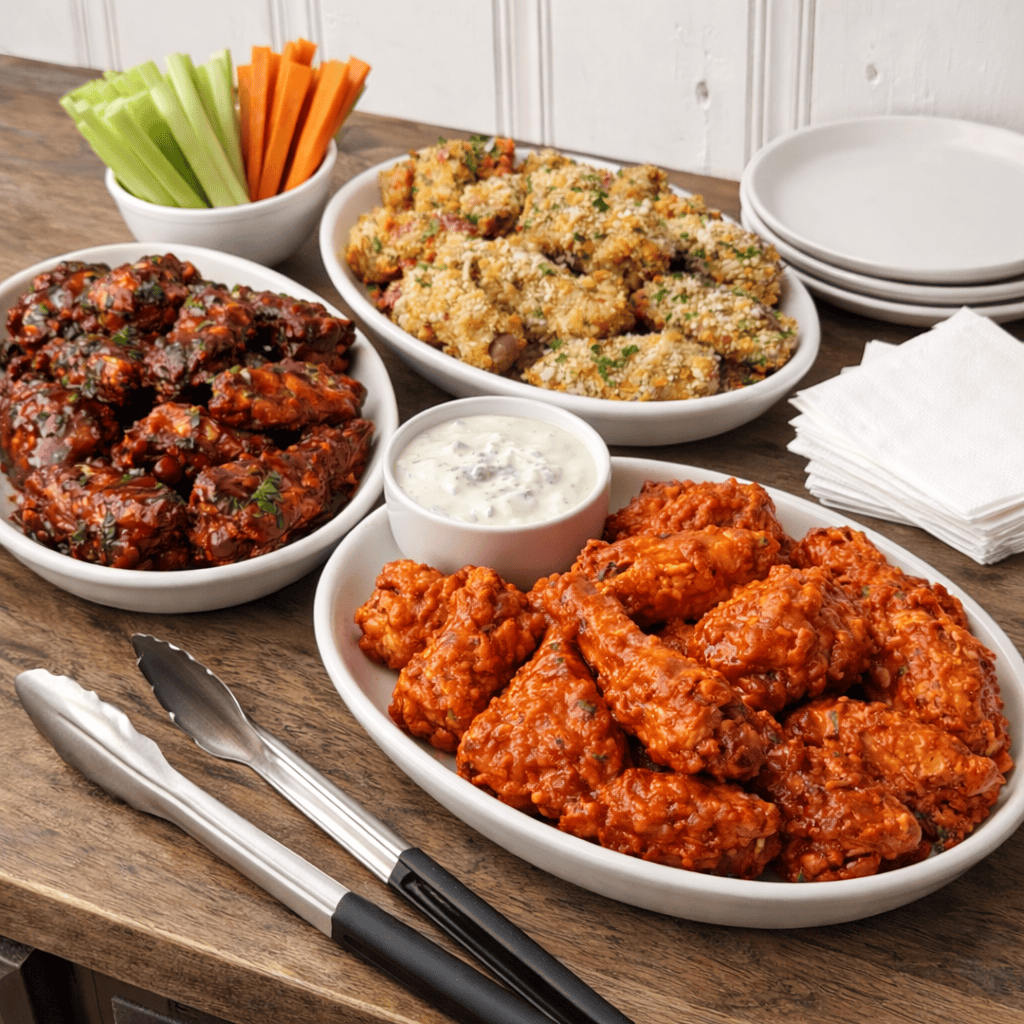
Chicken wings are a technique first and a flavor second. Crispy skin, rendered fat, and proper sauce timing matter more than heat level or sweetness. Get the method right, and the flavor becomes a choice instead of a gamble.
Why This Dish Matters
Chicken wings were never meant to be precious. They’re bar food, party food, and late-night food—cheap cuts turned valuable through technique. Their popularity exploded not because of novelty, but because wings are endlessly adaptable: bake them, fry them, grill them, sauce them—or don’t.
Ingredient Intelligence
Wings
Whole wings split at the joint cook more evenly than random “party wings” from a bag. You want skin intact, joints clean, and wings that aren’t waterlogged. If they’re very wet out of the package, blot them. Excess surface moisture is the enemy of crisp.
Buttermilk
This brine isn’t about tenderness for wings—they’re already forgiving. It’s about seasoning the meat all the way through and giving the flour something to cling to. The payoff is crust that sets hard and stays attached.
Flour + rest time
The dredge isn’t “drying” so much as it’s hydrating. That 10–15 minute rack rest lets the flour absorb the brine and turn tacky, almost like wet batter. That’s how you get crags and blisters instead of smooth, pale coating.
Oil temperature
For frying, stability beats drama. If the oil dips too low, wings drink grease. If it runs too hot, the crust colors before the meat finishes. A thermometer is non-negotiable if you want repeatability.
Sauce timing
Sauce is the finish, not the cook. Toss hot wings gently right before serving. BBQ gets sticky, Buffalo stays glossy, Parmesan needs heat to grab.
Equipment That Actually Helps
You can make wings with almost anything, but these tools make them consistent:
- Heavy Dutch oven / deep pot (6–8 qt): holds heat, prevents wild temperature swings.
- Instant-read or clip thermometer: keeps frying honest.
- Wire rack + sheet pan: for dredge rest and post-fry draining (paper towels make steam, steam makes sog).
- Large mixing bowls: one for dredging, one for saucing—separate jobs.
- Tongs: control without tearing crust.
- Air fryer (if using that method): size matters—overcrowding = steamed wings.
(These are perfect spots for your affiliate links without turning the post into a shopping channel.)
Technique Intelligence
Wings succeed or fail based on skin rendering and surface dryness.
Crisp wings come from removing surface moisture, rendering fat slowly enough to avoid steaming, and applying sauce after the skin has set. Sauce timing matters more than sauce choice. Toss too early and you soften the skin. Toss too late and the sauce never adheres.
Failure mode: rubbery skin, greasy texture, or sauce sliding off instead of coating.
(Link upward to: Frying & High-Heat Cooking / Sauces & Emulsification)
The Three Most Popular Wing Flavors
These aren’t trends. These are anchors.
1. Buffalo Wings
The reference point.
Built on hot sauce and butter, Buffalo wings balance heat, acid, and fat. The sauce is thin, emulsified, and meant to coat—not glaze. Heat level varies, but restraint is what makes them addictive rather than punishing.
Why they work: acidity cuts fat; butter carries flavor.
2. BBQ Wings
Sweet, smoky, and familiar.
BBQ wings lean into caramelization and sugar, whether baked, grilled, or finished under high heat. The key is applying sauce late enough to avoid burning while still allowing it to cling.
Why they work: sweetness plus smoke equals comfort.
3. Garlic Parmesan Wings
Rich without heat.
Garlic Parmesan wings are about fat management. Butter, garlic, and cheese must coat the wings without turning greasy or clumpy. These are often served dry or lightly dressed rather than sauced.
Why they work: savory depth without spice fatigue.
Variations & Context
- Dry-rub wings emphasize texture over sauce
- Asian-inspired wings introduce soy, sugar, and aromatics
- Oven vs fryer changes texture more than flavor
Flavor is flexible. Technique is not.
Serving & Pairing
Wings benefit from contrast:
- Something cold or crisp alongside
- Acidic dips or pickled elements
- Simple sides that don’t compete
They’re designed for sharing, not precision plating.
Storage & Make-Ahead
Wings are best fresh. Reheating softens the skin, though air fryers recover texture better than ovens or microwaves. Sauce should always be added after reheating, never before.
Chicken Wings: Techniques, Sauces, and the Most Popular Flavors

Equipment
- Equipment
- Heavy pot or Dutch oven
- Air fryer
- Thermometer
- Wire rack
- Mixing bowls
- Tongs
Ingredients
Ingredients
Chicken
- 4 lb chicken wings split, tips removed
Buttermilk Brine (All Wings)
- 2 cups buttermilk
- 2 teaspoon kosher salt
- 1 teaspoon black pepper
- 1 teaspoon garlic powder
BBQ Flour Dredge
- 1½ cups all-purpose flour
- 1½ teaspoon kosher salt
- 1 teaspoon smoked paprika
- ½ teaspoon garlic powder
- ½ teaspoon onion powder
Buffalo Flour Dredge
- 1½ cups all-purpose flour
- 1½ teaspoon kosher salt
- 1 teaspoon paprika
- ½ teaspoon cayenne pepper
- ½ teaspoon garlic powder
Parmesan Flour Dredge
- 1½ cups all-purpose flour
- 1½ teaspoon kosher salt
- 1 teaspoon garlic powder
- ½ teaspoon dried oregano
Scratch BBQ Sauce
- ½ cup ketchup
- ¼ cup brown sugar
- 2 tablespoon apple cider vinegar
- 1 tablespoon Worcestershire sauce
- 1 teaspoon smoked paprika
- ½ teaspoon garlic powder
- ½ teaspoon onion powder
- 1 tablespoon unsalted butter
Buffalo Sauce
- ½ cup Frank’s RedHot Original
- 4 tablespoon unsalted butter melted
Parmesan Finish
- ½ cup finely grated Parmesan
- 1 tablespoon olive oil or melted butter
Instructions
Instructions
Buttermilk Brine (All Wings)
- Whisk 2 cups buttermilk, 2 teaspoon salt, 1 teaspoon pepper, and 1 teaspoon garlic powder.
- Add wings, toss to coat, cover, and refrigerate 4–12 hours.
- Remove wings from brine and allow excess to drip off before dredging.
Dredging & Drying (Critical Step)
- Choose the flour dredge that matches your final flavor.
- Dredge wings thoroughly, pressing flour into the surface.
- The coating should absorb the buttermilk and cling tightly, appearing thick and damp—almost like wet cake batter, not dusty or dry.
- Arrange dredged wings on a wire rack and rest 10–15 minutes.
- During this time, the flour hydrates and sets.
- When ready to cook, the surface should feel tacky, not powdery.
Method 1: Deep-Fried Wings
- Heat oil in a heavy pot to 350°F (175°C).
- Fry wings in batches 10–12 minutes, until deeply golden and crisp.
- Transfer to a wire rack and rest 2–3 minutes before saucing.
Method 2: Air Fryer Wings
- Preheat air fryer to 400°F (205°C).
- Lightly spray wings with oil.
- Air fry 22–25 minutes, flipping halfway, until crisp and cooked through.
Finish 1: Scratch BBQ Wings
- Combine all BBQ sauce ingredients in a saucepan.
- Simmer 10 minutes until glossy.
- Toss hot wings gently until coated.
Finish 2: Buffalo Wings (Frank’s RedHot)
- Whisk ½ cup Frank’s RedHot with 4 tablespoon melted butter.
- Toss wings while hot and serve immediately.
Finish 3: Parmesan Wings
- Toss hot wings with 1 tablespoon olive oil or butter.
- Sprinkle with ½ cup Parmesan and toss gently to coat.
Notes
Table Itinerary: Wing Night (6–8 People)
This is a built-in “hostable” plan that makes the wings feel intentional.
The spread
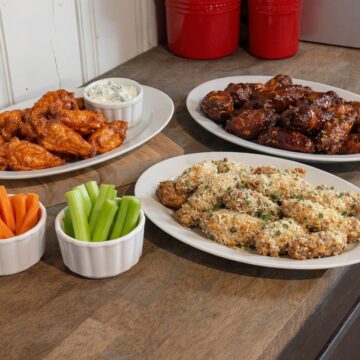
- Three-platter wing flight: BBQ, Buffalo + blue cheese, Parmesan
- Crunch + cold: celery + carrots (keep them icy)
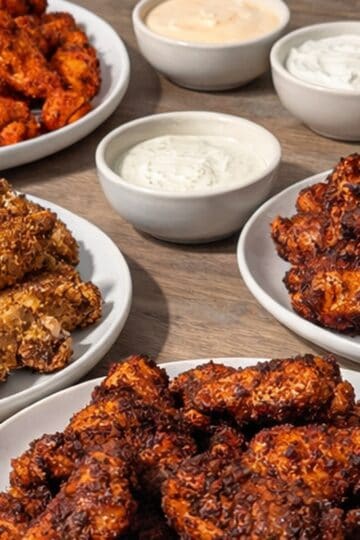
- Dip: blue cheese dressing (Buffalo) + optional ranch for the crowd-pleasers
- Something sharp: quick pickles or pickled red onions (cuts fat, resets palate)
Sides that behave
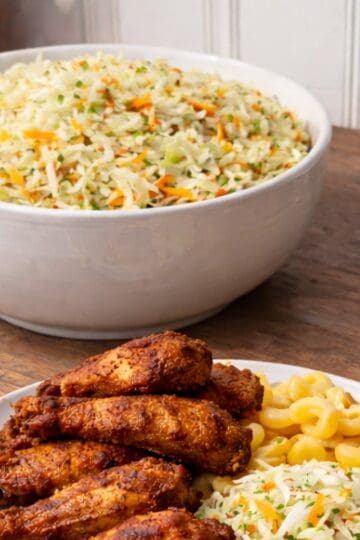
- Vinegar slaw (best partner, least effort)
- Kettle chips or oven fries if you need a starch
- Simple chopped salad if you want to pretend it’s balanced
Drinks
- Beer is obvious. If you’re pouring wine: sparkling, dry Riesling, or chilled Beaujolais—acid and lift, no heavy oak.
Comments
No Comments