
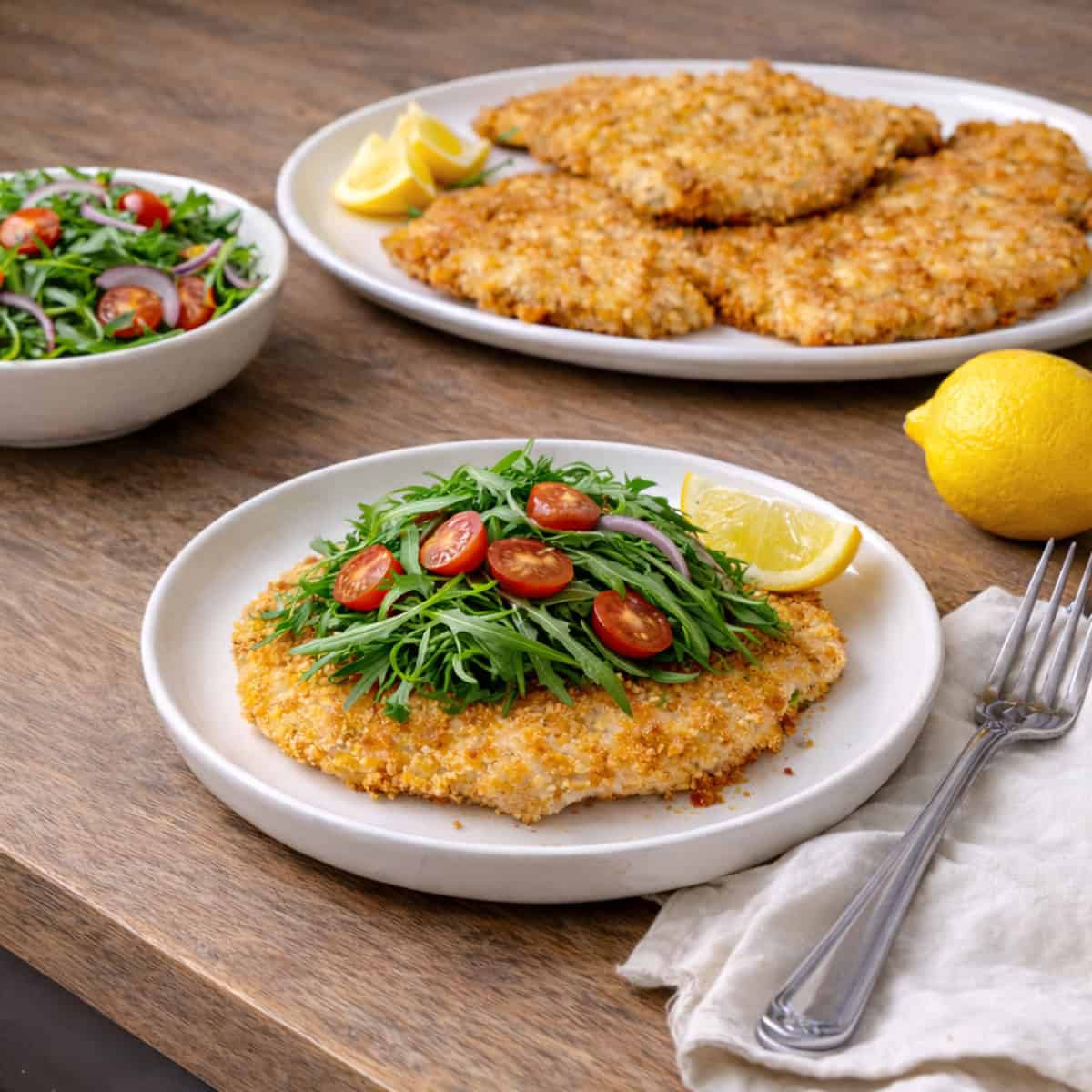
Chicken Milanese is about contrast: thin, tender meat under a crisp coating that stays light, not greasy. When it’s done right, the chicken cooks quickly, the crust adheres, and the whole dish eats clean. This isn’t fried chicken—it’s pan-frying with discipline.
Why This Dish Matters
Milanese cooking values restraint. Chicken Milanese follows the same logic as veal Milanese—stretch a protein, cook it fast, and let texture do the work. It’s economical, repeatable, and built for everyday cooking, which is why it appears everywhere from home kitchens to trattorias.
Technique Intelligence
Chicken Milanese lives or dies on thinness, adhesion, and oil control.
The cutlet must be pounded evenly so it cooks in minutes, not long enough for the breading to darken or detach. The coating should be dry and firmly pressed so it sets quickly in hot oil. Oil temperature matters more than depth—too cool and the crust absorbs fat, too hot and it burns before the chicken is cooked.
Failure mode: thick cutlets or rushed breading that leads to soggy crust and uneven doneness.
(Link upward to: Pan-Frying & Breaded Cutlets)
Ingredients, With Intent
Chicken
Boneless chicken breasts are split and pounded thin to ensure fast, even cooking. Thickness matters more than size—uneven cutlets cook unevenly.
Breading
Flour dries the surface, egg creates adhesion, and breadcrumbs provide texture. Fine breadcrumbs coat evenly; coarser crumbs add crunch but require tighter heat control.
Fat
Neutral oil handles the heat. Butter can be added at the end for flavor, not used as the primary frying medium.
Seasoning
Salt belongs on the chicken before breading and lightly after frying. Over-seasoning the crumbs muddies the crust.
Finish
Lemon is structural, not decorative. Acid cuts fat and keeps the dish from feeling heavy.
What Can Go Wrong
Breading falls off → Chicken surface was wet or crumbs weren’t pressed firmly.
Greasy cutlets → Oil temperature too low or pan overcrowded.
Burnt crust, raw center → Cutlet too thick.
Pale crust → Oil not hot enough or insufficient fat contact.
Variations & Context
- Veal Milanese is the traditional reference.
- Pork Milanese works well with slightly thicker cuts.
- Arugula-topped versions turn the cutlet into a full plate rather than a standalone protein.
The method stays constant—the protein shifts.
Wine Pairing (Updated Standard Applied)
Chicken Milanese needs acidity, restraint, and freshness. The crisp coating and quick pan-fry call for wines that clean the palate rather than compete with it.
A Soave Classico from producers such as Pieropan or Inama is a canonical pairing—dry, clean, and structured enough to handle fried breading without dulling the dish.
For a slightly firmer profile, Verdicchio dei Castelli di Jesi from Umani Ronchi or Bucci works especially well when the cutlet is finished with lemon or served with arugula. The wine’s minerality mirrors the dish’s balance.
For an elevated option, Franciacorta Brut from Ca’ del Bosco or Bellavista brings lift and acidity that cut through the crust cleanly.
Avoid red wine. Tannin and fried breading work against each other, even in lighter styles.
Table Itinerary
Chicken Milanese fits cleanly into a simple table:
- Arugula salad with lemon and olive oil
- Roasted potatoes or a light pasta
- Something bitter or acidic to counter the fry
The cutlet is the anchor—everything else should stay out of its way.
Suggested Equipment
- Meat mallet or rolling pin for even pounding
- Wide, shallow bowls for breading
- Heavy skillet for heat retention
- Thin spatula to protect the crust
Thin pans and crowded skillets undermine good technique.
Storage & Make-Ahead
Chicken Milanese is best eaten immediately. Breaded cutlets can be held briefly before cooking, but once fried, the crust softens quickly. Reheating sacrifices texture.
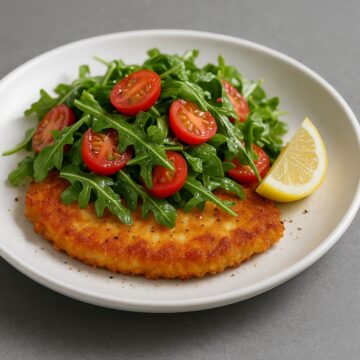
Chicken Milanese

Equipment
- Equipment
- Meat mallet or rolling pin
- Wide shallow bowls for breading
- Heavy skillet
- Thin spatula or fish spatula
- Salad spinner
Ingredients
Ingredients
Chicken
- 2 large boneless skinless chicken breasts, halved horizontally
- 1 teaspoon kosher salt
- ½ teaspoon black pepper
Breading
- ½ cup all-purpose flour
- 2 large eggs beaten
- 1½ cups fine dry breadcrumbs
- Neutral oil for pan-frying
- 2 tablespoon unsalted butter optional, for finishing
Salad
- 4 cups arugula
- ¼ small red onion thinly sliced
- ½ cup cherry tomatoes halved
- 1 tablespoon fresh lemon juice
- 2 tablespoon extra-virgin olive oil
- ¼ teaspoon kosher salt
- Shaved Parmesan cheese optional
To Finish
- Lemon wedges
Instructions
Instructions
- Place 4 cups arugula in a bowl of cold water and soak for 10 minutes to crisp. Drain well and spin or pat completely dry.
- Pound chicken cutlets evenly to a thin, uniform thickness. Season both sides with 1 teaspoon kosher salt and ½ teaspoon black pepper.
- Set up a breading station with ½ cup flour, 2 beaten eggs, and 1½ cups breadcrumbs. Dredge each cutlet in flour, then egg, then breadcrumbs, pressing to adhere.
- Heat a shallow layer of neutral oil in a heavy skillet over medium-high heat until shimmering.
- Pan-fry chicken cutlets until golden and cooked through, turning once. Add 2 tablespoon butter to the pan during the final minute if using.
- Transfer chicken to a rack or paper towels. Season lightly with salt while hot.
- In a bowl, toss dried arugula with ¼ sliced red onion, ½ cup cherry tomatoes, 1 tablespoon lemon juice, 2 tablespoon olive oil, and ¼ teaspoon kosher salt. Add shaved Parmesan if using.
- Serve chicken Milanese with the arugula salad and lemon wedges on the side.
Notes
Storage Chicken Milanese is best eaten immediately. Reheating softens the crust.
Comments
No Comments