
Fresh pasta doesn’t ask for much. Flour, eggs, pressure, and time. What it does ask for is attention — especially at the beginning, when the dough tells you exactly what it needs if you’re willing to listen.
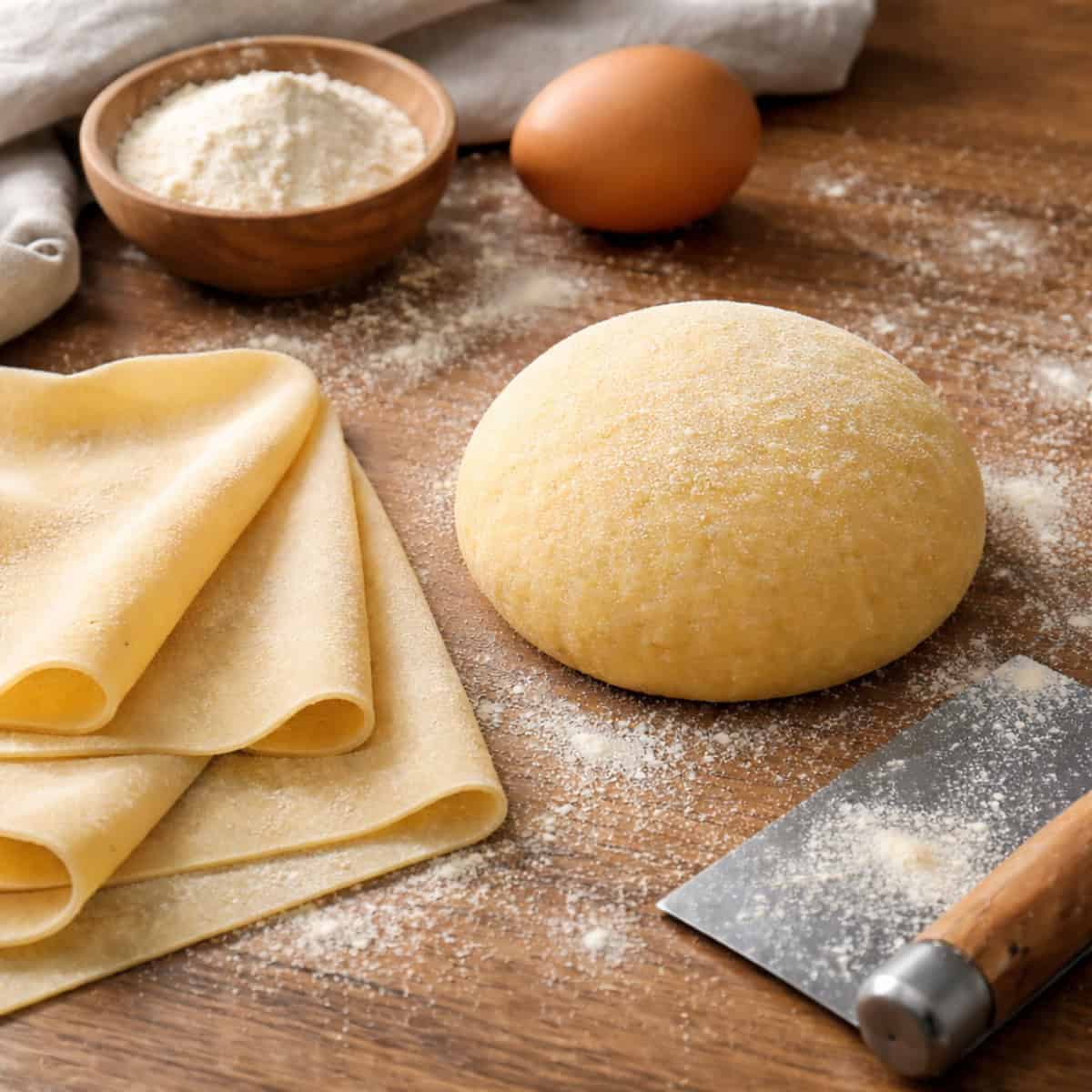
This recipe is built as one dough, two methods. You can make it by hand, slowly and deliberately, or you can let a food processor do the heavy lifting and step in when it matters. Both are valid. Both produce excellent pasta. The difference isn’t purity — it’s pace.
What matters most isn’t the method.
It’s knowing what the dough should feel like when it’s right.
Ingredient Story (Why These Matter)
Flour
“00” flour gives tenderness and elasticity — ideal for rolling. All-purpose flour works well and is more forgiving. Semolina isn’t for the dough itself here; save it for dusting.
Eggs
Eggs provide structure, richness, and color. Their size and moisture vary every time, which is why pasta has always been judged by feel, not fixed numbers.
Salt
A small amount seasons the dough lightly and strengthens gluten. Most of the seasoning still happens later, in the cooking water.
What This Post Teaches (and What It Doesn’t)
This isn’t a nostalgia piece about Italian grandmothers.
It’s not a precision exercise measured to the gram.
This post is about:
- Understanding pasta dough texture
- Knowing when to adjust hydration
- Choosing the right method for your day, not your ego
The WP recipe below gives you quantities and timing.
This part gives you judgment.
The Dough, in Plain Terms
Fresh pasta dough should feel drier than you think at first. Not crumbly, not cracking — just firm, reluctant, and a little stubborn.
If you’ve made bread, forget that instinct. Pasta dough doesn’t want to be soft. It wants to be controlled.
Egg size varies. Flour absorbs differently. Humidity changes everything. That’s why good pasta cooks don’t follow pasta recipes blindly — they adjust.
Method 1: Making Pasta Dough by Hand
This is the method people romanticize, but the real value isn’t tradition — it’s feedback.
When you mix by hand, you feel:
- When the flour has taken on enough moisture
- When the dough tightens
- When it finally smooths out and stops fighting you
You bring the dough together slowly, knead it until it’s smooth and elastic, and make small corrections as you go.
If the dough feels too dry, add a few drops of water or olive oil and keep kneading.
If it feels sticky, dust lightly with flour and continue — don’t panic, and don’t add more eggs.
Once the dough is smooth and firm, wrap it and let it rest. That rest isn’t downtime — it’s when the dough becomes rollable instead of argumentative.
Method 2: Making Pasta Dough in a Food Processor
This is the method most working cooks use when no one’s watching.
The processor hydrates the flour quickly and evenly, giving you a coarse, crumbly dough that should hold together when pinched. From there, you finish by hand — briefly — and make the same small adjustments you would either way.
If it’s too dry, add a few drops of water or olive oil.
If it’s sticky, dust lightly and move on.
The machine saves time. It doesn’t replace judgment.
Basic Pasta Dough (By Hand or Food Processor)
Materials
Ingredients
- 300 g “00” flour or all-purpose flour
- 3 large eggs
- ½ teaspoon fine sea salt
- Water or olive oil as needed (for adjustment)
Semolina flour, for dusting
Instructions
Method 1: Pasta Dough by Hand
- This is the slower path — not because it’s harder, but because it asks you to stay present.
Instructions
- Mound the flour on a work surface and make a wide well in the center.
- Add eggs and salt to the well. Beat gently with a fork, gradually drawing in flour.
- When a shaggy dough forms, switch to your hands.
- Knead for 8–10 minutes until smooth and elastic.
- Adjust hydration as needed with a few drops of water or olive oil if the dough feels too dry.
- Wrap tightly and rest at room temperature for 30 minutes.
Method 2: Pasta Dough in the Food Processor
- Same dough. Less mess. The processor gets you most of the way there — judgment finishes the job.
Instructions
- Add flour and salt to the bowl of a food processor. Pulse to combine.
- Add eggs and pulse until the mixture resembles coarse crumbs.
- Pinch the dough — if it holds together, it’s ready.
- Turn out onto a work surface and knead briefly (1–2 minutes).
- Adjust hydration with a few drops of water or olive oil if the dough feels crumbly or tight.
- Wrap tightly and rest at room temperature for 30 minutes.
Notes
How to Know the Dough Is Right
This is the part no recipe card can teach.
You’re looking for a dough that is:
- Firm
- Smooth
- Dry to the touch, but not cracking
It should resist when you press it, then relax as you knead. If it snaps back aggressively when rolled, it needs more rest — not more force.
Pasta dough should push back just enough to let you know it’s alive.
Rolling & Cutting (Just Enough to Be Useful)
Once rested, roll the dough by hand or machine until smooth and even. Dust lightly with semolina — not flour — to prevent sticking.
Common Cutting Widths
Tagliatelle
About 6–8 mm (¼–⅓ inch) wide.
Flexible, balanced, and ideal for butter sauces, mushrooms, and light ragù.
Pappardelle
About 20–25 mm (¾–1 inch) wide.
Broad, deliberate pasta meant for braises and hearty sauces.
Consistency matters more than perfection. Pasta that cooks evenly eats better than pasta that measures perfectly.
Storage & Timing (Because Life Happens)
- Rest dough at room temperature up to 1 hour.
- Refrigerate wrapped dough up to 24 hours; always bring it back to room temperature before rolling.
- Fresh-cut pasta freezes well and cooks straight from frozen.
How This Pasta Wants to Be Served
Fresh pasta doesn’t want heavy sauces or long simmers. It shines with:
- Butter or olive oil
- Eggs and cheese
- Mushrooms or greens
- Simple tomato sauces
If the sauce overwhelms the dough, you’ve missed the point.
Comments
No Comments