
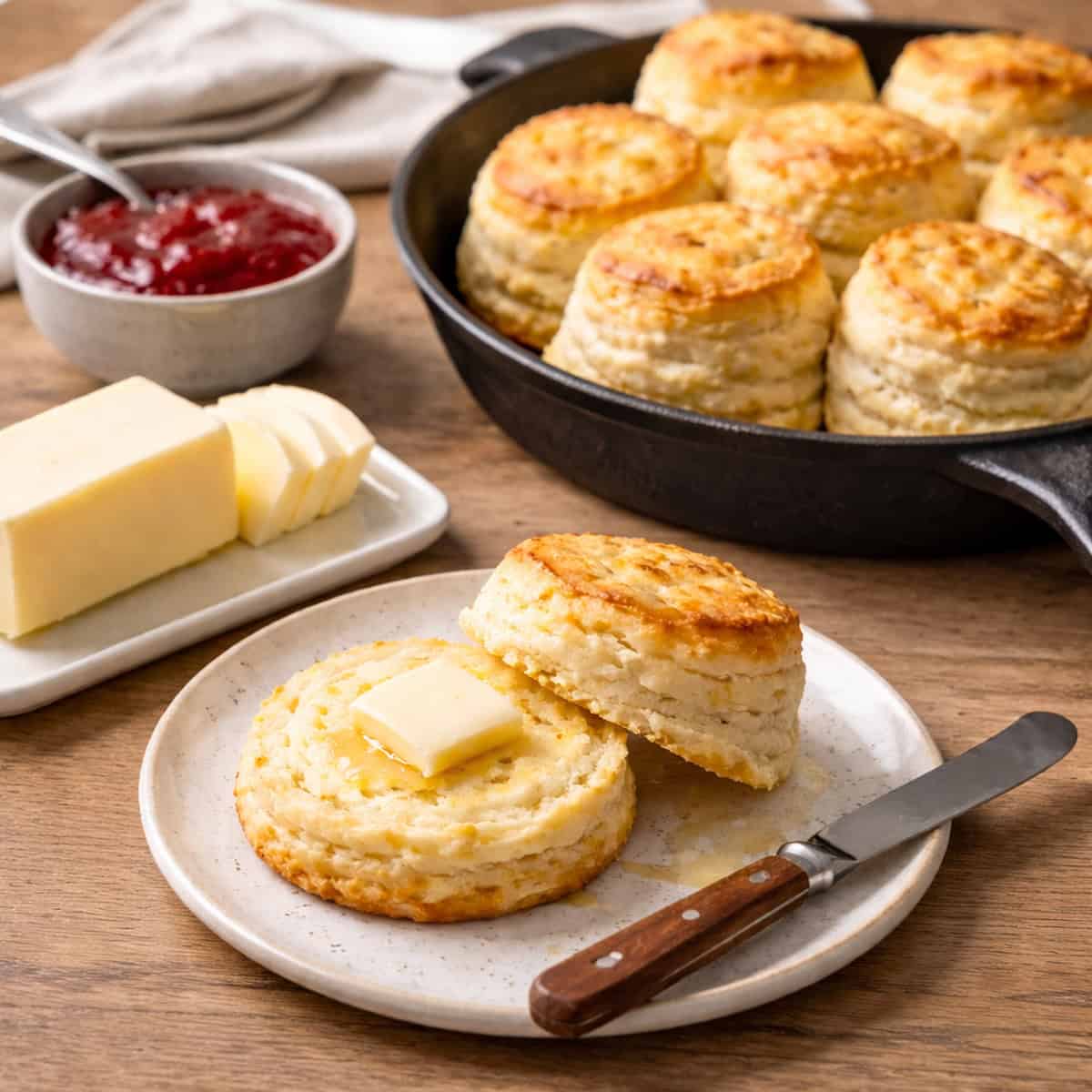
A biscuit is supposed to feel like it has layers—because it does. When it’s right, you can pull it apart with your fingers and see the seams like pages in a paperback. When it’s wrong, it’s bread cosplay. These are the kind you want: crisp top, tender center, and a rise that looks slightly arrogant.
Why This Dish Matters
Buttermilk biscuits are one of the clearest examples of American cooking being both practical and quietly technical. No yeast, no long fermentation, no preciousness—just cold fat, quick hands, and heat doing the heavy lifting.
Technique Intelligence
Biscuits rise because of steam + chemical leavening + layers.
Cold Butter = Lift
Butter contains water. In a hot oven, that water turns to steam. Steam expands and pushes dough layers apart. That’s flake. If the butter melts early, it blends into flour and you lose the lift.
Why I Recommend Grating Frozen Butter
Freeze butter for 20–30 minutes, then grate it directly into the flour using a box grater. Toss gently to coat.
Grated butter distributes evenly, creates lots of tiny fat pockets, and dramatically reduces overworking. It’s the most consistent way to get flake without turning biscuit day into an endurance sport.
Mix Less Than You Think
Once liquid hits flour, gluten starts forming. Gluten = chew. Chew = bread. We want tender. Mix until shaggy and stop.
Book Fold (4 Turns — True Book Fold)
This is not a letter fold. It’s a half fold.
You’ll press the dough into a rectangle, fold it in half like closing a book, rotate, press again, and repeat for four total turns. Each half fold doubles your layers. Four turns builds structure without toughening the dough.
Thickness Matters
Pat the dough to ¾–1 inch before cutting. Thin dough makes short biscuits. Biscuit height starts on the counter, not in the oven.
Cutting Rule
Cut straight down. Don’t twist the cutter. Twisting seals the edges and blocks rise.
Ingredient Intelligence
Flour
All-purpose works. If you can find a Southern-style soft wheat flour (like White Lily), you’ll get a more tender biscuit because lower protein means less gluten formation.
Buttermilk
Use real cultured buttermilk (not “milk + lemon juice” unless you’re in a pinch). The acidity improves tenderness and reacts with baking soda for lift and browning.
Baking Powder + Baking Soda
Baking powder is the main engine. Baking soda supports browning and balances buttermilk’s acidity. If your baking powder is old, your biscuits will be too.
Butter
Unsalted gives control. Freeze it, grate it, keep it cold. That’s the whole game.
Salt
Non-negotiable. It makes the biscuit taste like something instead of a warm napkin.
Optional: melted butter brushed on top after baking for gloss and richness.
Equipment & Tools (Suggested)
- Box grater (for frozen butter)
- Large mixing bowl
- Silicone spatula or dough whisk
- Bench scraper (clean turns, less sticking)
- 2½-inch biscuit cutter (sharp edge)
- Sheet pan + parchment or cast iron skillet
- Pastry brush (optional finish)
What You’ll Do
You’ll combine dry ingredients, grate in frozen butter, add cold buttermilk until just shaggy, then perform a 4-turn book fold to build layers. Cut thick, bake hot, and let steam do the work.
(Full measurements + instructions live in the WP recipe card.)
Serving Ideas
- Breakfast: honey butter, jam, or sausage gravy
- Lunch: fried chicken biscuit sandwiches
- Dinner: pulled pork + vinegar slaw on biscuits
- Brunch board: biscuits, pimento cheese, pickles, hot honey
Wine / Beverage Pairing
This one isn’t about wine. It’s about balance.
- Brunch: dry sparkling wine (Crémant, Cava, Brut Champagne)
- Comfort dinner: crisp lager or pilsner
- Southern heat (hot honey / fried chicken): off-dry Riesling or a light, chilled rosé
Chef Notes
Make dough early, cut biscuits, and hold them uncooked in the fridge. Bake right before serving for maximum lift and drama. If you’re feeding people, bake in a cast iron skillet so they rise tall and stay warm longer.
Buttermilk Biscuits (Grated Butter + 4-Turn Book Fold)

Equipment
- Equipment
- Box grater
- Large mixing bowl
- Dough whisk or silicone spatula
- 2½-inch biscuit cutter (sharp edge)
- Sheet pan with parchment or 10-inch cast iron skillet
- Pastry brush (optional)
Ingredients
Ingredients
- 2 cups 240g all-purpose flour, plus more for dusting
- 1 tablespoon baking powder
- ¼ teaspoon baking soda
- 1 teaspoon kosher salt
- 6 tablespoons 85g unsalted butter, frozen 20–30 minutes
- ¾ cup 180ml cold buttermilk, plus up to 2 tablespoons more as needed
- 1 –2 tablespoons melted butter optional, for brushing
Instructions
Instructions
- Preheat the oven to 450°F. Line a sheet pan with parchment or set out a cast iron skillet.
- In a large bowl, whisk together 2 cups flour, 1 tablespoon baking powder, ¼ teaspoon baking soda, and 1 teaspoon kosher salt.
- Grate 6 tablespoons frozen butter directly into the flour mixture using a box grater. Toss gently until the butter shreds are evenly coated.
- Pour in ¾ cup cold buttermilk and stir just until a shaggy dough forms. If dry flour remains, add 1 tablespoon more buttermilk at a time (up to 2 tablespoons total). Do not overmix.
- Turn the dough onto a lightly floured surface. Gently press into a rectangle about 1 inch thick.
- Book Fold – Turn 1: Fold the dough in half like closing a book. Rotate 90 degrees.
- Press back into a rectangle and repeat the book fold. Continue until you have completed 4 total book folds (fold in half, rotate, press — repeat).
- Pat the dough to ¾–1 inch thickness.
- Cut biscuits straight down with a floured 2½-inch cutter. Do not twist.
- Place biscuits on the pan. For taller biscuits, place them touching. For crispier sides, space them about 1 inch apart.
- Bake 12–15 minutes until tall and golden brown.
- Brush tops with melted butter if desired. Cool 5 minutes before serving.
Comments
No Comments