
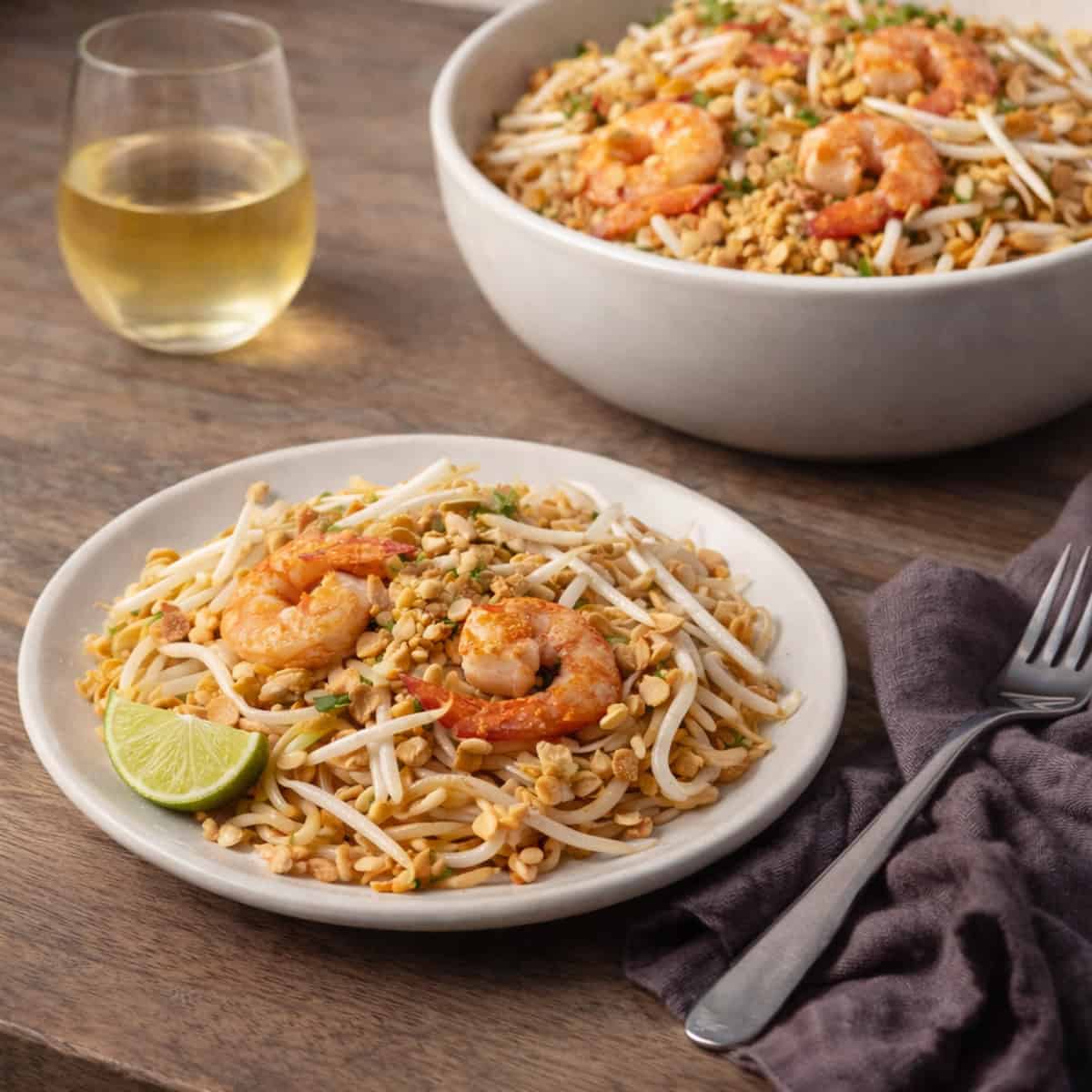
Pad Thai is Thailand’s most exported dish—and most misunderstood. At its core, it’s a fast-cooked rice noodle stir-fry built on balance: sour from tamarind, salt from fish sauce, sweetness from palm sugar, and heat that lingers rather than shouts. When cooked properly, it’s glossy, light, and savory. When it’s wrong, it’s sticky, sweet, and heavy.
This version respects how Pad Thai is actually cooked: quickly, deliberately, and without bottled shortcuts.
Why This Dish Matters
Pad Thai matters because it teaches restraint under pressure. It’s a dish that looks forgiving but isn’t. The pan is hot, the clock is ticking, and every ingredient has a job.
In Thailand, Pad Thai is street food—made to order, cooked fast, and eaten immediately. At home, the challenge is recreating that balance without drowning the noodles in sauce or sugar. This recipe prioritizes technique over convenience, so the dish tastes alive instead of cloying.
Technique Spotlight: Noodle Hydration, Sauce Absorption, and Heat Control
Pad Thai is not a sauce-first dish.
Rice noodles are hydrated—not boiled—so they finish cooking in the pan, absorbing the sauce as it reduces. The sauce goes in measured, not dumped. Heat must be high enough to evaporate liquid and form gloss, not stew the noodles into submission.
Lime juice is added off heat. Bean sprouts go in at the end. Eggs are soft-set, not scrambled dry. Everything happens in order, or it falls apart.
This dish rewards preparation and punishes improvisation.
Ingredients
Noodles (Structure & Absorption)
Flat Rice Noodles (3–5 mm wide)
Medium-width noodles absorb sauce without turning mushy. Too thin and they disintegrate; too wide and they stay raw in the center. Hydration, not boiling, is the key.
Recommended: Thai Kitchen or Three Ladies Brand Rice Noodles
Fat & Aromatics (The Base)
Neutral Oil
Peanut or avocado oil keeps the flavor clean and tolerates heat. Olive oil muddies the profile.
Recommended: Peanut oil for authenticity and performance.
Garlic, Finely Minced
Garlic forms the aromatic backbone. It cooks fast and must not brown, or bitterness takes over.
Protein (Optional, Not Decorative)
Firm Tofu, Shrimp, or Both
Tofu adds texture and absorbs sauce. Shrimp adds sweetness and depth. Chicken works; beef does not belong here.
Recommended: Extra-firm tofu, pressed and cut into batons.
The Sauce (Balance Is the Point)
Tamarind Concentrate
This is the soul of Pad Thai. It provides sourness with depth—not sharp acidity.
Recommended: Tamicon Tamarind Concentrate
Fish Sauce
Salt and umami in one move. This is structural, not optional.
Recommended: Red Boat or Squid Brand Fish Sauce
Palm Sugar
Palm sugar sweetens without flattening the dish. Brown sugar is a fallback, not a match.
Recommended: Thai palm sugar cakes, finely shaved.
Thai Chili Paste or Chili Flakes
Heat should linger, not dominate.
Recommended: Thai roasted chili paste or dried Thai chili flakes, used sparingly.
Finish & Contrast
Eggs
Soft-set in the pan, they enrich the noodles and help bind the sauce.
Bean Sprouts & Scallions
Crunch and freshness. Added late to preserve texture.
Roasted Peanuts, Crushed
Texture and fat. Optional but traditional.
Lime Wedges
Added off heat to sharpen the finished dish without breaking the sauce.
No ketchup. No bottled Pad Thai sauce. No sugar bomb shortcuts.
How It Comes Together
Soak the rice noodles in very hot water until pliable but still firm. They should bend without breaking.
Heat a wok or wide sauté pan until hot. Add oil, then tofu and shrimp, cooking just until set. Remove and reserve.
Add a touch more oil, then garlic, cooking briefly until fragrant. Scramble the eggs directly in the pan, keeping them soft.
Add the drained noodles and Pad Thai sauce. Toss continuously, letting the noodles absorb the sauce and finish cooking in the pan. Return the protein, then fold in bean sprouts and scallions.
Turn off the heat. Add lime juice to taste. Finish with crushed peanuts.
The noodles should be glossy, not wet. The sauce should cling, not pool.
What Can Go Wrong
- Mushy noodles → Over-soaked or boiled noodles
- Sticky, sweet pasta → Too much sugar or bottled sauce
- Greasy dish → Sauce didn’t emulsify; heat too low
- Flat flavor → Lime added too early or fish sauce underused
Pad Thai doesn’t forgive guessing.
Variations & Regional Notes
Some cooks add dried shrimp or preserved radish for funk and depth. Others skip peanuts entirely. Street versions vary stall to stall, but balance remains constant.
Change the ingredients deliberately—or don’t change them at all.
Serving & Pairing
Serve immediately. Pad Thai waits for no one.
Pair with something crisp and cold: Thai iced tea, a light lager, or plain soda water with lime. This is a dish meant to wake the palate, not exhaust it.
Wine Pairing
Pad Thai’s combination of tamarind, fish sauce, and chili rules out heavy wines.
A dry Riesling with high acidity works surprisingly well, especially with shrimp. Grüner Veltliner also holds up, offering freshness without sweetness.
Avoid tannins. Avoid oak. Let the dish lead.
Equipment
- Wide sauté pan or carbon steel wok
- Large bowl for noodle hydration
- Tongs or wok spatula
- Mixing bowl for sauce
If you need more than this, the technique is off.
Storage & Make-Ahead
Pad Thai is meant to be eaten immediately. Leftovers lose texture and balance. If reheating is unavoidable, use a hot pan with a splash of water and accept that it won’t be the same dish.
Pad Thai | Authentic Home Method

Equipment
- Equipment
- Wide sauté pan or carbon steel wok
- Large heatproof bowl (for noodle hydration)
- Tongs or wok spatula
- Small mixing bowl (for sauce)
- Measuring spoons
Ingredients
Ingredients
Pad Thai Sauce
- 3 tablespoons tamarind concentrate
- 3 tablespoons fish sauce
- 2½ tablespoons palm sugar finely chopped or shaved
- ½ –1 teaspoon Thai chili paste or dried Thai chili flakes to taste
Noodles
- 6 ounces flat rice noodles 3–5 mm wide
- Very hot water for soaking
Stir-Fry
- 2 tablespoons neutral oil peanut or avocado, divided
- 2 cloves garlic finely minced
- 4 ounces extra-firm tofu pressed and cut into small batons
- 6 –8 large shrimp peeled and deveined (optional)
- 2 large eggs
- ½ cup bean sprouts
- 2 scallions thinly sliced
For Serving
- ¼ cup roasted peanuts crushed
- Lime wedges
Instructions
Instructions
Make the sauce
- In a small bowl, whisk together 3 tablespoons tamarind concentrate, 3 tablespoons fish sauce, 2½ tablespoons palm sugar, and ½–1 teaspoon chili paste or chili flakes until the sugar is mostly dissolved. Set aside.
Hydrate the noodles
- Place 6 ounces rice noodles in a large bowl and cover with very hot water. Soak for 8–10 minutes, until pliable but still firm. Drain well and set aside.
Cook the protein
- Heat a wok or wide sauté pan over medium-high heat. Add 1 tablespoon neutral oil. Add the tofu and cook for 2–3 minutes until lightly golden. If using shrimp, add them now and cook 30–45 seconds per side until just opaque. Remove tofu and shrimp from the pan and set aside.
Build the base
- Add the remaining 1 tablespoon oil to the pan. Add the minced garlic and cook for 10–15 seconds, just until fragrant.
Scramble the eggs
- Push the garlic to one side of the pan. Crack in the 2 eggs and gently scramble until just set but still soft.
Add noodles and sauce
- Add the drained noodles to the pan, followed by the prepared Pad Thai sauce. Toss continuously for 2–3 minutes, allowing the noodles to absorb the sauce and finish cooking in the pan.
Return protein and finish
- Add the reserved tofu and shrimp back to the pan. Toss to combine, then add ½ cup bean sprouts and sliced scallions, cooking 20–30 seconds just to warm through.
Serve
- Remove from heat. Taste and adjust with lime juice if needed. Serve immediately, topped with crushed peanuts and lime wedges.
Comments
No Comments