
Mac and cheese is a sauce problem disguised as comfort food.
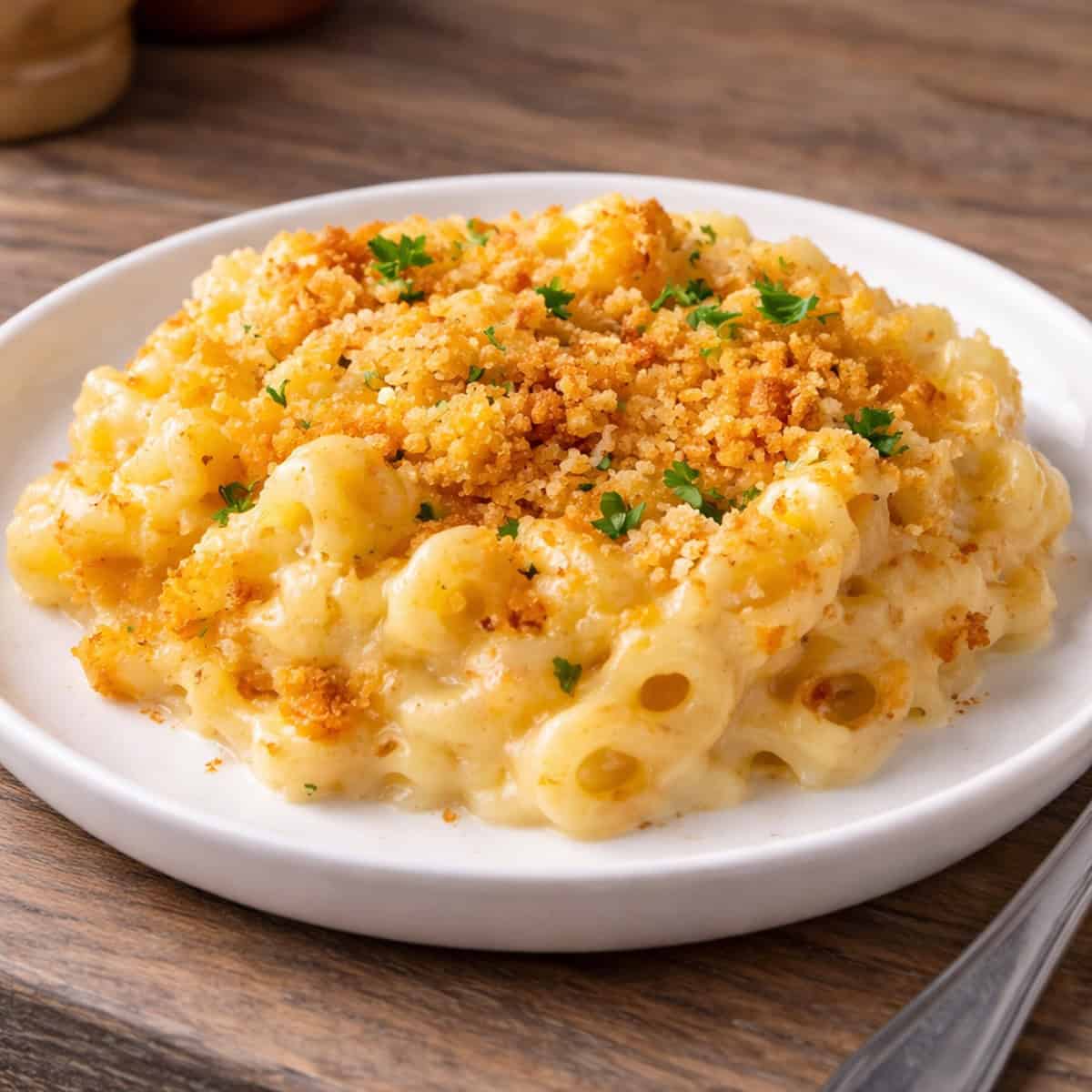
Why This Dish Matters
Mac and cheese exists because dairy, flour, and pasta were affordable and filling. It’s working food that crossed every boundary—home kitchens, cafeterias, and eventually restaurant menus—without changing its purpose. At its core, it’s still about turning a few reliable ingredients into something dependable and satisfying.
Technique Intelligence
Mac and cheese lives or dies by emulsification.
The base is a béchamel, but the goal isn’t thickness—it’s stability. Milk, fat, and starch are brought together gently, then cheese is added off heat so it melts without breaking. High heat is the enemy here. Once the sauce splits, no amount of stirring will put it back together.
Failure mode: grainy or greasy sauce from overheating or using pre-shredded cheese with stabilizers.
(Link upward to: Sauces & Emulsification Fundamentals)
Ingredients, With Intent
Pasta
Short, ridged shapes hold sauce without collapsing. Elbows are traditional, but shells and cavatappi work for the same reason—surface area and structure.
Dairy Base
Milk provides the liquid; butter and flour provide body. The roux should be cooked just long enough to lose its raw edge, not browned.
Cheese
Sharp cheddar gives backbone, but it shouldn’t work alone. Blending cheeses adds meltability and depth. Pre-shredded cheese introduces starches that interfere with emulsification.
Seasoning
Salt matters more than spice. A small amount of mustard or paprika supports the cheese without announcing itself.
Finish
Mac and cheese should stop cooking while it still looks slightly loose. It tightens as it sits.
What Can Go Wrong
Grainy sauce → Cheese added over heat or boiled.
Greasy texture → Sauce broke from overheating or excess fat.
Dry mac and cheese → Sauce too thick before mixing with pasta.
Bland result → Underseasoned base; salt wasn’t addressed early.
Variations & Context
- Stovetop versions prioritize creaminess and speed.
- Baked versions trade silkiness for structure and a set top.
- Breadcrumb toppings add texture but aren’t mandatory.
The method should match the moment—weeknight, buffet, or table centerpiece.
Wine Pairing
Mac and cheese needs acidity and freshness to counter fat.
A dry sparkling wine works cleanly. Unoaked Chardonnay or dry Riesling also fit, especially with sharper cheeses. Avoid heavily oaked whites and tannic reds—they fight the sauce instead of balancing it.
Table Itinerary
Mac and cheese works best when paired with contrast:
- Something green or bitter
- Something acidic
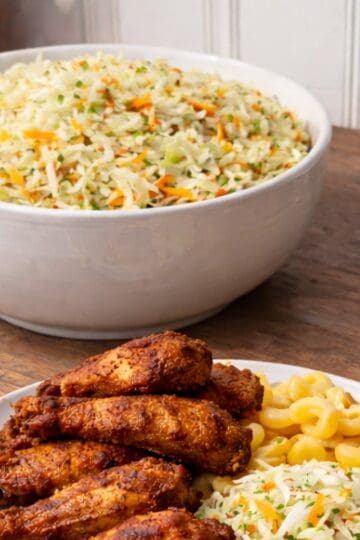
- Protein served alongside, not buried inside
It’s a supporting dish that often steals attention—plan accordingly.
Suggested Equipment
- Heavy saucepan for sauce control
- Whisk for smooth emulsification
- Heatproof spatula for folding pasta into sauce
- Baking dish only if finishing in the oven
Thin pans and high heat undo good intentions quickly.
Storage & Make-Ahead
Mac and cheese thickens as it cools. Reheat gently with added liquid to restore texture. Avoid high heat, which encourages separation.
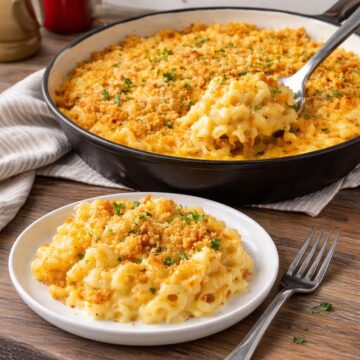
Creamy Baked Mac and Cheese

Equipment
- Equipment
- Heavy saucepan + whisk
- Oven-safe skillet (enameled cast iron works well) or 2-quart baking dish
- Microplane or box grater
- Wire rack or trivet for resting
Ingredients
Ingredients
Pasta
- 12 oz elbow macaroni or cavatappi/shells
- 1 tablespoon kosher salt for pasta water
Cheese Sauce
- 4 tablespoon unsalted butter
- ¼ cup all-purpose flour
- 3 cups whole milk warmed
- 1 teaspoon Dijon mustard
- ½ teaspoon kosher salt plus more to taste
- ¼ teaspoon black pepper
- ¼ teaspoon smoked paprika optional
- 8 oz sharp cheddar freshly grated (about 2 cups)
- 4 oz fontina or Monterey Jack freshly grated (about 1 cup)
Topping
- 1 cup panko breadcrumbs
- 2 tablespoon unsalted butter melted
- 2 tablespoon grated Parmesan optional
Instructions
Instructions
- Heat oven to 375°F. Butter a 10–12 inch oven-safe skillet or a 2-quart baking dish.
- Boil pasta in salted water: bring water to a boil and add 1 tablespoon kosher salt. Cook 12 oz pasta until just shy of al dente, about 1 minute less than package directions. Drain well.
- Make the roux: in a saucepan, melt 4 tablespoon butter over medium heat. Whisk in ¼ cup flour and cook 1 minute, whisking постоянно, until smooth and no longer smells raw.
- Build the base: slowly whisk in 3 cups warmed milk. Cook, whisking, until the sauce thickens enough to coat a spoon, 3–5 minutes.
- Season: whisk in 1 teaspoon Dijon, ½ teaspoon kosher salt, ¼ teaspoon black pepper, and ¼ teaspoon smoked paprika if using.
- Add cheese off heat: remove pan from heat. Stir in 8 oz cheddar and 4 oz fontina/Jack in handfuls until melted and smooth.
- Combine: fold drained pasta into the cheese sauce until evenly coated. Transfer to prepared skillet/dish and level the top.
- Top: mix 1 cup panko with 2 tablespoon melted butter and 2 tablespoon Parmesan if using. Sprinkle evenly over mac and cheese.
- Bake: bake 15–18 minutes until bubbling at the edges and golden on top.
- Rest: rest 5 minutes before serving so the sauce sets slightly.
Comments
No Comments