
Authentic Thai green curry paste made from fresh herbs and spices. Learn balance, aroma, and how to use it across Thai cooking.
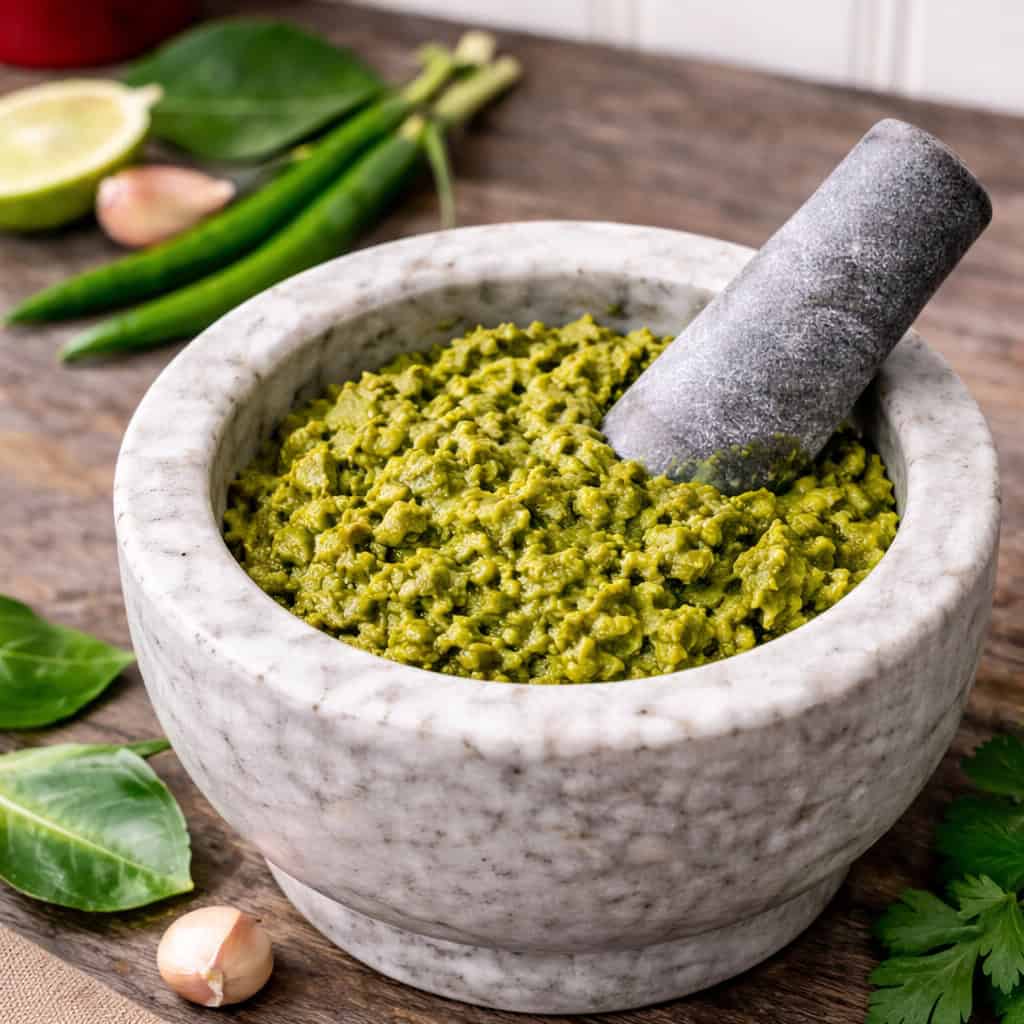
If you’ve ever wondered why restaurant Thai green curry tastes brighter, fresher, and more alive than what you make at home, the answer usually comes down to one thing: the paste.
Thai green curry paste isn’t just spicy — it’s aromatic, grassy, and sharply defined. When you make it fresh, the difference is immediate. The kitchen smells greener. The flavors feel clearer. And suddenly the curry makes sense.
This is the paste everything else is built on.
Why Make Thai Green Curry Paste from Scratch
Most people search for green curry paste because they want a better curry — not because they’re interested in making condiments for fun. Store-bought paste works, but it’s muted by design. Shelf life costs flavor.
Making it at home gives you:
- brighter aromatics
- control over heat and salt
- a paste that actually blooms when cooked
Once you’ve made it once, you stop thinking of it as extra work and start thinking of it as the shortcut.
What Thai Green Curry Paste Is — and Isn’t
This paste is a concentrated flavor base. It’s designed to be cooked in oil or coconut cream before becoming a curry.
It is not:
- a finished sauce
- meant to be eaten raw
- interchangeable 1:1 with jarred paste without adjustment
Think of it the same way you’d think about sofrito or curry roux: powerful on its own, transformative when cooked.
Why This Works
Thai green curry paste works because of fresh aromatics and proper breakdown. Pounding or grinding releases essential oils that don’t survive industrial processing.
Salt is added early to help the paste come together. Shrimp paste is added last so it doesn’t dominate. These aren’t traditions for tradition’s sake — they’re practical decisions that affect flavor.
Cooking Logic: How This Paste Is Used
If you’re searching for green curry paste, you’re probably planning to:
- make green curry chicken
- cook seafood or vegetable curry
- build a Thai-style soup
This paste is gently fried first to release aroma. Coconut milk or stock comes later. That sequence is what keeps the curry fragrant instead of flat.
Heat Control & Timing (What Home Cooks Miss)
Green curry paste should never be browned aggressively. Medium heat, patience, and fat are what unlock it.
If the paste smells sharp and fragrant, you’re doing it right.
If it smells dull or bitter, the heat was too high.
Common Mistakes People Make
- Using old or dried aromatics
- Treating ginger as a perfect galangal substitute
- Over-blending with liquid
- Using too much paste because the flavor seems mild before cooking
This paste comes alive after it hits heat.
Ingredient Intelligence (Search-Friendly, Practical)
Key Ingredients That Matter Most
- Green Thai chilies: Fresh heat and brightness
- Lemongrass: Citrus aroma without acidity
- Galangal: Sharp, clean spice (ginger is a compromise)
- Kaffir lime leaf: Floral bitterness and lift
- Shrimp paste: Depth and umami, used sparingly
Freshness matters more than quantity.
Substitutions (Honest, Search-Safe)
You can substitute:
- ginger for galangal
- lime zest for kaffir lime leaf
- miso or anchovy paste for shrimp paste
These work, but they change the character. This isn’t about purity — it’s about knowing what you’re trading.
Ingredient Hierarchy (What Impacts Flavor Most)
- Fresh aromatics
- Proper breakdown
- Balanced salt and heat
Everything else is flexible.
Thai Green Curry Paste (Nam Prik Gaeng Khiao Wan)

Ingredients
Ingredients
- 6 –8 fresh green Thai chilies stemmed
- 1 tablespoon coriander seed
- 1 teaspoon cumin seed
- 1 teaspoon white peppercorns
- 2 tablespoons finely chopped lemongrass tender inner core only
- 1 tablespoon galangal peeled and thinly sliced
- 4 kaffir lime leaves central rib removed, finely sliced
- 4 garlic cloves
- 2 shallots roughly chopped
- 1 teaspoon shrimp paste
- ½ teaspoon fine sea salt
Instructions
Instructions (Mortar & Pestle – Traditional)
- Heat a dry pan over medium heat and toast the coriander seed, cumin seed, and white peppercorns until fragrant. Remove from heat and cool completely.
- Grind the toasted spices into a fine powder using a spice grinder or mortar and pestle.
- Add the chilies and salt to a mortar and pestle. Pound until the chilies break down into a rough paste.
- Add the lemongrass and galangal. Continue pounding until the mixture becomes smooth and fibrous strands are no longer visible.
- Add the kaffir lime leaf, garlic, and shallots. Pound until thick, cohesive, and aromatic.
- Add the shrimp paste last and work it fully into the paste until glossy and evenly combined.
- If needed, add 1–2 tablespoons neutral oil or water to help the paste come together. The finished paste should be thick, not loose.
Instructions (Food Processor Method)
- Toast the coriander seed, cumin seed, and white peppercorns in a dry pan until fragrant. Cool completely.
- Grind the toasted spices to a fine powder using a spice grinder.
- Add the ground spices to a food processor along with the chilies, salt, lemongrass, galangal, kaffir lime leaf, garlic, and shallots.
- Pulse repeatedly, scraping down the sides as needed, until the mixture forms a thick, coarse paste.
- Add the shrimp paste and continue processing until fully incorporated.
- If the paste struggles to blend, add 1–2 tablespoons neutral oil or water, pulsing just until the paste comes together. Do not over-blend.
Notes
Equipment & Tools (Buyer-Intent Friendly)
A food processor works. A mortar and pestle works better. The difference is texture and aroma, not difficulty.
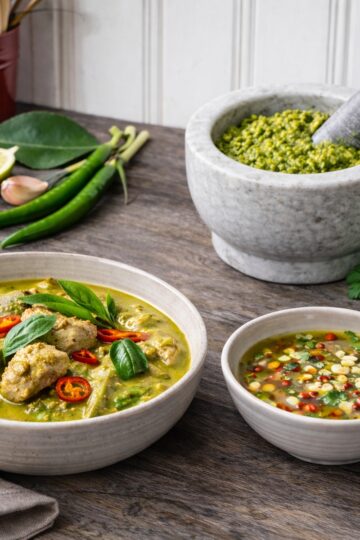
If you cook Thai food often, a granite mortar earns its space quickly.
Storage, Make-Ahead & Freezing
- Refrigerate up to 7 days
- Freeze in tablespoon portions up to 3 months
Freezing preserves aroma better than refrigeration and makes weeknight curry effortless.
How to Serve & Use This Paste
Use this paste for:
- coconut green curry chicken
- seafood curries
- vegetable curries
- Thai-style soups and stir-fries
Once you have it, Thai cooking becomes modular instead of intimidating.
Cultural Context
Green curry reflects central Thai cooking — fresh, aromatic, balanced, and confident without being aggressive. It values clarity over excess.
This paste carries that philosophy forward in the most practical way possible: by making better food.
Comments
No Comments