
Korean cooking is built on fermentation, fire, and shared at the table. Flavor develops over time through preservation, then comes alive through heat, contrast and texture. Technique lives as much in preperation as cooking and dishes are meant to work together rather then stan alone.
Korean cuisine doesn’t whisper. It simmers, ferments, grills, and hits the table all at once. It’s food built around time and heat—time to ferment, time to stew, and heat applied boldly, often right in front of you.
Geography matters here. Mountains, long coastlines, cold winters, and hot summers shaped a cuisine obsessed with preservation, communal eating, and strong flavors that don’t fade halfway through the meal. Korean food is structured around rice, soup, shared dishes, and an ecosystem of fermented condiments that make everything else make sense.
This page outlines the major regional cuisines of Korea and what gives each its personality—so you know where the food comes from before you decide what to cook.
Korea’s Major Regional Cuisines
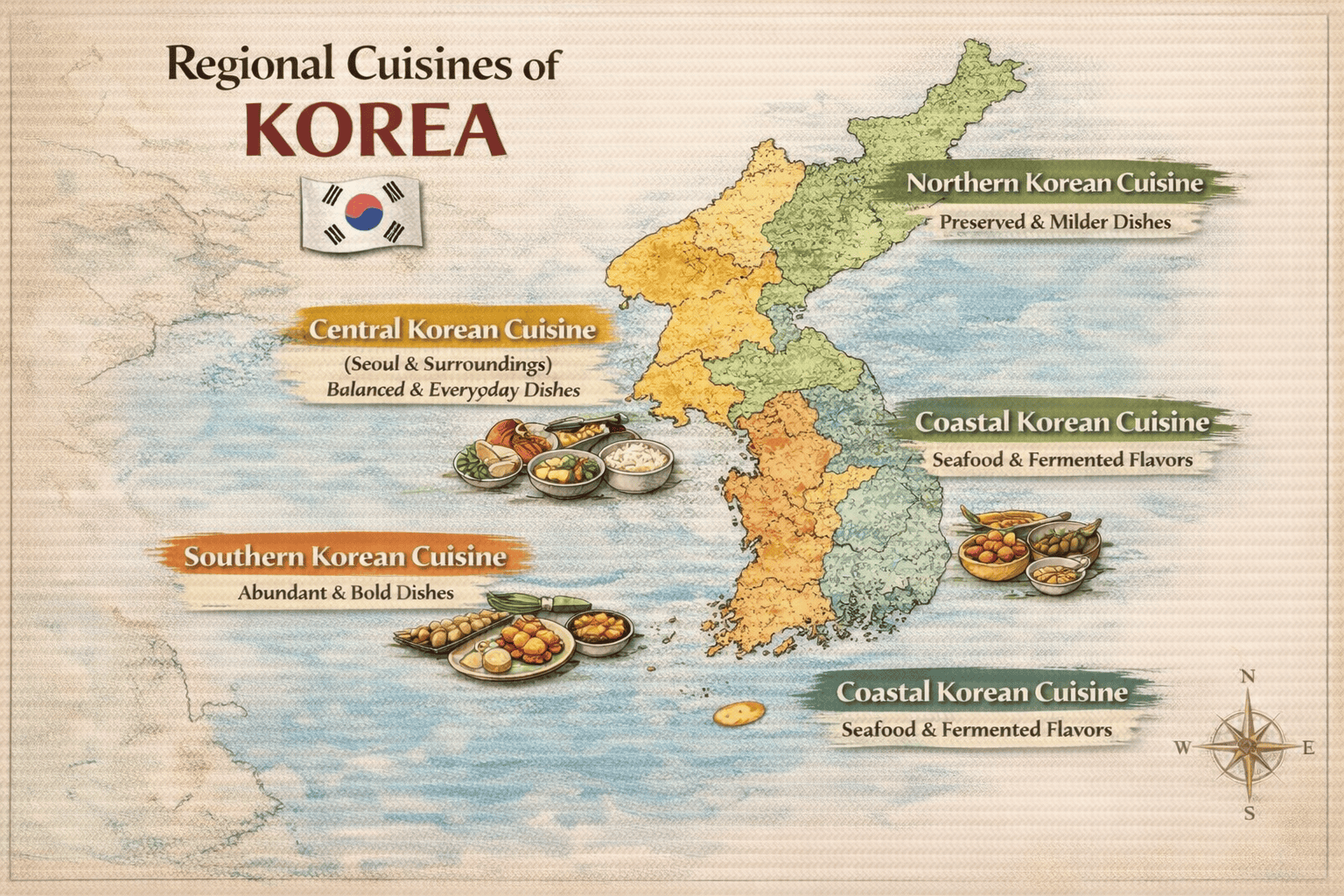
Central Korean Cuisine (Seoul & Surrounding Regions)
Central Korean cuisine, anchored around Seoul, represents what many people think of as everyday Korean food. This region emphasizes balance between fermented flavors, moderate heat, and clean structure.
Soups, stews, rice dishes, and a wide range of banchan define meals here. Fermented staples like kimchi, soybean pastes, and chili paste appear consistently, creating a foundation that feels familiar, comforting, and deeply Korean without being extreme.
This is the core grammar of Korean cooking.
Southern Korean Cuisine (Jeolla & Gyeongsang Regions)
Southern Korean cuisine is known for abundance and boldness. Warmer climate and agricultural richness lead to more banchan, deeper seasoning, and assertive flavors.
Dishes here often lean richer, saltier, and more complex, with fermented ingredients used generously. Seafood plays a larger role along the southern coast, and meals feel expansive—tables crowded with side dishes that turn eating into an event.
Southern cooking shows Korean cuisine at its most expressive.
Northern Korean Cuisine
Northern Korean cuisine developed in colder climates and historically relied on preservation and restraint. Dishes tend to be milder, less spicy, and more focused on broths, grains, and subtle fermentation.
Flavors are cleaner and gentler, reflecting both geography and necessity. While less commonly encountered outside Korea, this cuisine highlights the adaptability of Korean food beyond chili heat.
Coastal Korean Cuisine
Coastal regions of Korea emphasize seafood, sea vegetables, and briny, fermented flavors. Fish, shellfish, and ocean-grown ingredients appear fresh, dried, or fermented, often served simply to highlight natural flavor.
These regions deepen Korea’s fermentation tradition, showing how seafood and preservation intersect without overwhelming the ingredient itself.
How Korean Cuisine Comes Together
Across all regions, Korean meals follow a shared structure: rice as the anchor, soup or stew as the center, grilled or cooked dishes for substance, and banchan providing contrast. Fermentation ties everything together, creating depth that can’t be rushed.
Once you understand this structure, Korean food stops feeling chaotic. The table makes sense. The flavors align. The heat feels intentional rather than aggressive.
Each regional cuisine above links out to deeper pages covering its signature dishes, pantry setup, essential equipment, and techniques—keeping this pillar focused while allowing for serious exploration.
The Korean Pantry: Fermentation Is the Foundation
Korean cooking is impossible without its fermented backbone. Chili paste, soybean paste, chili flakes, soy sauce, sesame oil, and fermented vegetables appear across regions and dishes.
With these staples in place, Korean food becomes modular and intuitive—swap proteins, adjust heat, vary fermentation, and the cuisine still holds together.
Essential Tools in Korean Cooking
Korean kitchens rely on sturdy, practical equipment. Heavy pots for stews, grills or grill pans for meats, and reliable rice cookers do most of the work. Tools are meant to withstand heat and repetition, reinforcing the cuisine’s everyday nature.
Where to Go Next
This page establishes the regional and structural logic of Korean cuisine. From here, deeper pages explore fermentation, banchan, stews, grilled meats, pantry setup, and regional specialties in detail.
Each sub-page ties back to the regions and meal structure outlined here, keeping Korean cooking cohesive, bold, and grounded.