
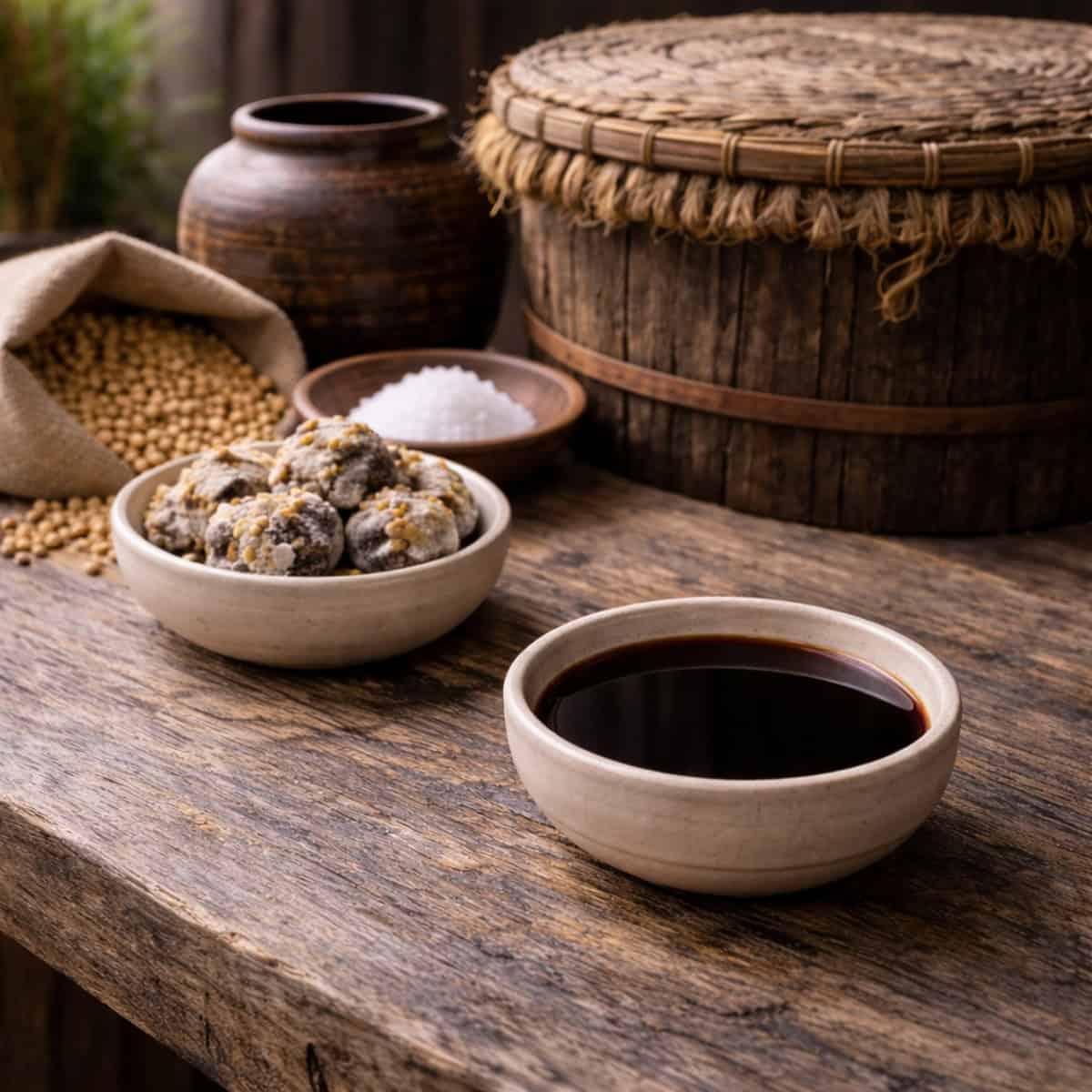
Soy sauce is not a condiment. It’s a process. A liquid archive of microbes, time, salt, and human patience. It looks simple—dark, salty, obedient—but it carries more regional identity than most national flags.
At its core, soy sauce is fermented soybeans, grain (usually wheat), water, salt, and time. Real time. Months to years. Anything faster is an impersonation wearing brown dye.
The Science (brief, because this is flavor, not a lab report)
Soy sauce fermentation relies on koji—a cultured mold that breaks proteins into amino acids, especially glutamates. That’s umami: savory depth that makes food feel finished, not louder. Salt preserves, microbes transform, oxidation rounds the edges. The result is complexity you can’t fake with salt alone.
Two Main Lineages, Very Different Personalities
Chinese Soy Sauces
Built for cooking. Structural. Assertive.
Light soy sauce is salty and thin, used for seasoning and marinades.
Dark soy sauce is aged longer, lightly sweetened, used for color and body.
Think stir-fries, braises, red-cooked dishes. This is soy sauce as architecture.
Japanese Soy Sauces (Shoyu)
Built for balance. Softer. More aromatic.
Typically brewed with more wheat, gently sweet, cleaner on the finish.
Designed to enhance rather than dominate—ideal for sushi, sashimi, dipping, and finishing.
Tamari Is Not Just “Gluten-Free Soy Sauce”
Tamari began as a byproduct of miso production. Less wheat (or none), deeper soybean flavor, thicker body. Excellent for dipping, glazing, and finishing, but it behaves differently in cooking. Treat it like a sauce, not a salt substitute.
What Tamari Is
Tamari is a soy-forward, wheat-light (or wheat-free) fermented sauce.
Compared to standard Japanese shoyu, it:
- Uses more soybeans
- Uses little to no wheat
- Is thicker, darker, and rounder
- Tastes less sharp, more bass-note umami
Think depth over brightness.
How It Differs from Japanese Shoyu
Japanese shoyu is a balanced duet: soybeans and wheat.
Tamari is a soloist: mostly soybeans.
That’s why shoyu feels lighter, aromatic, and slightly sweet, while tamari feels savory, dense, and lingering.
How It Differs from Chinese Soy Sauce
Chinese soy sauces are built primarily for cooking:
- Light soy = seasoning
- Dark soy = color and body
Tamari isn’t trying to do either of those jobs. It’s not about salting a stir-fry or darkening a braise. It’s about finishing.
When to Use Tamari (and when not to)
Tamari shines when the food is simple:
- Dipping sushi or sashimi
- Finishing tofu, eggs, rice, mushrooms
- Glazing grilled fish or vegetables at the very end
Tamari does not love high heat. Cook it hard and you flatten what you paid for.
The Gluten Confusion
Many tamaris are gluten-free because they skip wheat — but that’s a side effect, not the point. Traditional tamari is about flavor concentration, not dietary marketing. Always read the label.
Bottom Line
- Tamari is Japanese, born from miso culture.
- It’s thicker, deeper, and more contemplative than shoyu.
- It’s not a Chinese-style cooking soy sauce and not a 1:1 substitute.
Use it like a finishing salt with a passport.
Premium Soy Sauces: When Time Is the Ingredient
Premium soy sauces are not for dumping into a wok at high heat. They’re for moments where restraint matters—finishing, dipping, brushing, or quietly correcting a dish that feels flat.
What separates them from supermarket soy sauce isn’t branding; it’s fermentation length, small-batch production, wooden vats, and microbial diversity. These sauces taste alive.
Japanese Artisanal Standouts
- Yamaroku
Barrel-aged in century-old cedar vats. Deep, rounded umami with surprising sweetness. Use sparingly. This is soy sauce you taste by the drop. - Kishibori Shoyu
Smooth, elegant, softly sweet. Exceptional for sashimi, tofu, and simple rice dishes. - Haku Shoyu
Pale, aromatic, lightly sweet. Ideal when you want umami without darkening a dish—clear broths, steamed fish, delicate vegetables.
Premium Chinese Styles
- Zhongba
Naturally brewed, sun-fermented. Robust but balanced. Excellent for finishing braises or dipping dumplings. - Haday
Known for traditionally brewed, longer-aged sauces that maintain clarity and depth without harshness.
How to Use Premium Soy Sauce Without Wasting It
- Never cook it hard. Heat kills nuance.
- Use it at the end, or at the table.
- Think brush, drizzle, or dip—not pour.
- Pair with simple foods: eggs, rice, tofu, fish, mushrooms.
If a dish has ten ingredients, premium soy sauce will get lost. If it has three, it will sing.
What to Buy (baseline pantry)
Ignore ingredient lists that read like a chemistry exam. You want soybeans, wheat, salt, water. Period.
Reliable everyday benchmarks:
- Kikkoman (naturally brewed matters—choose it deliberately)
- Yamasa (clean, balanced, excellent for table use)
- Pearl River Bridge (proper light/dark distinction for cooking)
How Chefs Actually Use Soy Sauce
As a salt replacement with benefits—umami plus salinity.
In marinades for gentle protein modification.
For color control with dark soy.
As a secret weapon in non-Asian food: a few drops in beef stock, gravy, mushroom sauces, even tomato sauce. Quiet enhancement beats loud seasoning.
Storage Myth
Soy sauce is stable, but light and heat flatten aroma. Refrigeration isn’t mandatory, but it preserves character. Treat it like olive oil: respect the craft.
Passport Kitchen rule of thumb:
One Japanese shoyu for finishing and dipping.
One Chinese light soy for cooking.
One dark soy for color and depth.
One premium bottle for moments when the food is simple and honesty matters.
Soy sauce doesn’t shout. It edits. And great cooking, like good writing, is knowing when a single, well-chosen word is enough.
Comments
No Comments