
By Chef Samantha Tilley, executive chef at The Market CT and former chef-owner of Mockingbird Kitchen & Bar.
Sichuan dry-fried green beans, gān biān sì jì dòu (干煸四季豆), are a classic of Sichuan home cooking and restaurant menus, from Chengdu street stalls to banquet tables. The name comes from the technique. Gān biān, dry-frying, is one of the defining methods of Sichuan cooking: instead of a quick stir-fry, the ingredient is cooked in a modest amount of oil until its moisture is driven out and it shrinks, wrinkles and blisters. The same method is used for shredded beef, eggplant and other vegetables. The result has no sauce at all, just concentrated, smoky flavor clinging to every bean.
It looks simple, and it is, but it takes patience. The beans have to cook long enough to blister and wrinkle, which concentrates their flavor and gives them a chewy, crisp-tender texture. Only then do the aromatics go in: garlic, ginger, dried chiles, Sichuan peppercorn, chili bean paste and a little pork, sizzling just long enough to perfume the dish. Dry the beans well, let the wok do the work and don't drown anything in sauce.
The beans pop and hiss as they hit the oil, the garlic and chili fill the kitchen, and the beans turn a deep, wrinkled green. Bite one and you get the crisp edge, then the chew, then the slow tingle of peppercorn. You'll end up standing at the stove eating them straight from the wok.
Technique Intelligence
Technique: Sear, Sauté & Stir-Fry · Chapters 15 and 16 · Technique School
Dry the beans completely
Pat the beans thoroughly dry after washing. Water stops them from blistering and makes the oil spatter.
Fry until wrinkled and blistered
Cook the beans in about ¼ inch of oil over medium-high heat for 6 to 8 minutes, turning occasionally, until the skins wrinkle and blister in spots. That's more oil than a stir-fry and less than a deep-fry. Don't stir constantly; let them sit and color.
Crisp the pork
Take out the beans, pour off all but a little oil, and fry the ground pork until it's browned and slightly crisp. The pork is a seasoning here; its rendered fat carries the aromatics through the dish.
Bloom the aromatics, briefly
Add the peppercorns and chiles until fragrant, then the garlic, ginger and chili bean paste for about 30 seconds. Return the beans, season and toss. Keep it quick so nothing burns.
Ingredient Intelligence
Green Beans (四季豆)
Use fresh, firm green beans that snap cleanly. Long beans (yardlong beans), cut into 3-inch pieces, are also traditional.
Ground Pork
A small amount, about 3 ounces, is traditional and optional. For a vegetarian version, use finely diced king oyster mushrooms for a meaty chew.
Doubanjiang (豆瓣酱)
Fermented broad bean and chili paste, ideally Pixian doubanjiang from outside Chengdu. It gives the dish its deep, savory heat. Chili crisp works if you can't find it.
Sichuan Peppercorns and Dried Chiles
Sichuan peppercorns bring a citrusy, tingling numbness; dried red chiles bring smoky heat. Use whole peppercorns here and break the chiles into pieces.
Garlic, Ginger and Shaoxing Wine
Garlic for punch, ginger for warmth, and a splash of Shaoxing wine with a pinch of sugar to round out the salt and heat.
Variations
- Vegetarian: Replace the pork with diced king oyster mushrooms and add a splash of light soy sauce.
- Preserved vegetable: Add 2 tablespoons chopped Sichuan preserved mustard greens (ya cai) with the aromatics, the traditional restaurant addition.
- Less oil: Roast the beans at 450°F on a sheet pan until blistered, then toss with the aromatics in a wok.
- Extra heat: Finish with a drizzle of chili oil.
Make Ahead, Storage and Freezing
Make ahead: Trim and dry the beans and mince the aromatics a few hours ahead. Cook right before serving.
Storage: Refrigerate leftovers up to 2 days.
Freezing: Not recommended.
Reheating: Reheat in a hot, dry skillet or wok to bring back the texture.
What to Serve with Sichuan Dry-Fried Green Beans
- Mapo Tofu
- Kung Pao Chicken
- Smashed cucumber salad with garlic
- Steamed rice
- A cold Tsingtao, iced jasmine tea or a gin and tonic
Sichuan Dry-Fried Green Beans FAQ
What does dry-fried mean? The beans are cooked in a modest amount of oil until their moisture evaporates and they blister and wrinkle. There's no sauce.
Why aren't my beans blistering? They were wet, the oil wasn't hot enough, or the pan was crowded. Dry them well and fry in batches.
Can I make them without pork? Yes. Leave it out or use diced king oyster mushrooms.
Are Sichuan green beans spicy? Moderately. Use fewer chiles for a milder version.
Can I use frozen green beans? Fresh is much better; frozen beans hold too much water to blister properly.
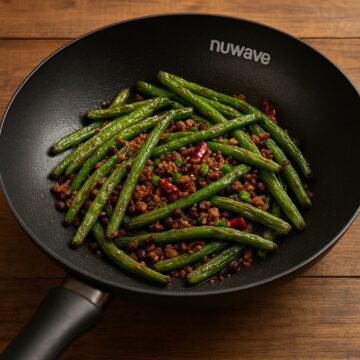
Sichuan Green Beans

Ingredients
Ingredients
- 1 lb green beans, trimmed 450g
- 3 tablespoon neutral oil peanut or canola
- 3 oz ground pork 85 g; optional but traditional
- 3 cloves garlic minced
- 1 inch fresh ginger minced
- 2 dried red chiles broken
- 1 teaspoon Sichuan peppercorns
- 1 tablespoon doubanjiang or chili crisp if unavailable
- 1 tablespoon soy sauce
- 1 teaspoon Shaoxing wine
- ½ teaspoon sugar
- 1 scallion finely sliced
- 1 teaspoon chili oil for drizzling, optional
Instructions
- Blister the beans: Heat 3 tablespoons oil in a wok until shimmering. Add 1 pound green beans and stir-fry until skins blister and wrinkle, about 6 to 8 minutes.
- Set the beans aside: Remove and drain.
- Brown the pork: If using, add 3 ounces ground pork to the same wok. Stir-fry until browned and slightly crisp.
- Bloom the spices: Push pork to the side and add 1 teaspoon Sichuan peppercorns and 2 dried red chiles; stir until fragrant.
- Add the aromatics: Add 3 cloves garlic, 1 inch ginger, and 1 tablespoon doubanjiang. Stir-fry for 30 seconds.
- Season: Add 1 tablespoon soy sauce, 1 teaspoon Shaoxing wine, and ½ teaspoon sugar.
- Return the beans: Return beans to the wok and toss to coat.
- Finish and serve: Finish with 1 finely sliced scallion. Drizzle with 1 teaspoon chili oil if you like; try my Garlic Chili Crunch Oil. Serve immediately.
Notes
Pat the beans dry before frying—moisture kills the blister. The “dry-fry” method uses more oil than stir-fry but less than deep-fry—about ¼ inch in the wok. If using vegetarian protein, choose diced king oyster mushrooms for a meaty chew and splash a bit of light soy to enhance umami.
Made this? Leave a star rating and a comment below: pork or mushrooms? I read every comment.

Comments
No Comments